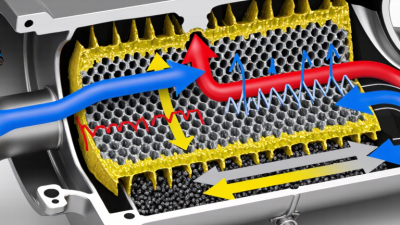
Why Is Catalyst Testing Important for Buyers?
A catalyst can look impressive in a supplier’s brochure and still disappoint inside a buyer’s reactor. Catalyst testing helps buyers compare performance using measurable evidence, not just claims. It can reveal activity, selectivity, stability, and sensitivity to operating conditions. Small differences matter. A few degrees of temperature, a change in feed composition, or several hours of operation may alter results.
The IUPAC Gold Book defines a catalyst as “a substance that increases the rate of a reaction without modifying the overall standard Gibbs energy change in the reaction.” That definition is precise, but a purchase decision needs more than chemistry. Catalysis researcher Jens K. Nørskov’s work highlights the importance of understanding catalyst behavior at the active site and under relevant conditions. For buyers, the practical question is whether test conditions resemble the intended process closely enough to support a sound comparison.
Look beyond a single headline conversion figure. Ask how the sample was prepared, how long the test ran, and whether results were repeated. Request data on deactivation, product selectivity, and any regeneration steps. A clean graph is useful, but it cannot answer every question. Testing also has limits: laboratory results may not predict scale-up perfectly, and that uncertainty deserves attention. A careful buyer checks methods, records assumptions, and asks what remains untested. These details can help prevent costly surprises and support a more reliable supplier evaluation.
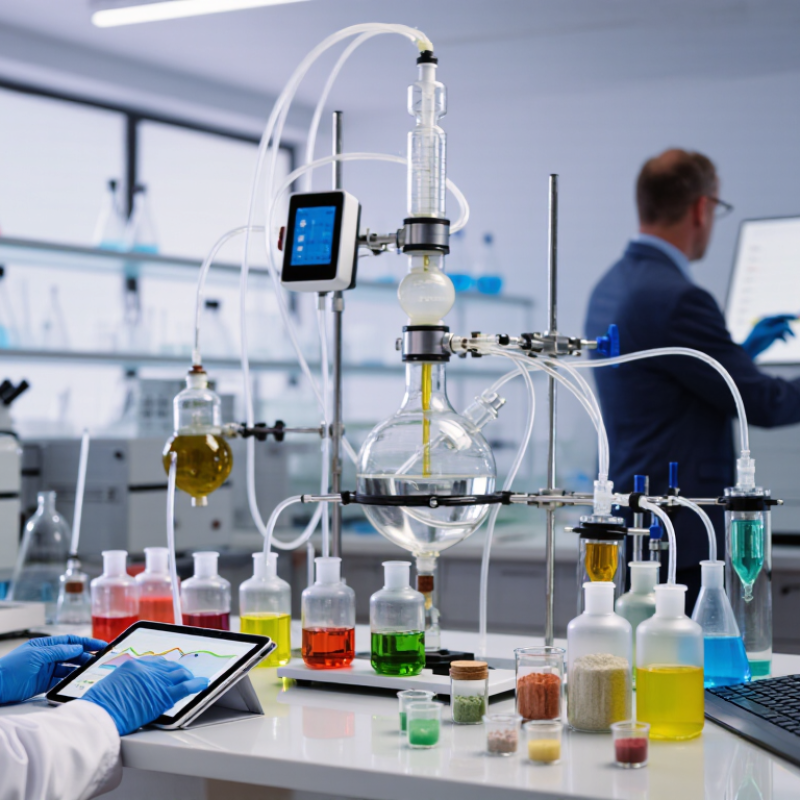
Catalyst testing measures how much of each target gas enters the material and how much leaves. For automotive catalysts, technicians commonly track hydrocarbons, carbon monoxide, and nitrogen oxides, then calculate conversion efficiency from inlet and outlet concentrations. They also measure light-off temperature: the point at which the catalyst begins converting pollutants effectively. A lower light-off temperature can matter during cold starts, when exhaust treatment is not yet fully active.
Testing can also examine selectivity, pressure drop, and performance after heat exposure or chemical aging. These details help buyers compare samples under matched conditions, rather than relying on a single headline efficiency figure. The U.S. Environmental Protection Agency’s 2023 Automotive Trends Report recorded an average 27.1 miles per gallon for model-year 2022 vehicles. That fleet figure is useful context, but it cannot confirm the condition of an individual catalyst. EPA vehicle tests measure emissions over prescribed driving cycles, while a bench test isolates catalyst behavior. The distinction matters.
Ask for test conditions, sample history, repeatability, and raw inlet-and-outlet readings. A strong result from a fresh sample may not predict performance after prolonged heat or contamination. Lab work has limits. Even so, a clear test report can reveal whether a catalyst meets the buyer’s stated operating needs, and where uncertainty remains.
Buyers need verified catalyst information because a product name or datasheet rarely captures how a batch will perform. A small mismatch in active-metal loading, particle size, moisture, or strength can affect conversion, pressure drop, and replacement timing. Picture a sealed drum arriving with a neat label but no batch-specific test results. That gap matters.
Testing links a purchase to measurable properties, such as composition, surface area, activity, crush strength, and contaminants. The U.S. EPA’s Catalytic Incinerator fact sheet (EPA-452/F-03-018) reports typical VOC destruction efficiencies of 95–99% for catalytic incinerators. That describes systems under suitable operating conditions, not a guarantee for every catalyst or installation. Small caveat, big difference.
Ask for a lot-specific certificate, test method, sampling date, and acceptance limits. Compare those details with the process conditions you actually run. A certificate without test methods is hard to evaluate. The EPA’s Air Pollution Control Cost Manual also discusses temperature and catalyst condition as performance factors. Lab claims need that context. I would not approve a purchase based on one headline number alone; real-world performance is less tidy.
A catalyst’s value depends on its recoverable metal content, not its weight alone. Buyers need to know which platinum-group metals are present and in what concentrations. The USGS Mineral Commodity Summaries 2024 reported 2023 average prices of about US$965 per troy ounce for platinum and US$1,337 for palladium. Those figures are historical, not a quote for today, but they show why composition matters. Small assay differences can affect a lot’s estimated value.
Sampling is critical. Catalysts can vary from piece to piece, so one surface reading may not represent an entire batch. Handheld X-ray fluorescence can screen material quickly, but coatings, uneven metal distribution, and the supporting substrate may influence results. For valuation, buyers can request representative sampling and a validated laboratory method, such as digestion followed by ICP-OES or ICP-MS. Ask for the reported detection limits, measurement uncertainty, and duplicate results. Sampling matters.
A precise number can still describe the wrong sample. That is the awkward part. Buyers should check how material was selected, prepared, and documented before comparing offers. A clear assay report makes the composition easier to verify and the valuation easier to question when results differ.
Buyers should match catalyst tests to the conditions it will face in service. For fluid catalytic cracking, ASTM D3907 describes a microactivity test that compares catalyst activity under controlled conditions. It is useful for screening, but it cannot reproduce every detail of a commercial unit. Ask for feedstock, temperature, catalyst-to-oil ratio, and repeat-test results. Small differences in these conditions can shift the measured yield.
For porous catalysts, request BET surface-area and pore-size measurements, plus crush-strength or attrition data where handling matters. These tests help explain whether a sample has accessible active surfaces and can withstand transport. Then review application-specific reactor testing, including conversion, selectivity, and time-on-stream. Include relevant contaminants or aging conditions when possible. No test is perfect. Lab results can still overstate field performance if the feed or operating cycle differs.
Independent verification matters when commercial claims are difficult to compare. The International Energy Agency reported that low-emissions hydrogen remained less than 1% of global hydrogen production in 2023, underscoring the gap between promising technologies and broad deployment. For catalysts used in hydrogen processes, buyers should request documented test conditions, calibration records, and raw results—not only a headline efficiency figure. Even then, one awkward question remains: will the result hold with your actual feed? Sources: ASTM D3907; IEA, Global Hydrogen Review 2024.
Why Is Catalyst Testing Important for Buyers?
A fair purchase depends on more than appearance or an estimated weight. Testing gives buyers measurable information about a catalyst’s recoverable material, helping both sides discuss value using the same evidence. A documented result can reduce guesswork when condition, age, or prior use differs. Small differences matter.
Reliable comparisons begin with clear sampling and handling records. Buyers should ask what was tested, how the sample was identified, and whether the report states its methods and limitations. An independent laboratory can add confidence, especially when the sale involves several units or a disputed estimate. Keep the report linked to the specific item; otherwise, even accurate numbers may not support a fair decision.
Results are not perfect. Sampling can miss variation within a unit, and damaged or contaminated material may affect interpretation. A careful buyer treats the report as evidence, not a promise, and checks that the proposed price reflects the result and the item’s condition. If a figure seems unusually high or low, asking for clarification is reasonable. That extra conversation can feel awkward, but it is better than relying on a number no one can explain.
| Test dimension | What the result reports | Why it matters to buyers | How it supports a fair comparison |
|---|---|---|---|
| Activity and conversion | Conversion or reaction rate measured under stated feed composition, temperature, pressure, and test duration. | Shows how effectively the catalyst performs under the tested conditions. | Compare results only when operating conditions, calculation methods, and test duration are aligned. |
| Selectivity and product yield | Product distribution, selectivity, or yield, with the calculation basis and measured products identified. | Indicates whether the catalyst favors desired products or forms unwanted by-products. | A shared product definition and material-balance basis help prevent misleading comparisons. |
| Operating window | Performance across specified temperatures, pressures, feed rates, or feed compositions. | Helps assess whether test performance is relevant to the buyer’s intended process conditions. | Testing at agreed conditions makes differences in performance easier to interpret. |
| Pressure drop | Pressure loss across a catalyst bed at a stated flow rate and test setup. | Can affect pumping or compression requirements and help identify flow-related limitations. | Use the same bed dimensions, packing procedure, flow basis, and measurement points for each sample. |
| Mechanical strength and attrition | Results from a stated crush-strength, abrasion, or attrition test, where appropriate for the catalyst form and service. | Provides evidence about resistance to handling and operating stresses; the relevant test depends on catalyst shape and application. | Compare measurements made using the same test method, sample preparation, and reporting units. |
| Composition and physical properties | Measured composition and relevant properties such as particle size, surface area, or pore characteristics, as applicable. | Helps verify that the supplied material matches the agreed specification and intended application. | A common specification, sampling plan, and analytical method reduce uncertainty between supplier results. |
| Stability and deactivation | Change in activity or selectivity over a stated test period, including the conditions and any regeneration procedure. | Shows how performance changes during the test; short tests alone do not establish full service life. | Compare test duration, feed contaminants, operating conditions, and regeneration assumptions before drawing conclusions. |
| Sampling, method, and uncertainty | Sample identification, sampling procedure, test method, replicates where available, and measurement uncertainty or detection limits where relevant. | Makes results traceable and helps buyers judge whether small differences are meaningful. | Documented procedures and consistent methods make the purchasing evaluation more transparent and reproducible. |
Note: Test conditions and suitable methods depend on catalyst chemistry, form, and intended service. Request the test protocol and compare results on an equivalent basis; no single test result establishes performance in every process.