What Is a 4 Catalyst and How Does It Work?

A 4 catalyst is an advanced exhaust after-treatment system designed to control four major pollutants. These usually include carbon monoxide, hydrocarbons, nitrogen oxides, and fine particulate matter. The term is not perfectly standardized. It often describes a four-way catalytic converter that combines three-way catalytic chemistry with a gasoline particulate filter.

Why does this technology matter? The U.S. Environmental Protection Agency reports that modern catalytic converters can reduce key tailpipe pollutants by more than 90% under suitable operating conditions. The European Environment Agency’s Air Quality in Europe reports continue to identify road transport as a major source of urban nitrogen oxide pollution. These findings explain the growing interest in integrated emission-control systems. Still, laboratory performance is not identical to real-world performance.

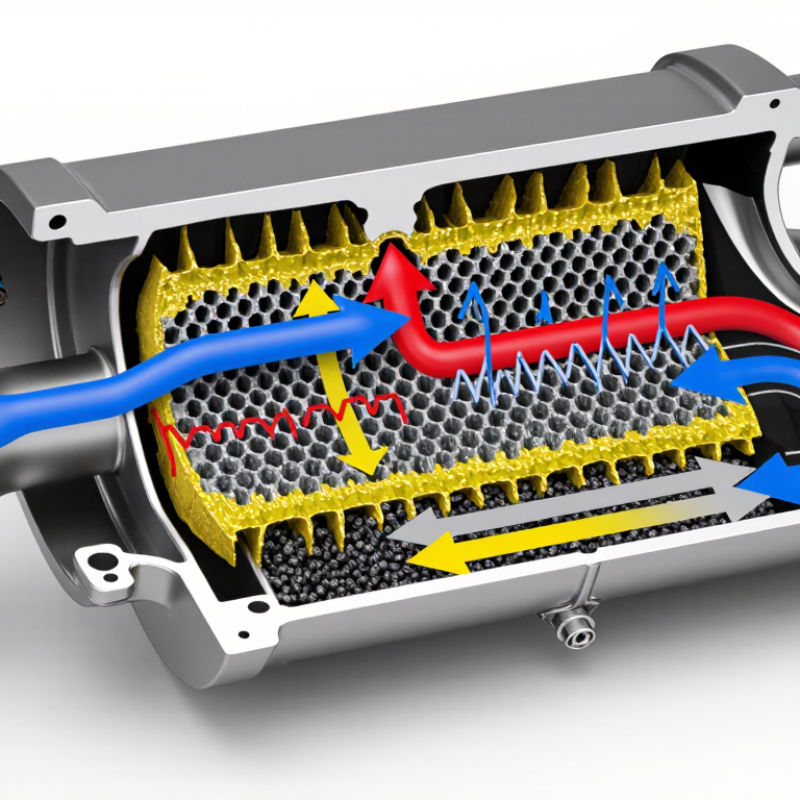
Inside the unit, a ceramic honeycomb creates thousands of narrow channels. A thin washcoat carries precious-metal catalysts, commonly platinum, palladium, and rhodium. When exhaust gases reach the correct temperature, oxidation reactions convert carbon monoxide and hydrocarbons into carbon dioxide and water. Reduction reactions transform nitrogen oxides into nitrogen and oxygen. A wall-flow filter then traps soot particles, which are periodically burned during regeneration.

The chemistry is precise. Small temperature changes matter.

An oxygen sensor helps the engine maintain a near-stoichiometric mixture. That balance allows the catalyst to switch efficiently between oxidation and reduction reactions. However, cold starts, short trips, oil contamination, aging, and poor maintenance can reduce effectiveness. This article examines what a 4 catalyst is, how its internal stages work, and where its practical limitations deserve closer attention.
What Is a 4 Catalyst and How Does It Work?

What a 4 Catalyst Is and What It Is Designed to Do

A 4 catalyst, often called a four-way catalyst, is an automotive emissions-control device. It is designed to reduce four major pollutants: carbon monoxide, unburned hydrocarbons, nitrogen oxides, and fine particulate matter. These pollutants leave the engine through the exhaust system. The catalyst uses a coated filter structure to help convert them into less harmful substances, mainly carbon dioxide, nitrogen, and water vapor.

It works through controlled chemical reactions. Oxidation reactions change carbon monoxide and hydrocarbons into carbon dioxide and water. Reduction reactions break nitrogen oxides into nitrogen and oxygen. A wall-flow filter also traps tiny soot particles before they reach the tailpipe.

Exhaust sensors continually measure oxygen levels, helping the engine maintain the mixture needed for efficient catalyst operation. The system performs best after reaching its operating temperature.

Cold starts remain a weak point. The catalyst cannot react efficiently while it is still cool. Excessive heat, engine misfires, oil consumption, or poor maintenance can also damage its coating and filter channels. From practical inspection, warning lights and reduced fuel economy often appear before serious blockage develops. However, diagnosis should include sensor readings and exhaust measurements, not guesswork alone. The term “4 catalyst” is not used identically in every technical source, so its exact design should be confirmed from the vehicle’s service documentation.

The Main Components and Chemical Reactions Involved

A 4 catalyst usually means a four-way catalytic converter used in modern vehicle exhaust systems. It targets four pollutants: carbon monoxide, unburned hydrocarbons, nitrogen oxides, and fine particulate matter. The system begins with a honeycomb substrate, which provides many small channels for exhaust flow. A porous washcoat increases surface area. Catalyst metals, including platinum, palladium, and rhodium, support the reactions. An oxygen-storage material helps balance changing exhaust conditions.

Carbon monoxide is oxidized into carbon dioxide: 2CO + O2 → 2CO2. Unburned hydrocarbons also react with oxygen, forming carbon dioxide and water. Nitrogen oxides undergo reduction, producing nitrogen and oxygen. The particulate filter captures soot inside its walls. During regeneration, trapped carbon reacts with oxygen and forms mainly carbon dioxide. These reactions need accurate temperature control and a near-balanced air-fuel mixture. Too much fuel can increase soot. Too much oxygen can reduce NOx conversion. Real systems are more complicated than this simplified chemistry.

Tips: Do not judge catalyst health by appearance alone. A clean surface can hide internal damage. Check exhaust temperature, oxygen-sensor readings, pressure changes, and emissions data together. Misfires deserve quick attention because they can send unburned fuel into the converter. That may overheat the substrate. I have found that diagnosis is often less certain than expected, especially when several sensors age at once. A laboratory test or qualified inspection can prevent a costly guess.

What Is a 4 Catalyst and How Does It Work? - The Main Components and Chemical Reactions Involved

System Element Primary Function Typical Materials or Features Main Chemical Process Target Emissions
Exhaust Inlet and Thermal Housing Directs hot exhaust gas into the catalyst and helps maintain the temperature needed for conversion. Heat-resistant stainless steel housing, insulation, inlet and outlet cones. Heat transfer and controlled gas flow rather than a catalytic reaction. Supports treatment of carbon monoxide, hydrocarbons, and nitrogen oxides.
Ceramic or Metallic Substrate Provides a large surface area while allowing exhaust gas to pass through with limited restriction. Honeycomb channels made from ceramic cordierite or heat-resistant metal foil. Physical support for the washcoat and catalyst particles. All three regulated pollutant groups: CO, hydrocarbons, and NOx.
Washcoat Increases microscopic surface area and helps distribute active catalytic materials. High-surface-area alumina with oxygen-storage materials such as cerium-containing oxides. Adsorption, oxygen storage, and release during changing exhaust conditions. Helps stabilize oxygen availability for simultaneous oxidation and reduction.
Platinum-Group Metal Sites Accelerate reactions without being consumed overall. Dispersed platinum-group metal particles, commonly including platinum, palladium, and rhodium. Surface adsorption, bond weakening, reaction, and product desorption. Carbon monoxide, unburned hydrocarbons, and nitrogen oxides.
Oxygen-Storage Component Buffers short-term changes between oxygen-rich and oxygen-poor exhaust. Redox-active metal oxides, especially cerium-based oxygen-storage materials. 2CeO2 ↔ Ce2O3 + 1/2O2 Maintains an effective oxygen balance for CO and hydrocarbon oxidation and NOx reduction.
Carbon Monoxide Oxidation Converts toxic carbon monoxide into carbon dioxide. Oxidation-active catalyst sites and a controlled supply of oxygen. 2CO + O2 → 2CO2 Carbon monoxide (CO).
Hydrocarbon Oxidation Oxidizes unburned fuel and other hydrocarbon compounds. Oxidation-active metal sites, heat, and available oxygen. CxHy + (x + y/4)O2 → xCO2 + y/2H2O Unburned hydrocarbons (HC) and, depending on the fuel, some oxygenated organic compounds.
Nitrogen Oxide Reduction Reduces nitrogen oxides to nitrogen, with carbon monoxide and hydrocarbons acting as reductants. Reduction-active catalyst sites operating under near-stoichiometric exhaust conditions. 2NO → N2 + O2
2NO + 2CO → N2 + 2CO2
Nitric oxide (NO) and nitrogen dioxide (NO2), collectively known as NOx.
Air-Fuel Control Keeps exhaust close to the stoichiometric point so oxidation and reduction can occur together. Oxygen sensor feedback and electronic fuel-injection control. Alternates between slightly oxygen-rich and slightly oxygen-poor conditions. Supports simultaneous control of CO, HC, and NOx.
Operating Temperature Provides sufficient heat for rapid catalytic conversion. Light-off commonly begins at approximately 250–350 °C, while sustained operation is often around 400–800 °C. Reaction rates increase as catalyst temperature rises, within material and durability limits. Cold-start emissions are highest before the catalyst reaches effective operating temperature.

A four-way catalyst, commonly called a four-way catalytic converter, combines oxidation of carbon monoxide and hydrocarbons with reduction of nitrogen oxides. Its effectiveness depends on catalyst temperature, exhaust composition, oxygen storage, and accurate air-fuel control.

How a 4 Catalyst Works Step by Step

What Is a 4 Catalyst and How Does It Work?

How a 4 Catalyst Works Step by Step

A four-way catalyst, often called a 4WC, is an emissions-control system for modern vehicles. It targets four pollutants: carbon monoxide, unburned hydrocarbons, nitrogen oxides, and fine particles. The International Energy Agency reported that global transport emissions reached about 8 gigatonnes of CO2 in 2022. Cleaner exhaust systems therefore remain important, even as vehicle technology changes.

The process starts when hot exhaust gas enters the catalyst housing. Heat activates coated surfaces containing reactive metals. Carbon monoxide changes into carbon dioxide. Unburned hydrocarbons react with oxygen and form carbon dioxide and water. Nitrogen oxides are reduced into nitrogen and oxygen. A wall-flow filter then traps tiny particles inside narrow channels.

The engine control unit constantly adjusts the air-fuel mixture. A sensor checks oxygen levels before and after treatment. If the mixture becomes too rich, oxidation reactions weaken. If it becomes too lean, nitrogen oxide reduction can suffer. Small temperature changes matter.

The European Environment Agency identified road transport as a major nitrogen oxide source across Europe. Yet laboratory figures can mislead. Real driving includes cold starts, traffic queues, and worn components.

Catalyst performance also declines with ash and thermal aging. That limitation deserves more attention. A 4WC is powerful, but it is not magic.

Key Applications and Performance Conditions

What Is a 4 Catalyst and How Does It Work?

A 4 catalyst, often called a four-way catalyst, controls four major exhaust pollutants: carbon monoxide, hydrocarbons, nitrogen oxides, and fine particulate matter. It usually combines catalytic coatings with a particulate filter. The coating promotes oxidation and reduction reactions, while the filter traps soot. Oxygen storage materials help balance brief changes in the air-fuel mixture. This balance matters.

Its main applications include modern gasoline engines, especially direct-injection systems that can produce more particles. Some designs also support hybrid powertrains, where repeated engine starts create sharp temperature changes. Performance depends heavily on exhaust temperature, mixture control, gas flow, and catalyst age.

Many systems work best after reaching light-off temperature, often around 250–400°C, although the exact range varies.

Excess fuel can reduce efficiency. High sulfur exposure, oil ash, and blocked filters can also weaken performance.

In real testing, a catalyst may perform well under steady driving but respond less effectively during rapid acceleration. That limitation deserves attention.

Tips: Check exhaust temperature before judging catalyst performance. Use emissions data, not only warning lights. Inspect for pressure buildup across the filter. Keep engine oil consumption low. Follow the specified maintenance schedule. A clean-looking unit can still be chemically aged. Always interpret results with the engine calibration and driving conditions in mind.

Common Benefits, Limitations, and Maintenance Needs

A 4 catalyst usually refers to a four-way catalytic converter used in modern gasoline vehicles. It combines chemical coatings with a particulate filter inside a heat-resistant housing. During driving, exhaust gases pass through tiny channels. The catalyst helps convert carbon monoxide into carbon dioxide, unburned hydrocarbons into water vapor and carbon dioxide, and nitrogen oxides into nitrogen and oxygen. It also traps fine particles from the exhaust stream.

The main benefit is broader emission control from one compact unit. It can reduce several pollutants at once, especially after reaching its operating temperature. Cleaner exhaust is the practical result. It may also support compliance with vehicle emission standards and smoother engine calibration. However, the device is not a cure for every engine problem. Short trips can prevent proper heating, while misfiring, excessive oil use, or a rich fuel mixture can damage its coating. Performance may decline before a warning light appears.

Maintenance begins with fixing engine faults quickly. A catalyst rarely fails without an underlying cause. Drivers should watch for reduced acceleration, unusual sulfur-like odors, rattling noises, or poor fuel economy. Regular inspections can identify blocked channels and abnormal exhaust temperatures. Physical impact is another concern; a low-mounted housing can crack after striking road debris. Replacement is expensive, and cleaning is not always effective. I would avoid assuming a “cleaning” service restores full performance. Test results matter more than promises.

What Is a Four-Way Catalyst and How Does It Work?

A four-way catalyst is an emissions-control system designed to reduce carbon monoxide (CO), hydrocarbons (HC), nitrogen oxides (NOx), and particulate matter (PM). It works most effectively after reaching operating temperature and when the air-fuel mixture is closely controlled.

The chart shows broad, indicative warm-operation reduction ranges reported for automotive after-treatment systems. Actual performance varies with catalyst design, exhaust temperature, engine calibration, catalyst age, and whether a particulate filter is integrated. Four-way catalysts require no routine replacement interval, but misfires, oil consumption, coolant contamination, overheating, and sulfur exposure can accelerate degradation.