China Best Catalyst Testing Services for Global Buyers

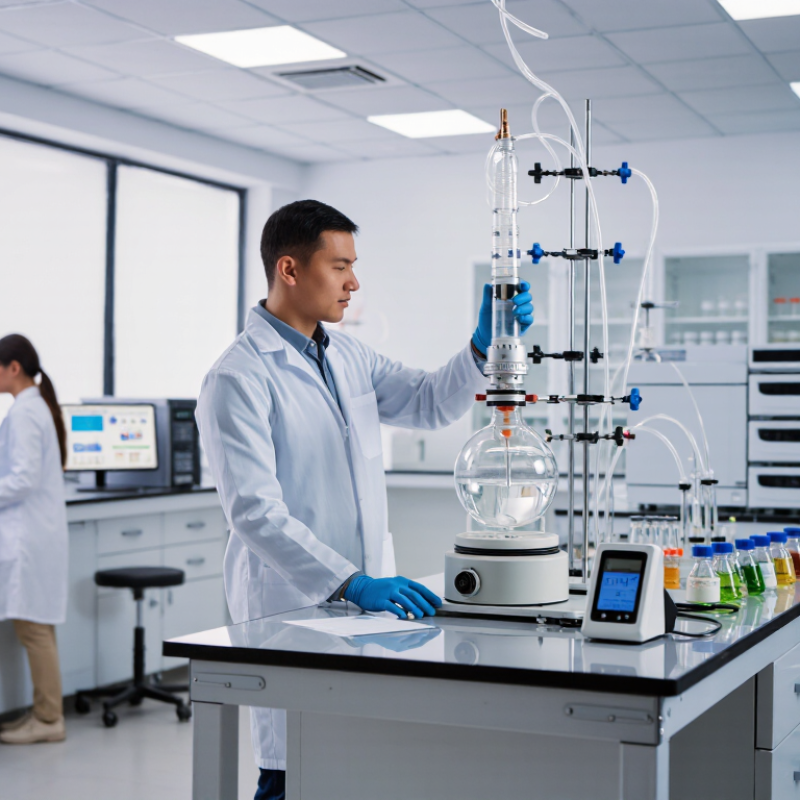
China’s catalyst testing sector is becoming an important partner for global chemical, energy, and environmental technology buyers. Testing laboratories in China now support catalyst screening, activity measurement, stability studies, regeneration checks, and pilot-scale validation. These services help buyers compare performance before committing to expensive commercial production.

The International Energy Agency’s Global Hydrogen Review 2024 reports that global low-emissions hydrogen projects continue expanding, although most announced capacity remains under development. This growth increases demand for reliable catalysts and independent performance verification. The International Renewable Energy Agency also identifies electrolyzers, ammonia synthesis, and fuel-cell technologies as important areas for future clean-energy investment. Catalyst testing provides the evidence behind these decisions.

Professor Bert Weckhuysen has described catalysis as “the heart of chemistry and the backbone of the chemical industry.” His observation explains why testing must examine more than initial activity. A catalyst may perform well for ten hours, then lose selectivity through coking, poisoning, sintering, or mechanical damage. Small details matter: reactor temperature, gas flow, particle size, pressure, moisture, and sampling intervals can change the result.

For global buyers, credible Chinese laboratories should provide traceable methods, calibrated instruments, raw data, uncertainty analysis, and clear reporting. ISO/IEC 17025 accreditation is a useful quality indicator, though accreditation alone cannot replace technical judgment. No laboratory is flawless. Results still need careful review and, when possible, confirmation through an independent facility.

This guide examines China’s best catalyst testing services for global buyers, focusing on technical capability, communication, confidentiality, turnaround time, and evidence-based reliability. Truthfully, the lowest quotation is rarely the safest choice.

China Best Catalyst Testing Services for Global Buyers

Catalyst Testing Scope: Activity, Selectivity, Stability, and Surface Area (m²/g)

China Best Catalyst Testing Services for Global Buyers

Catalyst Testing Scope: Activity, Selectivity, Stability, and Surface Area (m²/g)

Global buyers need more than a single conversion figure. The International Energy Agency’s Global Hydrogen Review 2024 reports nearly 100 million tonnes of annual hydrogen demand. Most demand remains linked to refining and ammonia production. Reliable catalyst testing therefore supports real process decisions, not only laboratory comparisons.

Activity testing measures conversion under controlled temperature, pressure, feed ratio, and space velocity. Selectivity tracks the desired product beside by-products. Carbon balances should close within a stated tolerance. Small errors matter. Stability requires time-on-stream testing, repeated regeneration, and post-test analysis. A catalyst that performs well for two hours may fail after several hundred hours.

Surface area is commonly reported in m²/g through nitrogen adsorption and BET analysis. ISO 9277 and ASTM D3663 provide recognized guidance for this measurement. Higher surface area can improve dispersion, but it does not guarantee higher activity. Pore blockage, weak active sites, and mass-transfer limits may tell another story. A 2024 catalyst-market assessment also identifies durability and efficiency as major purchasing factors, yet market projections cannot replace batch-level evidence. Testing reports should include raw data, calibration records, uncertainty, sample history, and clear calculation methods. In practice, laboratories sometimes overstate precision. That deserves review.

China Laboratory Standards: ISO 9277 BET, XRD, ICP-OES, and ASTM Methods

China’s catalyst testing capacity increasingly supports global buyers who need comparable, traceable results. The International Energy Agency reported over 1.4 GW of installed electrolyzer capacity worldwide in 2023. China represented more than half of that capacity, increasing demand for reliable catalyst evaluation.

ISO 9277 BET testing measures specific surface area through nitrogen adsorption. Technicians should record degassing temperature, time, sample mass, and isotherm quality. Small preparation differences can shift reported surface area. That detail matters. XRD identifies crystalline phases, structural changes, and unwanted compounds after calcination or reaction. However, XRD may miss poorly crystalline phases. This limitation deserves honest reporting.

ICP-OES quantifies elemental composition after controlled digestion. It can verify metal loading, impurities, and batch consistency. Certified reference materials and calibration checks strengthen confidence. ASTM methods can add consistent procedures for sampling, moisture, particle size, and chemical analysis. The International Organization for Standardization reported more than 1.5 million ISO 9001 certificates worldwide in its 2022 survey, showing the value of documented quality systems. Yet certification alone cannot guarantee useful catalyst data. Experienced laboratories should connect BET, XRD, and ICP-OES findings with reaction conditions, uncertainty, and raw instrument files. One overlooked issue is comparability. Different laboratories may use identical standards but different pretreatment details. Global buyers should request method versions, detection limits, repeatability data, and corrective-action records before accepting a report.

Performance Data Buyers Need: Conversion (%), Yield (%), and Deactivation Rate

China Best Catalyst Testing Services for Global Buyers

Global buyers need more than a fresh-catalyst activity number. Conversion shows how much feedstock reacts, while yield shows the desired product obtained. These figures are not interchangeable. A catalyst may deliver 92% conversion but only 78% target-product yield when side reactions increase. The IEA Global Hydrogen Review 2024 reports global hydrogen demand at nearly 100 million tonnes in 2023. Such scale makes reliable catalyst data commercially important, not merely academic.

A professional test should report temperature, pressure, feed ratio, space velocity, and time on stream. Gas chromatography, liquid analysis, and carbon-balance checks improve confidence. Conversion and yield should be calculated from stable sampling periods, not one attractive data point. Deactivation rate also needs a clear basis. A practical method records activity loss per 1,000 operating hours, with regeneration steps disclosed. The U.S. Department of Energy’s Fuel Cell Technologies Office emphasizes durability and long operating life in its 2024 program planning. Buyers should therefore request both initial performance and aging curves.

Small details can change the result. A blocked filter, uneven temperature, or incomplete mass balance may inflate apparent yield. I would question any report without raw chromatograms or repeat tests. Perfect data rarely exists. However, transparent uncertainty is more useful than polished claims. Independent laboratories should compare fresh and aged samples under identical conditions, then explain the differences in conversion, yield, and deactivation rate.

Quality Assurance in China: ISO/IEC 17025, Calibration, Replicates, and Uncertainty

China’s catalyst testing services increasingly serve global buyers in hydrogen, ammonia, and refining applications. That demand is measurable. The International Energy Agency’s Global Hydrogen Review 2024 reports nearly 97 million tonnes of global hydrogen demand in 2023. Reliable catalyst data therefore requires more than a single activity result.

An ISO/IEC 17025 laboratory should document trained personnel, validated methods, equipment control, and impartial reporting. Calibration records must connect balances, gas controllers, thermocouples, and analytical instruments to recognized standards. Small temperature errors can change conversion results. Replicate tests reveal repeatability, especially when catalyst particles vary in size or moisture. A credible report should show the mean, standard deviation, sample count, and expanded uncertainty. The uncertainty statement should explain coverage, commonly using a coverage factor of k=2, as described in NIST Technical Note 1297.

Numbers need context. The International Renewable Energy Agency’s Green Hydrogen Cost Reduction report identifies electrolyzer performance and durability as major cost drivers. Catalyst screening must therefore record operating time, pressure, feed composition, and deactivation behavior. A polished certificate can still hide weak sampling. No laboratory is flawless. Buyers should ask whether failed replicates were investigated or quietly excluded. That question may feel uncomfortable, but it often separates traceable evidence from attractive marketing. Calibration dates, raw chromatograms, blank results, and corrective-action records deserve equal attention.

Global Buyer Evaluation: Reports, Turnaround Time, Sample Rules, and Compliance

China Best Catalyst Testing Services for Global Buyers

Global Buyer Evaluation: Reports, Turnaround Time, Sample Rules, and Compliance

Reliable catalyst testing begins with a clear, traceable report. Buyers should request the test method, instrument details, calibration status, detection limits, and measurement uncertainty. Raw data or chromatograms can support technical review. A qualified laboratory should explain deviations instead of hiding them. Reports should identify the sample code, receipt date, analyst, and approval date.

Turnaround time depends on sample condition, test complexity, and laboratory capacity. Routine composition tests may take five to ten business days. Performance studies often require longer schedules and controlled operating periods. Ask whether the quoted time includes data review and report approval. A fast report is not always a useful report. Delays should be communicated before shipment.

Sample rules deserve equal attention. Confirm the required mass, container type, labeling, preservation method, and safety documents. Send representative samples, not only the cleanest particles. Include batch information and previous treatment history when available. Laboratories may reject leaking, unlabeled, or contaminated packages. Compliance checks should cover transport restrictions, import documents, waste handling, and applicable testing standards. ISO/IEC 17025 accreditation can strengthen confidence, but buyers should verify the exact scope. One practical weakness remains: many evaluations compare prices before comparing methods, uncertainty, and sample preparation. That choice can make two apparently similar reports impossible to compare fairly.

China Best Catalyst Testing Services for Global Buyers - Global Buyer Evaluation: Reports, Turnaround Time, Sample Rules, and Compliance

Service Area Typical Buyer Requirement Common Test Outputs Typical Turnaround Time* Indicative Sample Rules* Report Format Compliance and Quality Evidence to Request Global Buyer Evaluation Point
Physical and Chemical Characterization Confirm composition, texture, surface properties, and batch consistency before performance testing. Elemental composition, moisture, ash, bulk density, particle-size distribution, surface area, pore volume, pore-size distribution, and morphology. 5–15 business days, depending on the number of techniques and whether method development is required. Approximately 10–100 g per routine technique; larger quantities may be required for repeat testing or destructive analysis. PDF report with sample identification, method, instrument details, raw or processed results, uncertainty where applicable, and reviewer approval. Documented calibration, traceable reference materials, controlled test methods, equipment maintenance records, and ISO/IEC 17025 accreditation where applicable. Check whether the laboratory reports detection limits, measurement units, replicate results, and deviations from the agreed method.
Catalytic Activity Testing Compare conversion, selectivity, yield, and productivity under defined operating conditions. Reactant conversion, product selectivity, product yield, space-time yield, reaction rate, carbon balance, and pressure drop where relevant. 10–30 business days for an established method; longer for custom reactor configuration or multi-condition testing. Commonly 10–50 g for fixed-bed screening; the required amount depends on catalyst loading, particle size, regeneration cycles, and test duration. A test report should include feed composition, flow rate, temperature, pressure, catalyst mass, pretreatment, sampling frequency, calculations, and mass-balance results. Validated analytical methods, calibrated flow and pressure controls, documented reactor-temperature uniformity, and defined acceptance criteria. Confirm that results are normalized consistently and that conversion and selectivity calculations are defined rather than presented as unexplained percentages.
Catalyst Life and Stability Assess deactivation, regeneration performance, and stability during extended operation. Activity versus time-on-stream, deactivation rate, regeneration recovery, coke or deposit analysis, and post-test characterization. 3–12 weeks; the duration is driven mainly by the planned operating period and number of cycles. Often 25–200 g, with additional material needed for long-duration tests, regeneration, and post-test analysis. Time-series data, operating log, interruption record, regeneration protocol, final performance comparison, and sample disposition statement. Controlled data logging, documented deviation handling, predefined test-end criteria, and secure retention of raw data. Request the complete time-on-stream profile; a single beginning-and-end result is not sufficient to demonstrate stability.
Temperature-Programmed and Chemisorption Analysis Measure acidity, basicity, reducibility, oxidation behavior, dispersion, or active-site-related properties. Desorption or reduction profiles, peak temperatures, hydrogen or gas uptake, metal dispersion estimates, and active-site distribution. 5–15 business days for established methods. Usually 0.5–5 g per analysis, subject to instrument sensitivity, pretreatment, and repeatability requirements. Report with pretreatment conditions, carrier gas, ramp rate, calibration information, baseline treatment, chromatograms or profiles, and calculation method. Instrument calibration records, reference-material checks, method repeatability data, and clear disclosure of assumptions used for peak assignment. Verify that peak deconvolution and active-site assignments are supported by the stated method and not presented as direct proof without qualification.
Thermal Analysis Determine thermal stability, decomposition behavior, oxidation or reduction events, and mass changes. Mass loss, derivative mass-loss peaks, heat-flow transitions, oxidation temperature, decomposition temperature, and residual mass. 5–12 business days. Approximately 5–50 mg per run; additional material may be needed for repeat runs or complementary analysis. Thermogram, test atmosphere, gas flow, heating rate, crucible type, sample mass, temperature range, and interpretation notes. Temperature calibration, balance verification, controlled atmosphere, and documented handling of moisture-sensitive samples. Compare results only when heating rate, atmosphere, sample mass, and pretreatment are equivalent.
Structural and Phase Analysis Identify crystalline phases, structural changes, oxidation states, and surface or bulk morphology. Phase identification, crystallinity, lattice information, oxidation-state indicators, elemental maps, particle morphology, and agglomeration observations. 7–20 business days, depending on sample preparation and data interpretation. Typically 0.1–10 g for diffraction or spectroscopy; microscopy may require only milligrams, but preparation requirements differ. Annotated spectra or images, measurement parameters, phase database or reference basis, sample-preparation description, and limitations. Instrument performance checks, image or spectrum traceability, controlled sample preparation, and qualified technical review. Ask whether results are qualitative or quantitative and whether amorphous phases or detection-limit limitations affect interpretation.
Poisoning, Contamination, and Regeneration Studies Evaluate tolerance to sulfur, chlorine, metals, water, carbon deposits, or other process contaminants. Performance loss, contaminant uptake, recovery after treatment, irreversible deactivation, and post-test composition. 2–8 weeks, depending on exposure time and number of regeneration steps. Usually 25–150 g, plus sufficient contaminant or feed material for controlled exposure testing. Exposure conditions, contaminant concentration, duration, regeneration method, before-and-after performance, and material balance. Chemical handling procedures, hazard assessment, chain-of-custody records, waste-management controls, and documented safety approvals. Require actual exposure concentrations and gas or liquid composition; “poison-resistant” conclusions should be tied to measured conditions.
Custom Reactor and Process Simulation Replicate a buyer-defined process window, including feed composition, pressure, temperature, residence time, and cycling. Process performance, heat or mass-transfer observations, scale-relevant operating data, product analysis, and recommended operating window. 4–12 weeks after the scope, method, and safety review are approved. Commonly 50 g to several kilograms, depending on reactor scale, catalyst geometry, test duration, and repeat requirements. Technical report with test protocol, risk assessment, equipment schematic, raw data summary, deviations, calculations, and conclusions limited to tested conditions. Documented process-safety review, pressure-equipment controls, emergency procedures, calibration records, and change-control documentation. Confirm that the test system is representative of the intended process and that scale-up limitations are explicitly stated.
Report and Data Package Review Obtain a decision-ready package suitable for technical approval, supplier comparison, and internal quality records. Executive summary, complete methodology, validated results, uncertainty or precision information, raw-data references, deviations, and conclusions. 2–7 business days after the final test data are available; technical review can add time. No additional sample unless re-testing, retained-sample verification, or independent confirmation is requested. Searchable PDF plus agreed electronic data files, tables, chromatograms, spectra, images, and calculation worksheets where permitted. Version control, reviewer and approver signatures, data-integrity controls, secure file transfer, confidentiality terms, and retention period. Check that the final report can be traced from sample receipt through testing, calculation, review, and approval.
International Shipment and Sample Acceptance Deliver samples legally and safely while preserving identity, condition, and test suitability. Sample receipt confirmation, condition record, chain of custody, storage status, rejection reason if applicable, and disposal or return record. Receipt confirmation commonly within 1–3 business days after delivery; customs clearance time varies by country and classification. Use sealed, labeled, leak-resistant packaging with sample name, batch or lot code, net mass, hazard information, and requested storage conditions. Sample-receipt form linked to the final report through a unique identification number. Safety Data Sheet where applicable, dangerous-goods classification, import documents, packaging instructions, and written acceptance criteria. Obtain written confirmation of sample quantity, prohibited substances, customs documents, storage conditions, and responsibility for return shipping before dispatch.
Confidentiality and Intellectual Property Protect formulation details, process conditions, performance data, and ownership of test results. Executed confidentiality agreement, defined data ownership, authorized disclosure list, and restrictions on photographs or publication. Usually completed before sample shipment; legal review may take 2–10 business days. Provide only the minimum sample and process information needed for the approved scope, while retaining a buyer-side sample record. Controlled report distribution with revision history and access restrictions. Signed confidentiality terms, access-control policy, data-retention policy, and documented sample-disposal procedure. Ensure ownership of raw data, derived data, photographs, unused samples, and any method improvements is clearly stated in writing.

*Turnaround times and sample quantities are typical planning ranges for established laboratory methods. Actual requirements depend on catalyst type, hazard classification, test conditions, method validation, sample preparation, repeat testing, customs clearance, and laboratory workload. Buyers should obtain a written quotation and sample-acceptance instruction before shipment.