
Which Is the Best Chemistry Catalyst from China?
Which Is the Best Chemistry Catalyst from China? The question sounds simple, but industrial evidence suggests a more careful answer. A chemistry catalyst must deliver stable activity, controlled selectivity, low energy demand, and predictable service life. Price alone cannot prove quality. A cheaper catalyst may create more waste, shorter production cycles, or difficult regeneration.
Recent industry reports provide useful context. The International Energy Agency’s Global Hydrogen Review 2024 identifies China as a major center for electrolyzer manufacturing, with approximately 60% of global manufacturing capacity. This strengthens China’s position in catalyst research for hydrogen, ammonia, and related chemical processes. The China Petroleum and Chemical Industry Federation also continues to emphasize efficiency, emissions reduction, and domestic innovation across the chemical sector. These trends matter because modern catalysts increasingly support cleaner production, not merely higher output.
Still, “best” depends on the application. A nickel-based catalyst may suit alkaline hydrogen production, while a zeolite catalyst can support selective hydrocarbon conversion. Precious-metal systems may offer outstanding activity, yet their cost and supply risks require careful calculation. The IEA’s Global Critical Minerals Outlook 2024 reminds buyers that material availability can influence long-term project security. Laboratory performance is only one part of the decision. Factory trials, impurity tolerance, regeneration behavior, and technical support deserve equal attention.
The answer is not obvious. Reliable selection requires verified test data, independent quality certification, and references from comparable plants. Some supplier claims remain difficult to compare. That weakness deserves scrutiny. This guide evaluates Chinese chemistry catalyst suppliers through measurable performance, engineering experience, documentation quality, and lifecycle value. The goal is practical judgment, not a convenient ranking.
What Makes a Chemistry Catalyst the Best Choice?
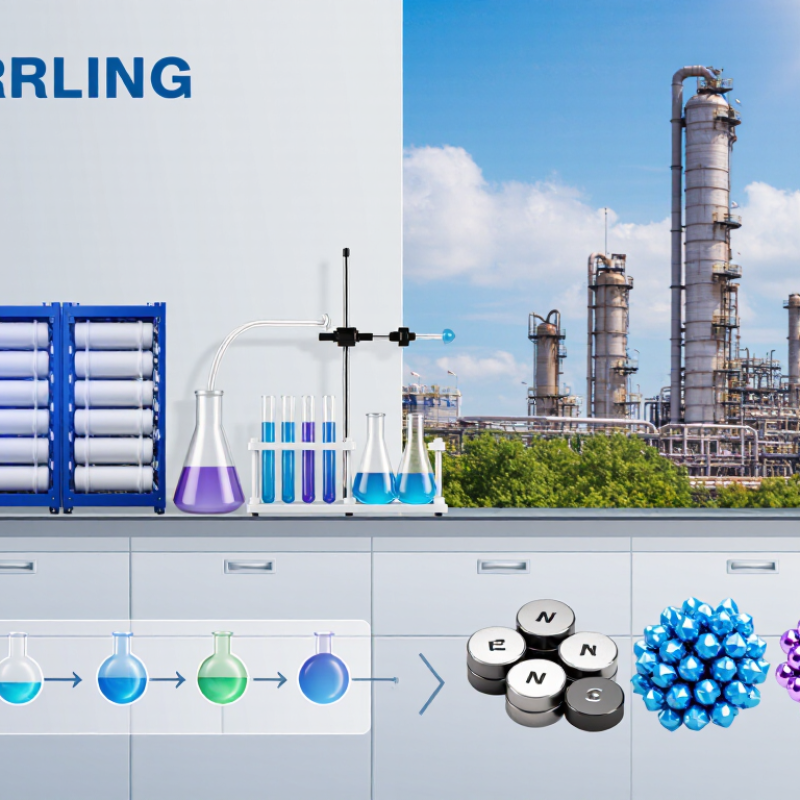
Choosing the best chemistry catalyst from China starts with performance, not country of origin. The right choice depends on reaction temperature, pressure, solvent, feedstock, and required product purity. A catalyst should offer high activity under practical conditions. Selectivity matters just as much. A fast reaction is not useful if it creates difficult-to-remove by-products. In laboratory work, I compare conversion, selectivity, cycle life, and regeneration results under identical conditions. Small details matter. A one-degree temperature change can distort conclusions.
Reliable suppliers provide technical data, representative samples, certificates of analysis, safety documentation, and clear batch traceability. For Chinese production, I review factory quality systems, export documents, and audit records. Ask for pilot-scale results, not only ideal laboratory curves. Particle size, pore structure, active-material loading, moisture, and mechanical strength can affect plant performance. Consistent batches are often more valuable than slightly higher initial activity. I also check lead times, packaging, storage requirements, and technical support. No catalyst is perfect. A material may show excellent selectivity but lose strength after repeated regeneration. Another may be affordable yet require tighter temperature control. That trade-off deserves honest testing. The best catalyst fits the process, meets safety requirements, and performs consistently in independent verification.
Which Is the Best Chemistry Catalyst from China? - What Makes a Chemistry Catalyst the Best Choice?
| Catalyst Family | Typical Chemical Application | Main Active Phase | Typical Operating Temperature | Typical Pressure | Key Advantages | Main Limitations | Overall Selection Score* |
|---|---|---|---|---|---|---|---|
| Nickel-Based Hydrogenation Catalyst | Hydrogenation of oils, nitriles, nitro compounds, aromatics and unsaturated intermediates | Metallic nickel supported on alumina, silica or porous carbon | 80–250°C | 1–30 bar hydrogen | Cost-effective, widely available, good activity and suitable for large-scale processing | Sensitive to sulfur and some poisons; may require controlled reduction and safe handling | 9.0/10 |
| Palladium-on-Carbon Catalyst | Selective hydrogenation, dehalogenation and removal of benzyl-type protecting groups | Palladium nanoparticles dispersed on activated carbon | 25–150°C | 1–30 bar hydrogen | High activity at relatively mild conditions and excellent performance in fine-chemical synthesis | Higher cost; palladium recovery and metal contamination must be managed | 8.7/10 |
| Platinum-on-Carbon Catalyst | Hydrogenation of carbonyl compounds, olefins, aromatics and specialty intermediates | Platinum nanoparticles on activated carbon or another high-surface-area support | 20–150°C | 1–30 bar hydrogen | Very high intrinsic activity, good low-temperature performance and broad substrate compatibility | Precious-metal cost; can promote over-hydrogenation and is vulnerable to poisoning | 8.5/10 |
| Copper–Zinc Oxide–Alumina Catalyst | Methanol synthesis from synthesis gas or carbon dioxide and hydrogen; water-gas shift reactions | Copper and zinc oxide with alumina structural promoter | 220–280°C | 50–100 bar | Strong industrial relevance, comparatively low raw-material cost and good productivity when properly activated | Sensitive to overheating, sulfur and water-related deactivation; requires careful temperature control | 8.8/10 |
| Zeolite-Based Acid Catalyst | Fluid catalytic cracking, hydrocarbon isomerization, alkylation and selective aromatization | Protonic or metal-modified crystalline aluminosilicate micropores | 350–550°C | Approximately 1–30 bar | Shape selectivity, strong acidity, high thermal stability and suitability for continuous processing | Coke formation and pore blockage may reduce activity; regeneration is often necessary | 9.1/10 |
| Iron-Based Ammonia Synthesis Catalyst | Industrial ammonia production from nitrogen and hydrogen | Promoted iron derived from iron oxide, commonly with potassium, calcium and alumina promoters | 400–500°C | 100–300 bar | Mature technology, robust industrial operation and relatively low catalyst-material cost | Requires high pressure and temperature; activity depends strongly on gas purity and activation quality | 8.9/10 |
| Titanium Dioxide Photocatalyst | Photocatalytic oxidation of organic pollutants, self-cleaning surfaces and advanced water treatment | Anatase-rich or mixed-phase titanium dioxide | Ambient to 60°C | Usually atmospheric pressure | Chemically stable, relatively low toxicity, reusable and effective under ultraviolet irradiation | Limited visible-light response; efficiency depends on light intensity, reactor design and mass transfer | 7.9/10 |
| Cobalt–Molybdenum Sulfide Catalyst | Hydrodesulfurization and hydrotreating of petroleum fractions | Cobalt-promoted molybdenum sulfide on porous alumina | 300–400°C | 30–130 bar hydrogen | Effective sulfur removal, established refinery operation and good resistance after sulfiding | Requires sulfur-containing activation; high hydrogen demand and possible deactivation by metals or coke | 8.6/10 |
*The overall selection score is an indicative comparison based on activity, selectivity potential, operating practicality, cost, durability, scalability and environmental considerations. Actual performance depends on catalyst formulation, reactor design, feedstock purity, activation procedure and process conditions.
Related Posts
-
China Best Catalysis Research Equipment Suppliers for Global Buyers
-
What is a Process Catalyst and How Does It Work?
-
How to Optimize Catalytic Reactions for Better Efficiency?
-
Top 5 Catalyst Services You Need for Global Procurement?
-
Best Catalytic Reactions Techniques for Efficient Manufacturing?
-
How to Choose the Right Catalysts and Technologies?