Best Catalytic Reactions Techniques for Efficient Manufacturing?
Catalytic reactions play a crucial role in modern manufacturing processes. As industries strive for efficiency, understanding these reactions becomes essential. Dr. Emily Carter, a leading expert in catalysis, emphasizes, "The right catalytic reaction can transform the manufacturing landscape." Her insight underscores the significance of optimizing these reactions for better results.
In many cases, the effectiveness of catalytic reactions hinges on several variables. Temperature, pressure, and catalyst choice can dramatically influence outcomes. Manufacturers often grapple with the challenge of selecting the best conditions for their specific needs. This trial-and-error approach can be time-consuming and costly. Despite advancements, room for improvement persists.
As we look ahead, the industry faces the task of refining current techniques. Striking a balance between efficiency and sustainability remains elusive. Catalytic reactions hold promise, but dependence on traditional methods could hinder progress. Embracing innovation in this field is vital for achieving long-term success in manufacturing.

Types of Catalytic Reactions and Their Applications in Manufacturing
Catalytic reactions play a crucial role in modern manufacturing, improving efficiency and sustainability. There are several types of catalytic reactions, including homogeneous and heterogeneous catalysis.
Homogeneous catalysis involves reactants in a single phase, often liquid. This method can be highly efficient for liquid-phase reactions, such as esterification. On the other hand, heterogeneous catalysis occurs at the interface of two phases, typically solid and gas or liquid. This is widely used in processes like the Haber-Bosch process for ammonia synthesis, which contributes to about 1-2% of global energy use (International Energy Agency).
Understanding the various types of catalysts is essential for manufacturers. For instance, noble metals like platinum and palladium are highly effective but costly. More recently, researchers have explored alternative catalysts, such as metal oxides and zeolites, which show promise in reducing costs while maintaining efficiency. According to a report from the Catalysis Society, the use of such alternative catalysts can lower production costs by up to 30% in certain applications.
Sustainable practices are also becoming a focus. Green chemistry emphasizes the reduction of waste and energy usage. Using biocatalysts, for example, can significantly reduce the environmental footprint of chemical processes. This technique often leads to fewer hazardous by-products and lower energy requirements. Manufacturers aiming for a greener approach should consider integrating biocatalysts into their existing processes. They can yield significant benefits and contribute to responsible manufacturing practices.
Selection Criteria for Catalysts in Efficient Manufacturing Processes
The selection of catalysts is critical for efficient manufacturing processes. One of the main criteria is the catalyst's activity. Catalysts need to facilitate reactions at lower temperatures. This aids in energy savings. The ideal catalyst should also have a long lifespan. Frequent replacements can lead to increased costs and downtime.
Another important factor is selectivity. A good catalyst directs the reaction towards the desired product while minimizing by-products. This boosts yield and reduces waste. Material compatibility is also essential. Catalysts must endure operational conditions without degradation. This resilience contributes to overall reliability in the manufacturing process.
Finally, consider sustainability. In today's market, eco-friendly options are gaining attention. Catalysts derived from abundant resources can reduce environmental impact. However, the manufacturing community often grapples with trade-offs. Balancing performance with sustainability remains a challenge. As manufacturers evaluate catalysts, acknowledging these complexities is vital for future progress.
Optimization Techniques for Enhancing Catalytic Reaction Efficiency
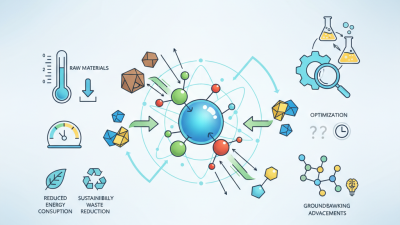
Catalytic reactions are essential in various manufacturing processes. Optimizing these reactions can lead to significant improvements in efficiency. Recent studies show that the use of advanced catalysts can enhance reaction rates by up to 30%. This increase not only reduces production costs but also minimizes waste. In the realm of green chemistry, this is crucial. Efficient catalysts can lower energy consumption and emissions, aligning with global sustainability goals.
One effective optimization technique is temperature management. Precise control of reaction temperatures can maximize catalyst activity. Research indicates that a mere one-degree increase can accelerate certain reactions by 5-10%. However, achieving optimal temperature requires careful monitoring and sometimes complex adjustments. There’s also a question of scalability; techniques that work in lab conditions may falter in commercial applications due to variations in scale.
Another optimization method involves catalyst composition. Tailoring the active sites of catalysts enhances their reactivity. A 2022 report indicated that using mixed metal oxides can improve selectivity by over 20%. Yet, developing these custom catalysts poses challenges. Variations in raw materials can affect consistency and performance. The quest for reliable, efficient catalytic processes continues, pushing the industry towards innovative solutions.
Advancements in Catalytic Reaction Technologies for Sustainable Production
The advancements in catalytic reaction technologies are transforming sustainable production. Catalysts improve reaction rates, reducing energy consumption. These innovations offer businesses pathways to produce with less waste and fewer resources.
Recent studies show that utilizing nanocatalysts can enhance efficiency. These materials can operate at lower temperatures and pressures. The scalability of these techniques is a key factor for manufacturers. They can achieve higher yields while minimizing environmental impacts. This balance is crucial for companies aiming for green practices.
For companies looking to adopt these technologies, maintaining a well-trained team is vital. Skilled professionals can effectively implement new catalytic methods. Testing different approaches can yield surprising results. Experimentation often uncovers unexpected efficiencies. Regular review of the processes ensures continuous improvement. This reflection can spark innovative ideas leading to sustainable success.
Best Catalytic Reactions Techniques for Efficient Manufacturing
This chart illustrates the efficiency levels of various catalytic reaction techniques in a manufacturing setting, highlighting the advancements made in catalyst technologies for sustainable production.
Case Studies of Successful Catalytic Reactions in Industrial Settings
Catalytic reactions play a crucial role in manufacturing processes. Many industries are harnessing the power of these reactions to boost efficiency and reduce waste. Take, for instance, the petrochemical sector. Utilizing catalytic cracking, companies convert heavy hydrocarbons into gasoline and diesel. This process enhances fuel yield and minimizes energy consumption. Understanding these successful case studies can provide vital insights for improving your operations.
Biocatalysis is another innovative approach that has gained traction. It uses natural catalysts, like enzymes, to facilitate chemical reactions. One notable case in pharmaceuticals showed that enzyme-catalyzed reactions reduced reaction times significantly while enhancing product selectivity. This method not only increased efficiency but also resulted in fewer byproducts, which is a major advantage in today's eco-conscious marketplace.
When considering catalytic techniques, think about scalability. Small-scale successes don't always translate to larger operations. It’s essential to analyze how conditions change, such as temperature and pressure. Often, a technique that works in a lab doesn’t yield the same results in full production. Always remain open to refining your processes. Continuous improvement is key to achieving optimal efficiency.
Best Catalytic Reactions Techniques for Efficient Manufacturing
| Catalytic Reaction |
Technique Used |
Industrial Application |
Efficiency Improvement |
Notes |
| Ammonia Synthesis |
Haber-Bosch Process |
Fertilizer Production |
Increased yield by 15% |
Utilizes high pressure and temperature for optimization. |
| Biodiesel Production |
Transesterification |
Renewable Energy Sources |
Yield improvement of 20% through optimized catalysts. |
Eco-friendly approach using waste oils. |
| Cracking of Hydrocarbons |
Fluid Catalytic Cracking (FCC) |
Petroleum Refining |
Increased gasoline yield by 10%. |
Maximizes production of lighter fractions. |
| Methanol Production |
SAP Process |
Chemical Intermediate |
Cost reduction by 12% through better catalyst. |
Versatile feedstock options. |
| Ethylene Oxide Production |
Silver Catalyst Process |
Chemical Manufacturing |
Yield increase of 8% with enhanced selectivity. |
Important in producing antifreeze and plastics. |