Catalysis research now sits at the intersection of cleaner production, energy security, and industrial efficiency. The International Energy Agency’s The Future of Petrochemicals report says petrochemicals could account for more than one-third of oil-demand growth through 2030, and nearly half by 2050. That outlook puts pressure on laboratories to test catalysts faster and measure results more reliably. Small details matter: a stable mass-flow controller, a well-sealed reactor, and precise temperature control can shape an entire experiment. A catalogue alone cannot show that.
For global buyers, China’s catalysis research equipment suppliers offer options ranging from fixed-bed reactors and high-pressure autoclaves to microreactors and gas-analysis systems. The right choice depends on the work: reaction conditions, sample scale, analytical needs, and available service support. Ask for calibration records, materials specifications, safety documentation, and examples of comparable installations. Check whether replacement parts and technical assistance are accessible after delivery. These checks take time. They are worth it.
This guide compares supplier capabilities, equipment types, and practical purchasing considerations. It also recognizes a common limitation: published specifications do not always reveal day-to-day usability. A reactor may meet its stated pressure rating yet prove awkward to clean or modify. Buyers should verify critical details directly, request demonstrations where possible, and treat unusually broad performance claims with care. The IEA report provides the industrial context; supplier evaluation still depends on documented evidence and the needs of each laboratory.
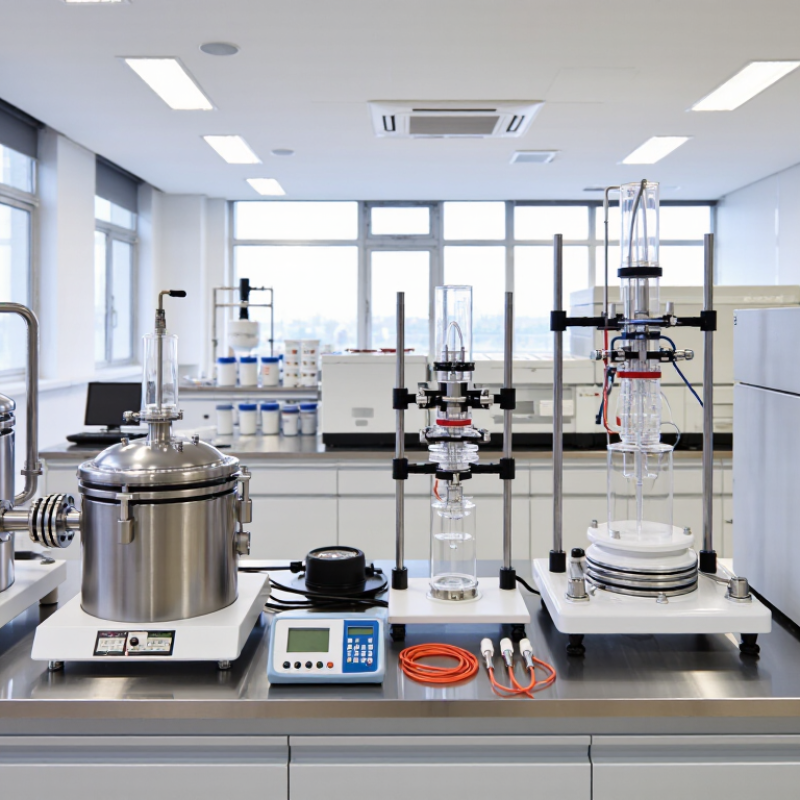
Catalysis research equipment covers the tools used to prepare catalysts, test their performance, and examine changes in their structure. A typical bench setup may include a reactor, gas or liquid feed controls, temperature sensors, and an exhaust treatment unit. Small details matter: a blocked line or uneven heating can distort a conversion measurement. Reliable results depend on calibrated sensors, consistent procedures, and careful records.
These systems support research in emissions control, chemical manufacturing, energy conversion, and materials development. Researchers may compare catalyst activity, selectivity, and stability under controlled conditions. For example, a fixed-bed reactor can reveal how a catalyst performs as gases pass through a packed tube. Product analysis may use gas chromatography or mass spectrometry, depending on the compounds being measured. No instrument removes the need to question the data.
Main categories include catalyst synthesis equipment, reaction testing systems, and characterization instruments. Synthesis tools may provide controlled mixing, drying, or heat treatment. Reactor systems range from batch vessels to continuous-flow and fixed-bed designs. Characterization tools can assess surface area, crystal structure, or chemical composition. The best configuration depends on the research question, sample size, and operating conditions. A tidy equipment list can hide practical trade-offs; for instance, high throughput may reduce the time available for close sample checks. That deserves attention.
Typical temperature ranges for selected catalytic processes. These indicative ranges help illustrate the operating conditions that research equipment may need to support; actual conditions vary by catalyst, feedstock, and process design.
Evaluating Chinese catalysis equipment suppliers starts with the intended process, not the catalog. Define reactor type, temperature range, pressure, sample size, and required controls. Then compare these needs with the supplier’s technical drawings and specifications. For a fixed-bed reactor, check thermocouple placement, gas-flow control, sealing details, and the materials exposed to feed gases. Small design differences can affect repeatability. Ask how instruments are calibrated and whether test records are available.
A capable supplier should explain both the equipment’s limits and its suitable operating conditions. Check documentation for clear units, tolerances, and maintenance intervals. Discuss customization in writing, including delivery scope and acceptance criteria. A polished presentation is not proof of reliable performance. Nor is one successful demo enough. It can be tempting to focus on price, but unclear service arrangements may cost time later. I would compare evidence carefully, while leaving room for practical issues that only appear during installation.
For global buyers, supplier capability means more than offering a reactor on a product list. A dependable manufacturer should explain how its team handles design, fabrication, instrument integration, and commissioning. Ask for drawings, material specifications, operating limits, and clear explanations of temperature and pressure controls. A sample factory acceptance test can show how sensors, alarms, and data logging are checked before dispatch. Look closely at weld finishes, fittings, and cable labels. Small details matter. Good documentation matters, too.
Manufacturing standards help buyers compare suppliers, but certificates need context. Check whether a quality management certificate is current and covers the actual production site and equipment category. Request traceable inspection records, calibration certificates, and test reports tied to the unit’s serial number. For custom systems, agree on acceptance criteria before production begins, including leak checks, control accuracy, and delivery of manuals. Video inspections can help, though they cannot replace every on-site check. No checklist catches everything. Even experienced teams can overlook a mismatch between a laboratory’s workflow and a supplier’s standard configuration. Share real operating conditions early, then review the proposed design with technical staff before approving it.
Catalysis laboratories need equipment that matches their questions, sample sizes, and operating conditions. Fixed-bed reactors are common for continuous gas-phase studies. Their packed tubes make catalyst loading and temperature control relatively straightforward. Researchers can monitor inlet and outlet gases while adjusting flow rates. However, hot spots may develop inside the bed, so temperature sensors and careful calibration matter.
Batch reactors suit screening work with small quantities of liquid or solid catalysts. They allow researchers to vary pressure, temperature, and mixing within one vessel. This flexibility is useful when reaction conditions remain uncertain. The trade-off is that sampling and heat transfer can complicate comparisons between runs. Flow reactors offer steady operation and clearer residence-time control, but pumps, fittings, and feed lines require more attention. Small details matter.
Analytical equipment completes the picture. Gas chromatographs, mass spectrometers, and surface-characterization tools answer different questions; no single instrument covers every stage. Global buyers should compare temperature and pressure ranges, compatible gases, data formats, and local service availability. Ask how calibration, spare parts, and technical training are handled after installation. A lower purchase price may not reflect the time needed for maintenance or method transfer. One easy-to-miss issue is laboratory space: a reactor system may fit on paper but leave too little room for safe access, gas lines, or future upgrades. Choosing is rarely tidy.
| Equipment Type | Primary Research Use | Typical Setup or Sample Scale | Main Outputs | Key Advantages | Important Selection Considerations |
|---|---|---|---|---|---|
| High-Pressure Batch Reactor | Evaluating gas–liquid, liquid–solid, and gas–liquid–solid catalytic reactions in a sealed vessel. | Vessel capacities commonly range from milliliters to liters, depending on the configuration. Used with catalyst powders, pellets, or supported catalysts. | Reaction conversion, product composition, pressure and temperature history, and reaction-time data. | Flexible for screening reaction conditions and handling pressurized reactions; stirring supports contact between phases. | Check the rated pressure and temperature, wetted materials, seal compatibility, agitation, safety features, and whether sampling is possible during operation. |
| Fixed-Bed Flow Reactor | Testing catalysts under continuous-flow conditions, including activity, selectivity, and stability studies. | A catalyst bed is held in a reactor tube; laboratory systems typically use small catalyst quantities. Feed may be gas, liquid, or a combination. | Conversion, selectivity, yield, space-time behavior, temperature profile, and pressure-drop information when appropriately measured. | Supports steady-state testing and continuous operation; operating conditions can be adjusted systematically. | Assess feed-delivery accuracy, reactor and tube materials, bed-temperature measurement, pressure control, vaporization options, and provisions for safe exhaust handling. |
| Microreactor or Microchannel System | Studying fast reactions, heat- and mass-transfer effects, and process intensification with small reaction volumes. | Uses narrow channels or small-volume flow paths; catalyst may be coated onto channels or introduced as a packed material, depending on the design. | Conversion and selectivity under controlled flow, along with temperature and pressure data where instrumented. | Small hold-up volume and efficient heat transfer can help control temperature-sensitive reactions and reduce material use. | Confirm channel dimensions, catalyst-loading approach, allowable particle size, fouling tolerance, pressure drop, and compatibility with the intended feed and products. |
| Temperature-Programmed Reaction Analyzer | Characterizing catalyst properties using procedures such as temperature-programmed reduction, oxidation, and desorption. | Typically analyzes a small catalyst sample while a controlled gas stream and programmed temperature are applied. | Signal profiles versus temperature or time; results can indicate features such as reducibility, adsorption behavior, or surface acidity, depending on the method and detector. | Provides comparative characterization of catalyst samples and helps investigate pretreatment and surface-related behavior. | Review gas-control accuracy, temperature range, detector type, calibration, sample pretreatment options, and the methods supported. Profiles require careful interpretation and do not by themselves establish catalytic performance. |
| Chemisorption Analyzer | Estimating accessible active-metal surface area and dispersion using gas adsorption or pulse-chemisorption methods. | Uses a pretreated solid sample exposed to a probe gas; sample mass and pretreatment depend on the material and method. | Adsorption uptake and calculated quantities such as metal dispersion or surface area, subject to stated model assumptions. | Useful for comparing supported metal catalysts and tracking changes after preparation or treatment. | Check available probe gases, pretreatment capability, pressure and temperature control, detection limits, and whether the assumed adsorption stoichiometry is appropriate for the catalyst. |
| Gas Adsorption Surface-Area and Porosity Analyzer | Measuring gas-accessible surface area and pore characteristics of catalyst supports and porous materials. | Analyzes a degassed solid sample using adsorption and desorption measurements; suitable sample quantity depends on surface area and instrument configuration. | Surface area and, with suitable methods and data analysis, pore-volume and pore-size information. | Provides important textural information for comparing supports, catalysts, and synthesis batches. | Evaluate degassing temperature and vacuum control, available adsorptive gases, analysis range, sample-tube options, and reporting methods. These measurements describe texture, not catalytic activity directly. |
| Gas Chromatography System for Product Analysis | Separating and quantifying gas-phase or vaporized reaction products from batch and flow reactor experiments. | Configured with appropriate columns, sampling hardware, and detectors for the expected product mixture. | Chromatograms and quantitative composition data when calibrated with suitable standards and methods. | Enables product-distribution analysis and supports calculation of conversion, selectivity, and yield when paired with reliable sampling and feed data. | Match columns and detectors to target compounds; check sampling compatibility, calibration requirements, detection limits, data handling, and integration with the reactor system. |
Comparison note: Operating limits, sample capacities, accuracy, and available methods vary by configuration. Buyers should verify the instrument specification, applicable safety requirements, calibration approach, local service capability, and compatibility with their actual catalysts and reaction conditions before purchase.
For global buyers, purchasing catalytic research equipment from China involves more than comparing specifications. UNCTAD’s Review of Maritime Transport 2023 reports that over 80% of international trade by volume moves by sea. Shipping plans should therefore include secure crating, clear handling labels, and realistic customs schedules. Ask suppliers to confirm packing dimensions, export documents, and who coordinates delivery to the laboratory. Small details matter. A missed utility connection can delay commissioning even when the instrument arrives intact.
The World Bank’s Logistics Performance Index 2023 assessed 139 economies across six areas, including shipment tracking, logistics competence, and timeliness. Buyers can apply the same practical lens to supplier support: request named installation contacts, remote setup guidance, and a written service-response window. Before shipment, share site requirements for voltage, ventilation, gas connections, and bench space. During commissioning, record calibration results and operator training. Afterward, confirm spare-part availability and diagnostic procedures. These steps reduce avoidable downtime. Still, response targets on paper do not guarantee fast repairs; time-zone gaps and local technician coverage need checking. A short acceptance checklist, agreed by both teams, can expose those weak points before the equipment is unpacked.