Unsaturated polyester (UP) resins help make boat hulls, storage tanks, pipes, and molded components. Their cure depends on carefully matched initiators, accelerators, and other formulation components. Grand View Research estimated the global unsaturated polyester resin market at about $12.2 billion in 2023, with projected growth through 2030. That scale makes catalyst selection more than a laboratory detail. It affects gel time, peak exotherm, surface finish, and production consistency. A warm workshop and a cool production floor can produce noticeably different results.
Catalysis pioneer Wilhelm Ostwald described a catalyst as “a substance which alters the velocity of a chemical reaction without appearing in the final product.” His principle offers a useful starting point, though UP formulations involve more than one simple catalytic role. The phrase “UP catalyst” is also used loosely in product descriptions. Some materials accelerate curing; others initiate it or help control processing. That distinction matters when comparing the top 10 types. This guide examines common catalyst and cure-system categories, their practical strengths, and the conditions that limit them. It also considers handling, compatibility, and supplier guidance rather than treating one product as universally best. The categories are not always tidy. That is worth remembering. A ranking can clarify choices, but it cannot replace formulation data, controlled trials, or advice from a qualified resin specialist.
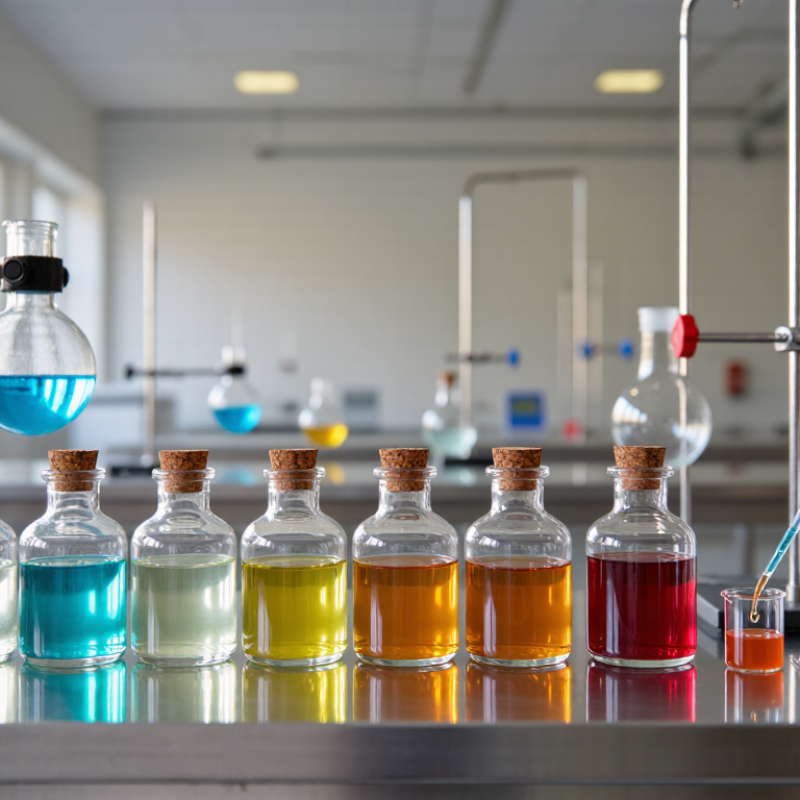
What Are the Top 10 Types of UP Catalysts?
What UP Catalysts Are and How They Support Resin Curing
Unsaturated polyester (UP) catalysts help resin turn from a liquid into a solid network. In practice, many are organic peroxides, more precisely called initiators. They generate reactive radicals that start the resin’s curing reaction. Promoters may be added to help control how quickly that reaction begins.
Common systems include methyl ethyl ketone peroxide or benzoyl peroxide, selected to suit the resin and process. The right choice affects gel time, heat development, and the finished part’s cure. Too-fast curing can trap heat in a thick casting; too-slow curing can leave a tacky surface. EuCIA’s 2022 market report estimated European composites production at about 2.6 million tonnes. That scale makes repeatable processing important, though the figure does not measure catalyst performance. Actual cure behavior still depends on resin formulation, temperature, part thickness, and accurate dosing.
Tips: Check the resin supplier’s technical data sheet, and record shop temperature and gel time for each batch. Avoid guessing. Never mix peroxide initiators directly with promoters; follow the product’s safety instructions and use suitable protective equipment. A small test panel can reveal problems before a larger part is poured.
In unsaturated polyester (UP) systems, “catalyst” is often a convenient but imprecise label. Many people use it for the peroxide that starts curing, though that material is technically an initiator. That distinction matters. A cup that stays liquid may need different troubleshooting than one that gels too quickly. UP resin hardens as reactive molecules link into a polymer network.
An initiator decomposes and creates radicals that begin this reaction. An accelerator, often called a promoter, helps the initiator produce radicals under specified conditions, especially at room temperature. It changes the cure rate; it does not replace the initiator. Temperature, batch size, resin formulation, and mixing quality all affect gel time. Small changes matter. A small test can reveal issues, but it cannot replace the product’s technical data. The terminology is imperfect, and even experienced users may use “catalyst” loosely.
Tips: Follow the resin maker’s specified amounts and measure carefully. Never combine concentrated initiator and accelerator directly. Mix each component into the resin as directed, and use suitable protective equipment. Record room temperature and gel time; those details make later troubleshooting more useful.
In unsaturated polyester (UP) resin, “catalyst” usually means a peroxide initiator that starts curing. The ten commonly discussed types are methyl ethyl ketone peroxide (MEKP), benzoyl peroxide, cyclohexanone peroxide, acetylacetone peroxide, methyl isobutyl ketone peroxide, cumene hydroperoxide, tert-butyl hydroperoxide, tert-butyl peroxybenzoate, dicumyl peroxide, and lauroyl peroxide. This is a practical list, not a universal ranking. Not interchangeable.
MEKP is widely used for room-temperature curing, often with a compatible accelerator. Benzoyl peroxide suits different cure systems, while tert-butyl peroxybenzoate and dicumyl peroxide are more associated with heat-driven processing. The resin formulation, part thickness, temperature, and desired working time all affect selection. A small cup of resin can heat and gel differently from a thick molded part.
ASTM D2471 provides a standard method for measuring gel time and peak exothermic temperature in reacting thermosetting resins. Those measurements help compare formulations; they do not prove that one initiator suits every shop or part. Follow the resin supplier’s technical data sheet, and verify cure behavior with controlled trials. Peroxides require careful handling and storage. One detail is easy to miss: changing the initiator can also change the time available for mixing and placing the resin.
In unsaturated polyester (UP) resin, “catalyst” commonly means a peroxide initiator. MEKP is widely used for room-temperature laminating, where it can support practical gel times with a compatible accelerator. BPO is more common in paste and repair systems, often paired with an amine accelerator. Cyclohexanone peroxide and methyl isobutyl ketone peroxide can offer different cure speeds, but results depend strongly on resin formulation and temperature. Small changes matter.
Cumene hydroperoxide and acetylacetone peroxide are options for systems needing adjusted cure behavior. Lauroyl peroxide is used in selected resin processes, while dicumyl peroxide is generally associated with heat-assisted curing. Tert-butyl peroxybenzoate and tert-butyl peroxy-2-ethylhexanoate are also used in heat-curing applications; their response depends on the molding cycle. These ten types are not interchangeable. A fast gel may help a thin hand lay-up, yet shorten working time and trap air in a thick section.
Compare more than nominal cure speed. Check peak exotherm, gel time, laminate thickness, surface finish, and the resin supplier’s compatibility guidance. A cup test can reveal practical differences, but it does not perfectly predict a large mold. That gap deserves attention. Follow the product safety data and handling instructions, since organic peroxide formulations vary.
“UP” is interpreted here as polyurethane. This is a practical comparison of ten established catalyst families, not a universal ranking: activity and selectivity depend on the catalyst structure, formulation, temperature, and processing conditions.
| No. | Catalyst type | Typical catalytic role | Relative performance | Common polyurethane applications | Key considerations |
|---|---|---|---|---|---|
| 1 | Tertiary amines | Promote the reaction of isocyanates with polyols and, depending on structure, the water–isocyanate blowing reaction. | Highly tunable; different structures can favor gelling, blowing, or a balance of both. | Flexible and rigid foams, molded foams, coatings, adhesives, and elastomers. | Some amines can contribute to odor or emissions. Selection and dosage affect foam rise, cure, and cell structure. |
| 2 | Organotin compounds | Strongly promote urethane-forming reactions between isocyanates and hydroxyl groups. | Often highly effective for gelling and rapid cure at low use levels. | Elastomers, sealants, adhesives, coatings, and some foam formulations. | Health, environmental, and regulatory concerns restrict some organotin compounds and uses; check applicable rules. |
| 3 | Bismuth carboxylates | Metal-based catalysts that promote urethane formation. | Can provide useful cure rates, though activity and compatibility vary with the formulation. | Coatings, adhesives, sealants, and elastomers where reduced reliance on certain tin catalysts is desired. | May be sensitive to formulation components and storage conditions; test compatibility and cure profile. |
| 4 | Zinc carboxylates | Promote urethane formation and can be used alongside other catalysts. | Generally milder than highly active organotin catalysts; performance depends on the zinc salt and formulation. | Coatings, adhesives, elastomers, and selected foam systems. | May require co-catalysts or higher loading to achieve a desired cure rate. |
| 5 | Potassium carboxylates | Promote isocyanate trimerization, forming isocyanurate structures. | Effective for increasing trimerization and supporting high-temperature performance. | Polyisocyanurate (PIR) rigid foams and other formulations designed for isocyanurate content. | Balance against urethane-forming reactions; catalyst level and processing conditions affect cure and foam properties. |
| 6 | Quaternary ammonium salts | Commonly used to catalyze isocyanate trimerization. | Activity varies considerably with the salt structure and formulation. | PIR foams and specialty polyurethane systems requiring trimerization. | Can influence processing window and cure behavior; confirm compatibility with the complete formulation. |
| 7 | Other alkali-metal carboxylates | Promote isocyanate trimerization; the specific metal and carboxylate influence activity. | Useful for trimerization, but not interchangeable with potassium salts on a weight-for-weight basis. | Selected PIR and high-isocyanurate formulations. | May require careful control of solubility, dispersion, and reaction rate. |
| 8 | Amidines | Strong organic bases used to accelerate isocyanate reactions, including trimerization in suitable systems. | Can be highly active; response depends on amidine structure and formulation. | Specialty foams, coatings, and systems requiring strong base catalysis. | Strong basicity can narrow the processing window or affect storage stability; evaluate carefully. |
| 9 | Guanidines | Basic organic catalysts that can promote polyurethane reactions and, in selected formulations, trimerization. | Potentially strong activity, with performance strongly dependent on structure and dosage. | Specialty elastomers, coatings, and selected foam formulations. | Check effects on pot life, cure speed, color, and compatibility with other additives. |
| 10 | Imidazoles | Basic nitrogen-containing catalysts that can promote certain isocyanate reactions, including trimerization in appropriate systems. | Application-specific; generally selected for particular formulation needs rather than as a universal catalyst. | Specialty polyurethane and hybrid systems, including selected coating and adhesive formulations. | Validate reaction selectivity, solubility, and cure conditions in the intended formulation. |
In unsaturated polyester (UP) work, “catalyst” often means a peroxide initiator. Options encountered across polyester and related resin systems include methyl ethyl ketone peroxide (MEKP), benzoyl peroxide, cyclohexanone peroxide, acetylacetone peroxide, and cumene hydroperoxide. Other types include tert-butyl peroxybenzoate, tert-butyl peroxy-2-ethylhexanoate, tert-butyl peroxyacetate, dicumyl peroxide, and di-tert-butyl peroxide. These materials are not interchangeable, and some require different curing conditions. Check the resin maker’s technical data and the product safety data sheet before choosing one.
Match the initiator to the resin, working temperature, required gel time, and part thickness. A fast cure can look efficient, but it may create excess heat in a thick casting. Shop temperature can shift, too, so a small test batch may reveal problems before production. Wear the protective equipment specified in the safety data sheet, and use clean, compatible tools. Keep peroxide products away from accelerators, heat, direct sunlight, and contamination. Never mix peroxide directly with an accelerator. Never improvise. Store products in their original, labeled containers, and follow the supplier’s storage limits. Keep them apart. If a spill or exposure occurs, follow the safety data sheet and workplace emergency procedure; do not guess.
Representative initiator types grouped by their commonly associated cure route—not ranked by popularity. Actual use depends on the resin formulation, promoter system, and product instructions.
Examples: Ambient-temperature systems commonly use MEKP, cyclohexanone peroxide, acetylacetone peroxide, benzoyl peroxide, or cumene hydroperoxide. Elevated-temperature systems may use tert-butyl peroxybenzoate, tert-butyl peroxy-2-ethylhexanoate, tert-butyl peroxyacetate, lauroyl peroxide, or di-tert-butyl peroxide. These are broad examples, not universal recommendations. In UP curing, organic peroxides are initiators; accelerators or promoters are separate components.
Safe handling: Follow the product label and safety data sheet. Keep initiators in their original compatible containers, away from heat and contamination. Never mix peroxide directly with an accelerator or promoter.