For global buyers, catalyst selection in 2026 will involve more than conversion efficiency. Supply security, regulatory pressure, plant conditions, and total operating cost now shape purchasing decisions. Catalyst catalysis supports cleaner fuels, polymers, emissions control, hydrogen production, and pharmaceutical manufacturing. The technology is broad. The decision is not simple.
The International Energy Agency’s Oil 2025 report identifies petrochemicals as a major source of future oil demand growth. This trend supports continued investment in fluid catalytic cracking, hydroprocessing, and olefin-production catalysts. Meanwhile, the IEA’s Global Hydrogen Review 2025 highlights expanding electrolyzer deployment, increasing interest in iridium-saving oxygen-evolution catalysts and durable alternatives. These developments matter to buyers comparing performance with raw-material exposure. Small metal loading can change a project’s economics.
The USGS Mineral Commodity Summaries 2025 also shows why platinum-group metals remain supply-sensitive materials. Their availability, refining concentration, and price movements can affect procurement schedules. Johnson Matthey’s PGM Market Report provides further insight into automotive, chemical, and hydrogen-related demand. Yet reports do not replace plant trials. Catalyst life may differ between a clean laboratory feed and a dusty refinery stream. That gap is easy to underestimate.
This guide compares zeolite, metal, precious-metal, homogeneous, biocatalyst, and emissions-control catalyst types for international purchasers. It considers activity, selectivity, regeneration, loading, documentation, and after-sales support. No ranking stays permanent. A cheaper catalyst may create higher waste-treatment costs later. Buyers should validate supplier claims through technical data, independent testing, and site-specific trials. The analysis is useful, but not perfect. Real operating evidence should make the final decision.
2026 Top Catalyst Types for Global Buyers?
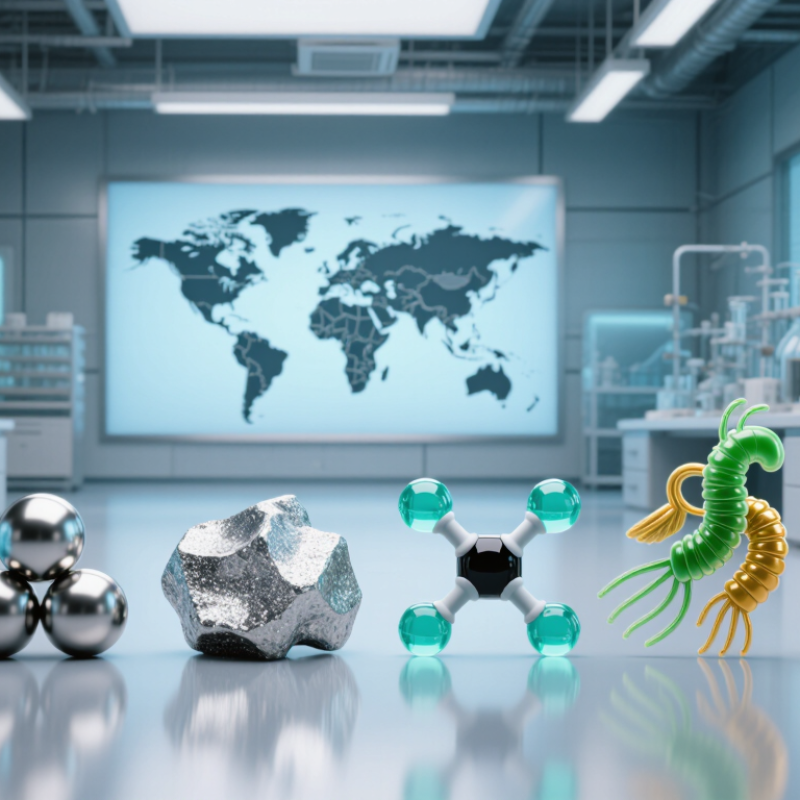
Catalyst Taxonomy: Metals, Zeolites, Enzymes, and Supports
For global buyers in 2026, catalyst selection should begin with process chemistry, not market fashion. Metal catalysts often provide strong activity at moderate temperatures. Their performance depends on particle size, oxidation state, and resistance to impurities. Zeolites offer controlled pores and acidic sites. They suit selective conversion, especially when molecular shape matters. However, pore blockage can reduce performance quickly. That detail is easy to overlook.
Enzymes operate under mild conditions and can improve selectivity for sensitive molecules. They may require careful control of temperature, pH, moisture, and storage time. Supports are different. They distribute active materials, improve handling, and influence heat transfer. Common support properties include surface area, pore volume, strength, and acidity. An experienced purchasing team should request batch data, impurity limits, regeneration results, and pilot-scale evidence. Supplier claims need testing. They are not proof.
A practical comparison should measure conversion, selectivity, service life, pressure drop, and disposal requirements. Small laboratory results may not predict packed-bed behavior. This is where buyers can misjudge costs. A cheaper catalyst may demand more frequent replacement or tighter operating control. Product documentation also deserves close review. Clear composition data, storage instructions, traceability, and technical support reduce avoidable risk. No category wins everywhere. That assumption fails.
The 85.4 million vehicles built worldwide in 2024 show why automotive catalysts still matter in 2026. OICA’s 2024 production statistics confirm a large installed base of combustion and hybrid vehicles. Three-way catalysts remain suitable for gasoline engines, controlling carbon monoxide, hydrocarbons, and nitrogen oxides. Diesel oxidation catalysts and selective catalytic reduction systems support diesel applications. Particulate filters are increasingly important where fine-particle limits are strict.
Electric vehicles are changing the mix, but not instantly. The International Energy Agency reported more than 17 million electric car sales in 2024, representing over 20% of global car sales. Many remaining vehicles still require exhaust after-treatment. Buyers should match catalyst chemistry with fuel type, engine calibration, sulfur exposure, temperature range, and local emission rules. A low-cost substrate can fail early under repeated cold starts.
Data from the International Council on Clean Transportation shows that real-world emissions can differ sharply from laboratory results. This makes thermal durability and field validation essential. In practical sourcing, ceramic and metallic substrates offer different balances of pressure drop, strength, and heat resistance. Precious-metal loading also needs careful control. Too little may reduce conversion efficiency; too much can raise cost without proportional benefit. The forecast is not perfectly clean. Regional policy changes, hybrid growth, and recycling capacity can quickly alter demand. Reliable buyers should request test records, traceable material data, and performance results across realistic driving cycles.
Refining catalysts are entering a capacity race. The International Energy Agency’s Oil 2024 report expects global oil demand to reach 104.7 million barrels per day by 2030. Refining systems must therefore operate above the 100 million b/d scale. Catalyst selection cannot rely on throughput alone. Feedstock quality, sulfur levels, residue content, and unit age also matter.
Hydrotreating catalysts remain essential for removing sulfur and nitrogen from increasingly difficult feeds. Hydrocracking catalysts support middle-distillate production, especially where jet fuel and diesel demand remains strong. Fluid catalytic cracking catalysts can convert heavier fractions into gasoline and petrochemical feedstocks. Reforming catalysts help maintain octane value, but their performance depends heavily on metals control and operating temperature.
The capacity match is not perfect. IEA data also indicates substantial new refining capacity through 2030, which may increase competition between older and newer plants. OPEC’s World Oil Outlook 2024 projects oil demand near 116 million b/d by 2045, but demand growth will not be evenly distributed. This creates a practical question for global buyers: should catalyst purchases prioritize maximum activity, longer cycle length, or easier regeneration? In my view, the answer changes by refinery. A technically impressive catalyst can still underperform when operators overlook feed variability, pressure limits, or maintenance habits. Supplier claims need independent testing, plant history, and measured yield data.
Hydrogen demand reached about 97 million tonnes in 2023, according to the International Energy Agency. Most demand still came from refining, ammonia, methanol, and direct reduced iron production. This scale changes how global buyers evaluate catalysts. They need stable activity, predictable replacement cycles, and supply resilience. Catalyst selection depends on process temperature, feed impurities, pressure, and reactor design. Nickel-based catalysts suit several established processes, while platinum-group metals support demanding electrochemical applications. Newer materials may reduce costs, but their field history remains limited.
Tips: Ask suppliers for tested performance data, impurity tolerance, operating temperature, and recycling options. Request samples when practical. Compare total operating cost, not only the purchase price. A catalyst that lasts six months longer can reduce shutdown pressure. Still, laboratory results may disappoint in a dusty plant. Site trials matter.
My earlier purchasing view was too simple: the “best” catalyst seemed to mean the highest initial activity. Experience shows that maintenance access, loading consistency, and local technical support can matter more. Buyers should record pressure drop, conversion, selectivity, and deactivation during operation. These details reveal problems that sales sheets often hide. Procurement teams also need realistic delivery schedules. Hydrogen projects can stall when catalyst qualification starts too late. Safety documentation and lawful transport arrangements must be checked before shipment.
| Catalyst Type | Primary Hydrogen-Related Application | Typical Active Materials | Role in the Hydrogen Value Chain | Key Performance Requirements | 2026 Buyer Relevance | Priority |
|---|---|---|---|---|---|---|
| Nickel-Based Reforming Catalysts | Steam methane reforming and autothermal reforming | Nickel supported on alumina, calcium aluminate, magnesium aluminate, or other ceramic supports | Converts hydrocarbons and steam into synthesis gas, which is subsequently shifted and purified to produce hydrogen | High activity, resistance to carbon deposition, thermal stability, sulfur tolerance, mechanical strength, and low pressure drop | Large installed base and continued importance for existing hydrogen production, including lower-emission configurations with carbon capture | High |
| Iron-Based Water-Gas Shift Catalysts | High-temperature water-gas shift | Iron oxide with chromium oxide or chromium-reduced stabilizing formulations | Converts carbon monoxide and steam into additional hydrogen and carbon dioxide after reforming | High-temperature activity, resistance to sintering, stable operation during load changes, and reduced environmental impact of catalyst constituents | Important for conventional and low-carbon hydrogen plants that use reforming-based process routes | High |
| Copper-Based Low-Temperature Shift Catalysts | Low-temperature water-gas shift | Copper, zinc oxide, and alumina-based formulations | Further reduces carbon monoxide concentration and increases hydrogen yield downstream of high-temperature shift reactors | High selectivity, resistance to thermal sintering, protection from sulfur and chloride contamination, and reliable start-up procedures | Relevant to hydrogen purification efficiency and process optimization in mature reforming facilities | High |
| Nickel-Iron Alkaline Electrolysis Catalysts | Alkaline water electrolysis | Nickel, nickel-iron oxyhydroxides, nickel-molybdenum, and related non-precious-metal systems | Accelerates the hydrogen evolution reaction at the cathode and oxygen evolution reaction at the anode in alkaline electrolyzers | High current-density performance, long operating life, low electrical resistance, low impurity sensitivity, and compatibility with intermittent renewable power | Attractive for large-scale hydrogen projects seeking lower catalyst-material costs and reduced dependence on scarce precious metals | High |
| Platinum-Group Metal PEM Electrolysis Catalysts | Proton exchange membrane water electrolysis | Platinum-group metals, commonly platinum at the cathode and iridium-based oxides at the anode | Supports compact, high-response hydrogen production from purified water using electricity | High current density, rapid dynamic response, corrosion resistance, low precious-metal loading, and high catalyst utilization | Well suited to variable renewable electricity and space-constrained projects, while material availability and recycling remain major purchasing considerations | High |
| Ceramic and Perovskite Electrode Catalysts | Solid oxide electrolysis | Nickel-ceramic cermets, yttria-stabilized zirconia, lanthanum-based perovskites, and related mixed-conducting oxides | Enables high-temperature electrochemical conversion of steam into hydrogen, potentially reducing electricity demand when suitable heat is available | Thermal-cycle durability, redox stability, resistance to chromium or sulfur poisoning, electrode compatibility, and long stack life | Promising for integrated industrial sites with available heat, although durability and operating complexity require careful technical evaluation | Medium |
| Iron-Based Ammonia Synthesis Catalysts | Haber-Bosch ammonia synthesis using hydrogen and nitrogen | Promoted iron with potassium, aluminum, calcium, or other structural and electronic promoters | Uses hydrogen as a feedstock to produce ammonia, a major existing hydrogen-consuming product and a potential hydrogen carrier | High ammonia synthesis rate, resistance to poisons, stable performance under pressure, and suitability for flexible operation | Directly linked to the largest established hydrogen-demand segment, because ammonia production is one of the principal uses of hydrogen | High |
| Copper-Zinc-Alumina Methanol Catalysts | Methanol synthesis from synthesis gas or carbon dioxide and hydrogen | Copper, zinc oxide, and alumina-based formulations, sometimes modified with additional oxides | Converts hydrogen-containing synthesis gas into methanol for chemical production, fuels, and possible energy-carrier applications | High activity at moderate pressure, resistance to water and thermal degradation, stable selectivity, and tolerance to feed impurities | Relevant to established methanol demand and emerging pathways that combine hydrogen with captured carbon dioxide | High |
| Iron-Based Direct Reduction Catalysts and Oxygen-Carrying Materials | Hydrogen-based direct reduction of iron ore | Iron oxides, iron-based oxygen carriers, and engineered oxide materials | Facilitates the reduction of iron ore using hydrogen, producing direct-reduced iron while avoiding coal-based reduction in the process route | Rapid reduction kinetics, resistance to sticking, porosity retention, thermal stability, and compatibility with hydrogen-rich gas mixtures | Strategically important for future low-emission steelmaking, although commercial deployment depends on plant scale, hydrogen cost, and process integration | Medium |
| Nickel and Noble-Metal Methanation Catalysts | Synthetic methane production and hydrogen purification by methanation | Nickel supported on alumina or silica; ruthenium-based formulations for high activity at lower temperature | Converts carbon monoxide or carbon dioxide with hydrogen into methane, either for synthetic natural gas production or removal of residual carbon oxides | High selectivity, resistance to carbon formation, thermal stability, sulfur tolerance, and controlled heat management | Useful in selected power-to-gas, synthetic fuel, and hydrogen purification applications rather than as a universal hydrogen-production catalyst | Medium |
| Dehydrogenation Catalysts for Hydrogen Carriers | Release of hydrogen from liquid organic hydrogen carriers | Platinum, palladium, nickel, and supported bimetallic catalysts | Removes hydrogen from carrier molecules so that hydrogen can be delivered at the point of use | High dehydrogenation activity, low coke formation, resistance to poisoning, low precious-metal loading, and stable cycling | Potentially important for long-distance hydrogen logistics, especially where liquid handling and existing storage infrastructure are advantageous | Medium |
| Ammonia Cracking Catalysts | Conversion of ammonia back into hydrogen and nitrogen | Ruthenium supported on basic materials, nickel-based catalysts, and promoted transition-metal formulations | Releases hydrogen at the destination from ammonia used as a transport or storage medium | High conversion at moderate temperature, low residual ammonia, resistance to sintering, and reduced use of scarce noble metals | Relevant to imported hydrogen supply chains and distributed hydrogen generation, with system efficiency and ammonia-slip control as key buying criteria | Medium |
|
Market context: The International Energy Agency reported global hydrogen demand of approximately 97 million tonnes in 2023. Existing applications, including refining, ammonia, methanol, and direct reduced iron, accounted for the overwhelming majority of demand. Catalyst selection for 2026 should therefore consider both established process capacity and emerging electrolytic, carrier-based, and hydrogen-intensive industrial routes.
Reference: International Energy Agency, Global Hydrogen Review 2024; International Energy Agency, Global Hydrogen Review 2023; U.S. Department of Energy, hydrogen production and electrolyzer technology resources. |
||||||
2026 Top Catalyst Types for Global Buyers?
Polymer catalysts helped support 413.8 million tonnes of plastics production in 2023, according to PlasticsEurope. This figure shows their industrial importance. It also exposes a purchasing challenge: catalyst selection affects throughput, polymer structure, energy use, and waste.
Ziegler–Natta catalysts remain practical for many polyethylene and polypropylene grades. They offer established process knowledge and broad operating experience. Metallocene catalysts provide tighter control over molecular structure and comonomer distribution. That control can improve film clarity, toughness, or sealing performance. Chromium-based systems still serve selected polyethylene processes where high productivity matters. Each type has limits.
Performance depends on more than catalyst chemistry. Buyers should examine reactor design, feedstock quality, activation requirements, residue levels, and recovery procedures. A catalyst that performs well in one plant may disappoint elsewhere. Pilot trials and plant-scale data deserve more attention than attractive laboratory results. They cost time. They prevent expensive assumptions.
Supplier documentation should include technical specifications, batch consistency, safety information, and measurable application data. Independent testing can strengthen confidence, especially across international supply chains. The 413.8Mt figure is powerful, but it does not explain every regional difference. Production definitions and reporting methods may vary. That uncertainty should remain visible during 2026 procurement reviews. Cost-per-kilogram alone is a weak decision tool.