How to Choose the Best Catalysts and Technologies for Your Needs?
Selecting the right catalysts and technologies is crucial for effective chemical processes. Businesses often struggle with making informed choices. Understanding the properties of different catalysts can greatly impact productivity and efficiency. Each catalyst has unique characteristics that suit specific reactions.
Evaluating catalysts and technologies involves analyzing various factors. These include reaction conditions, desired outcomes, and cost efficiency. Test results can be misleading; therefore, practical experience plays a vital role. It's important to learn from past successes and failures.
Consulting with industry experts can also provide valuable insights. They help identify the most effective catalysts for desired results. Relying solely on theoretical data is not enough. Practitioners must consider real-world applications and recent advancements in technology. By balancing knowledge and experience, choosing the best catalysts and technologies becomes a more manageable task.

Understanding the Basics of Catalysts and Their Role in Reactions
Catalysts play a vital role in speeding up chemical reactions without being consumed in the process. They lower the activation energy needed for reactions to occur, making them essential in various industrial applications. In many cases, catalysts are designed to target specific reactions, enhancing efficiency and selectivity. This means understanding the nature of the reaction is crucial for choosing the right catalyst.
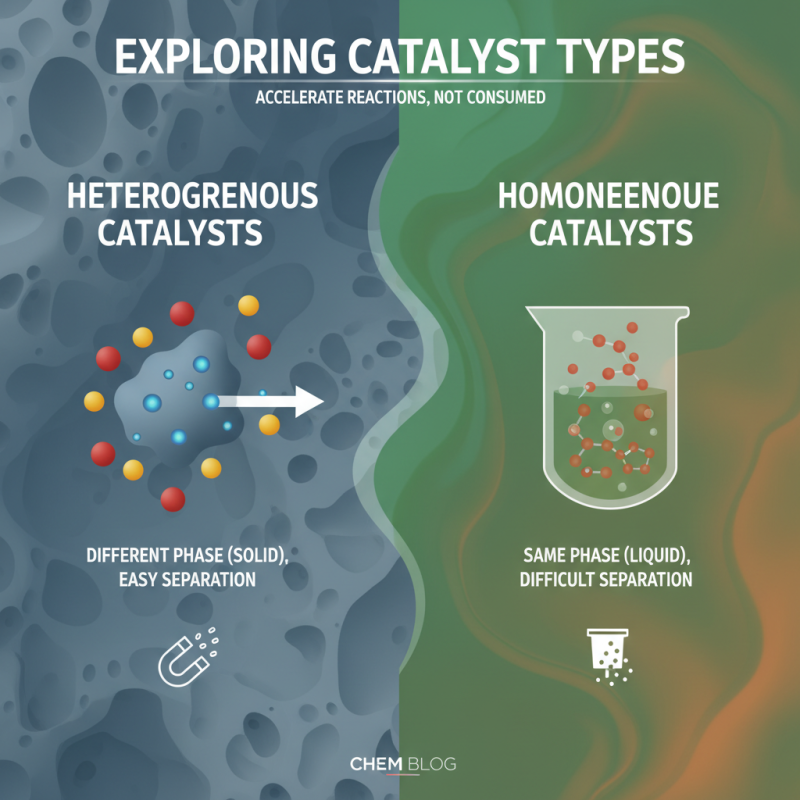
Different types of catalysts exist, including heterogeneous and homogeneous ones. Heterogeneous catalysts work in distinct phases from the reactants, while homogeneous catalysts are in the same phase. The choice between them often depends on the reaction conditions. It's important to contemplate factors such as temperature, pressure, and the nature of the reactants when selecting a catalyst. Additionally, considering the intended end products can lead to more informed decisions.
While many catalysts are effective, not all are perfect. Some may lead to unwanted by-products or require excessive energy. Innovations in catalyst design are ongoing, addressing these limitations. Real-world results often differ from theoretical expectations. Reflecting on these discrepancies can guide future catalyst selection and development. Aim for a thorough understanding of both the catalysts and the specific requirements of your reactions for optimal performance.
Assessing Your Specific Needs for Catalyst Performance and Efficiency
When selecting catalysts and technologies, it is crucial to assess your specific needs. Catalyst performance can vary significantly based on application. For example, studies show that a catalyst's selectivity can differ by up to 30% based on the feedstock used. This discrepancy affects overall efficiency and output quality. A thorough evaluation of your production process allows for more informed decisions.
Understanding the operational conditions is vital. Temperature, pressure, and reactant concentrations are key factors influencing catalytic activity. Research indicates that optimizing these parameters can lead to improved yield by approximately 15-20%. Targeting these specifics can enhance productivity and reduce waste, leading to better environmental compliance. Many companies overlook these details, focusing instead on generic solutions that fail to meet their unique needs.
Evaluation of long-term performance is another essential aspect. Catalyst deactivation rates can be as high as 25% in certain conditions, necessitating regular maintenance and replacement. Choosing a catalyst with a lower deactivation rate can significantly reduce operational downtime. Reflection on these metrics will help ensure that the selected catalyst aligns with both short-term goals and long-term sustainability targets. Each decision carries weight, impacting efficiency and cost-effectiveness in the broader operational framework.
Exploring Different Types of Catalysts: Heterogeneous vs. Homogeneous
Catalysts are essential in various chemical processes. They accelerate reactions without being consumed. In this context, choosing between heterogeneous and homogeneous catalysts is crucial. Heterogeneous catalysts exist in a different phase than the reactants. They are often solid and allow easy separation after reactions. In contrast, homogeneous catalysts are in the same phase as the reactants, usually in liquid form.
A 2021 report from the Global Catalyst Market valued the industry at over $35 billion, with heterogeneous catalysts holding a significant market share of approximately 60%. This dominance is due to their ease of recovery and recyclability. However, homogeneous catalysts often provide higher reaction rates and selectivity, making them suitable for fine chemical productions.
Both types present challenges. Heterogeneous catalysts may suffer from deactivation, while homogeneous catalysts can be difficult to separate from products. It’s crucial to assess the specific application needs. For example, productions requiring high selectivity might benefit more from homogeneous options despite their separation challenges. Balancing these factors is key to achieving optimal efficiency and sustainability in chemical processes.
Evaluating Technological Options for Catalyst Implementation
When evaluating technological options for catalyst implementation, it’s crucial to adopt a systematic approach. Start by assessing the specific requirements of your process. Analyze the reaction conditions, desired selectivity, and potential by-products. Different catalysts offer various efficiencies under certain conditions. Understanding these nuances can help avoid costly mistakes.
Consider the scale of your operation. Some technologies excel at a lab scale but falter in industrial applications. Reviewing case studies or existing literature can provide insights. However, remember that real-world scenarios may differ from theoretical frameworks. Also, engage with industry experts to gather diverse perspectives. Their experiences can inform decision-making and highlight hidden challenges.
Cost is another important factor. While advanced catalysts may promise higher efficiencies, they can come with a hefty price tag. Weigh the initial investment against potential long-term savings. In some cases, less expensive catalysts may perform adequately without the budget strain. It’s essential to remain adaptable and willing to revisit your choices as new technologies emerge. This reflective practice can lead to better outcomes in an ever-evolving field.
Comparison of Catalyst Types and Their Efficiency