How to Source Chemicals Effectively in the Global Market?
In today's interconnected world, sourcing chemicals effectively in the global market is critical for the chemical industry. The right sourcing strategies can enhance productivity and reduce costs. However, navigating this complex landscape presents challenges.
Global suppliers vary in quality, compliance, and reliability. This inconsistency can lead to supply chain disruptions. Industry professionals must evaluate suppliers carefully to maintain standards. Establishing strong relationships with trusted vendors is essential. This approach fosters communication and enhances collaboration.
Moreover, monitoring market trends is crucial. Price fluctuations and regulatory changes impact sourcing decisions. Companies should adopt a proactive strategy to stay ahead. Continuous assessment of sourcing practices allows for adjustments. The aim is to secure high-quality chemicals while minimizing risks. Embracing these principles can lead to a more resilient chemical industry.

Understanding the Global Chemical Market Landscape
The global chemical market is vast and diverse, comprising numerous sectors such as pharmaceuticals, agriculture, and specialty chemicals. According to a report by the American Chemistry Council, the global chemical sales reached approximately $5 trillion in 2021. This figure underscores the enormous scale of trade and the complexity in sourcing chemicals. Engaging with suppliers requires a keen understanding of regional dynamics and regulatory environments.
Navigating this landscape requires a strategy grounded in thorough research. It’s critical to assess factors like supply chain logistics and market volatility. For instance, fluctuations in raw material prices can profoundly impact sourcing decisions. A recent study highlighted that disruptions in one region can lead to a ripple effect globally. Therefore, companies need agile strategies to adapt quickly.
Building relationships with suppliers is essential, but transparency must be prioritized. Many buyers face challenges in obtaining accurate data about chemical composition and sourcing origins. This uncertainty can impact product quality and compliance with regulations. Investing in reliable platforms that provide verified supplier data can mitigate risks. In a complex market, these efforts empower buyers to make informed choices.
Identifying Reliable Suppliers and Manufacturers Worldwide
Identifying reliable suppliers and manufacturers in the global market can be challenging. Start by conducting thorough research. Use trade shows and industry directories to find potential partners. Attending events allows for direct interaction, which can foster trust. Also, leverage online platforms with robust supplier databases. Reviews and ratings can offer insights into suppliers' reliability.
It’s essential to assess a supplier's credentials. Request certifications that demonstrate quality standards. Ask for client references and case studies. This provides a glimpse into their operational effectiveness. Always verify these references. A reliable supplier may provide transparency about their processes and policies.
However, not every interaction leads to fruitful partnerships. Some suppliers may seem promising but fail to deliver quality or meet deadlines. This can cause significant disruptions. It's crucial to have backup options and a contingency plan. Reflecting on past experiences helps refine future sourcing strategies. Learn from challenges to build a more resilient sourcing approach.
How to Source Chemicals Effectively in the Global Market?
| Region |
Supplier Type |
Product Category |
Certification |
Minimum Order Quantity (MOQ) |
Lead Time (days) |
| North America |
Manufacturer |
Industrial Chemicals |
ISO 9001 |
100 kg |
15 |
| Europe |
Distributor |
Specialty Chemicals |
REACH |
50 kg |
20 |
| Asia |
Manufacturer |
Pharmaceuticals |
GMP |
200 kg |
30 |
| South America |
Broker |
Agricultural Chemicals |
ISO 14001 |
250 kg |
25 |
| Africa |
Manufacturer |
Cosmetic Chemicals |
ISO 22716 |
150 kg |
18 |
Evaluating Quality and Compliance Standards in Chemical Sourcing
When sourcing chemicals in the global market, evaluating quality and compliance standards is essential. Understanding these standards can prevent costly mistakes. A thorough assessment of potential suppliers ensures they meet required compliance criteria.
Regular audits of suppliers can minimize risks. Look for certifications that indicate adherence to safety and quality regulations. Quality management systems should be robust. Be aware that even trusted suppliers can fall short. It's vital to maintain vigilance in quality checks.
Tips for effective sourcing include researching regional regulations. Different countries have varying compliance requirements. Engage with industry experts to gain insights. Consider developing a checklist of key compliance factors tailored to your needs. This can help streamline the evaluation process, but keep it flexible. Regularly updating your criteria allows for adjustments in the evolving global market.
Negotiating Terms and Conditions for Chemical Purchases
Negotiating terms and conditions for chemical purchases requires a strategic approach. The global chemicals market was valued at approximately $3.98 trillion in 2020, with projections to reach $5.67 trillion by 2028 according to reports by Grand View Research. This significant growth prompts buyers to consider their negotiating tactics carefully.
Understanding the nuances of contracts is essential. Many suppliers offer payment terms ranging from net 30 to net 90 days. Buyers should analyze their cash flow requirements to determine the best option. It’s commonly overlooked that even a slight change in pricing can impact long-term costs. For instance, a 5% increase in price may seem minor initially but translates to substantial costs over time.
Cultural differences can also play a critical role in negotiations. Buyers must recognize and respect these variations. Some suppliers may prioritize relationship-building, while others focus solely on terms. Engaging with local representatives can enhance understanding. Balancing firm negotiation with relationship management is vital. Ultimately, refining these strategies can lead to more favorable terms and solid partnerships in the chemical industry.
Global Chemical Market Sourcing Comparison
This bar chart presents the volume of chemicals sourced from various regions across the globe. It highlights the peak sourcing in Asia, followed by North America and Europe, which is crucial for understanding the dynamics of global chemical procurement.
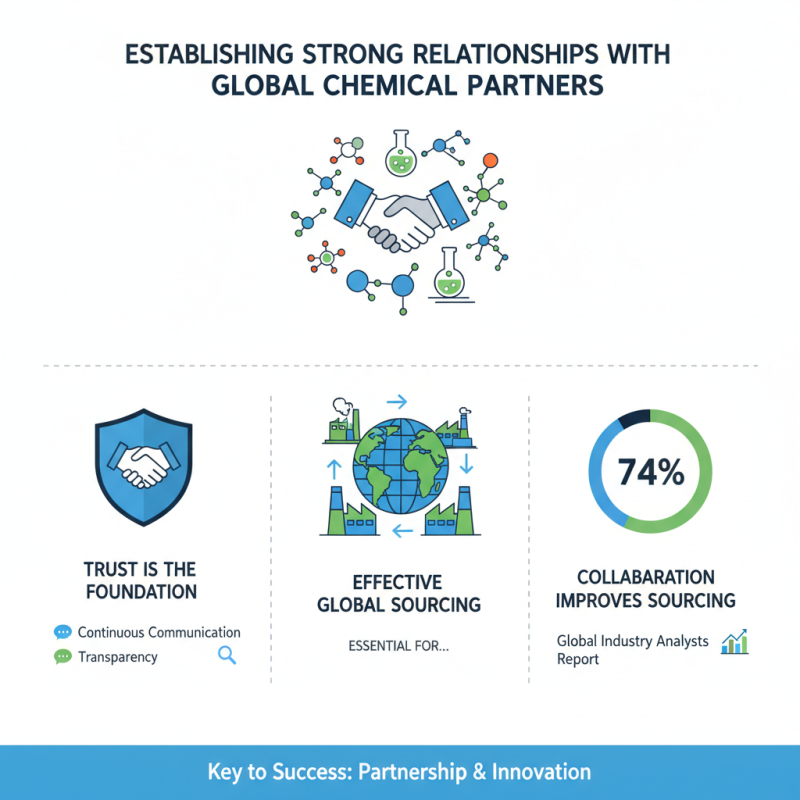
Establishing Strong Relationships with Global Chemical Partners
Building strong relationships with global chemical partners is essential for effective sourcing. Trust is the foundation of these relationships. It requires continuous communication and transparency. In a report by the Global Industry Analysts, 74% of companies stated that collaboration improved their sourcing processes.
Regular visits to suppliers can foster deeper connections. Face-to-face meetings can help discuss challenges and share innovations. For instance, establishing joint development projects can align goals and spark creativity. About 61% of chemical companies report increased efficiency through collaborative efforts, according to a study by Deloitte.
However, relying solely on relationships can be risky. Companies should also assess market trends and supplier stability. The chemical industry is highly dynamic, with fluctuations in prices and availability. A proactive approach to relationship management, coupled with data analysis, can mitigate these risks. Engaging in partnerships means understanding each other’s capabilities and challenges. It invites reflection on how partnerships can evolve.