Choosing the right chemical manufacture partner is a critical decision. The quality of your products relies heavily on this relationship. No company wants to suffer delays or quality issues because of a poor choice.
The correct partner understands your needs. They should have expertise in your specific chemical processes. This depth of knowledge ensures that the results meet your expectations. Look for a manufacturer with a proven track record in your industry.
Consider the communication and support offered by potential partners. Clear communication helps to avoid misunderstandings. Reliable support is key to a productive partnership. Always reflect on past experiences to make informed decisions.

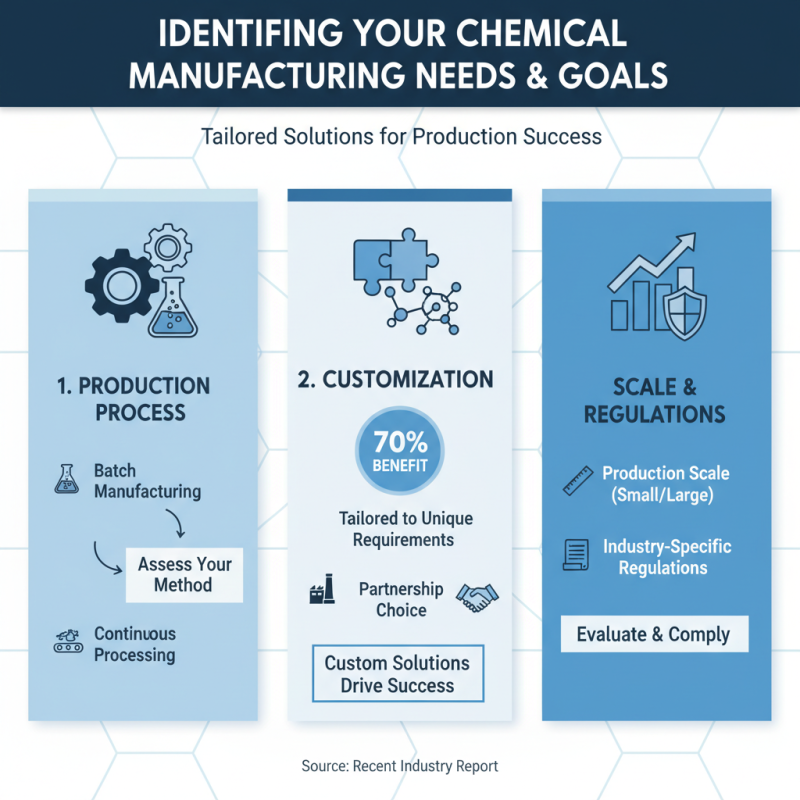
Identifying chemical manufacturing needs begins with a thorough assessment of your production processes. Understanding whether you require batch manufacturing or continuous processing can shape your partnership choice. According to a recent industry report, 70% of companies benefit from customized manufacturing solutions tailored to their unique requirements. It’s crucial to evaluate the scale of production, including any specific regulations that apply to your industry.
Goals should be clearly outlined before engaging with potential partners. Consider whether cost reduction, product innovation, or sustainability is your primary focus. A survey indicated that 65% of manufacturers list sustainability as a key driver in selecting partners. This is relevant as many clients these days demand eco-friendly practices. Open communication about your goals helps in identifying partners that align with these objectives.
It’s important to reflect on potential shortcomings in your approach. Often companies overlook the cultural fit between their team and the manufacturer’s. Issues may arise from misaligned values or work ethics. Regularly reassessing your needs and goals is essential. The manufacturing landscape changes rapidly, and what works today may not suffice tomorrow. Being adaptable and open to change can lead to better partnerships in the long run.
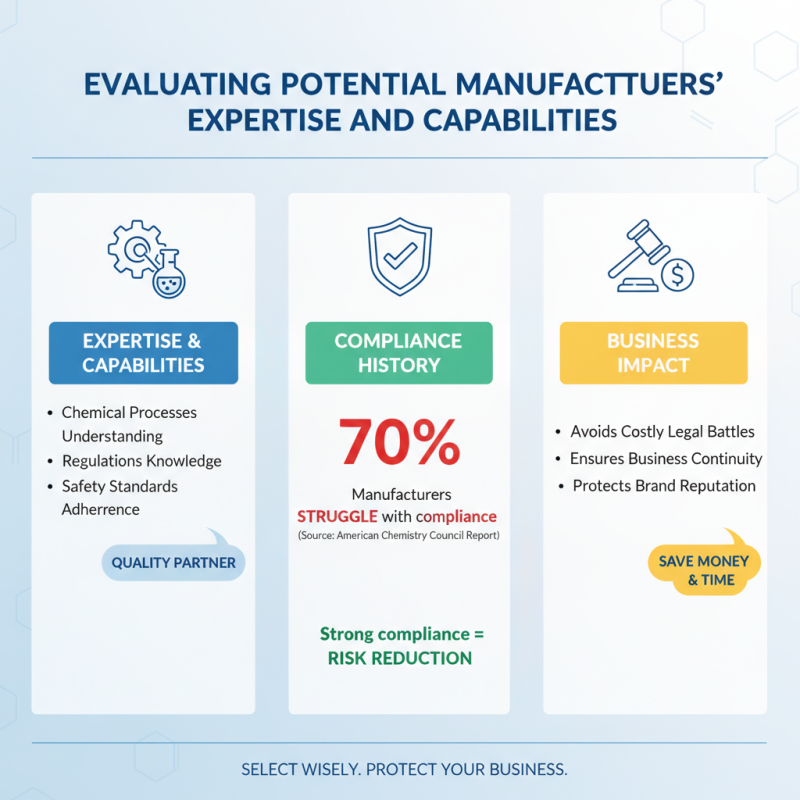
When selecting a chemical manufacturer, expertise and capabilities are crucial. The right partner should demonstrate a solid understanding of chemical processes, regulations, and safety standards. According to a recent report by the American Chemistry Council, about 70% of manufacturers struggle with compliance issues, which can lead to costly legal battles. A partner with a strong compliance history can shield your business from these risks.
Evaluating a manufacturer's capabilities requires thorough research. Look for certifications such as ISO 9001 or Environmental Management Systems standards. These indicators show a commitment to quality and environmental responsibility. A study by McKinsey found that companies with recognized certifications can achieve operational efficiencies up to 15%. This can translate into cost savings and improved product quality.
Additionally, consider the manufacturer's research and development capabilities. A partner with a robust R&D department can help innovate new products. However, as many manufacturers focus on cost reduction, R&D initiatives can take a backseat. This may impact long-term growth. Be cautious of partners that do not prioritize continuous improvement, as this can indicate stagnant capabilities.
Choosing the right chemical manufacturing partner involves a thorough understanding of quality control standards and compliance regulations. These elements are critical to ensuring the safety and efficacy of chemical products. According to a recent report by the American Chemical Society, 70% of product recalls in the chemical sector are due to quality issues. This statistic underscores the necessity of partnering with manufacturers who maintain stringent quality control processes.
When assessing potential partners, it is essential to review their quality management systems. Look for certifications such as ISO 9001, which signifies adherence to international standards in product quality. Regulations such as REACH and OSHA must also be considered. Compliance with these regulations ensures that the partner not only follows safe manufacturing practices but also aligns with environmental and health safety standards.
Engaging with partners who embrace a culture of continuous improvement can prevent future quality issues. It's vital to explore how they respond to audits and inspections. This transparency often speaks to their commitment to quality. Remember, the partnership should come with assurances of consistent quality. Relying solely on price can lead to compromises that impact product excellence. Always prioritize a partner's integrity over cost savings.
When selecting a chemical manufacturer partner, understanding pricing structures and contract terms is crucial. Multiple factors influence pricing in the chemical industry. According to a recent report by MarketsandMarkets, raw material costs account for approximately 60% of production costs. This insight reveals the need for transparency in pricing breakdowns and cost-related discussions.
Contracts should clearly outline pricing mechanisms. Fixed pricing, variable pricing, or cost-plus contracts can significantly affect overall expenditures. Each has its benefits, but understanding the implications is vital. Additionally, terms related to minimum order quantities (MOQs) can influence your purchasing decisions. Not every partner can match your quantities without hiking costs.
Consider these tips:
- Demand clarity on pricing components and contract terms.
- Question any ambiguous clauses that may lead to unforeseen expenses.
- Regularly review your agreements to adapt to changing market conditions.
Flexibility is key. The market is volatile, and prices may shift rapidly due to geopolitical events or supply shortages. Continuous dialogue with your manufacturer can lead to better pricing strategies. Each contract should be more than a legal agreement; it should foster collaboration and mutual growth.
Building a collaborative relationship with a chemical manufacturer is essential for long-term success. Trust is the foundation. Regular communication helps in understanding each other's capabilities and expectations. Transparency should be a priority. If there are issues, address them quickly. This prevents misunderstandings from escalating.
Engagement goes beyond emails and meetings. Joint problem-solving fosters innovation. Consider visiting the manufacturing site. This can reveal insights that emails cannot convey. Learning about their processes early can save time later. Share feedback openly. Recognize that adjustments may be necessary on both sides.
Long-term partnerships require effort. Companies may face challenges. There could be unexpected delays or quality issues. Reflect on how both parties can improve. Establishing shared goals creates a sense of ownership. Often, successful outcomes stem from a willingness to adapt. Small shifts in approach can lead to significant benefits over time.
| Criteria | Importance Level | Evaluation Score (1-10) | Comments |
|---|---|---|---|
| Experience in Industry | High | 9 | Proven track record in similar projects. |
| Quality Assurance Processes | High | 8 | Strong QA practices and certifications are essential. |
| Cost Competitiveness | Medium | 7 | Needs to be balanced with quality and service. |
| Technical Expertise | High | 10 | Critical for innovative solutions and troubleshooting. |
| Communication & Collaboration | High | 9 | Open and efficient communication is a must. |
| Flexibility & Responsiveness | Medium | 7 | Should quickly adapt to changing needs. |