
What Are the Best Catalyst Types for Catalysis in 2026?
In 2026, catalyst catalysis is becoming more selective, measurable, and application-driven. Chemical manufacturers now demand high activity, long service life, lower energy use, and easier recovery. A catalyst that performs well in a laboratory vial may struggle inside a hot, pressurized reactor. That gap matters.
This guide examines the best catalyst types for modern catalytic processes. It compares heterogeneous catalysts, homogeneous catalysts, biocatalysts, photocatalysts, electrocatalysts, and emerging single-atom systems. Each category offers a different balance of selectivity, stability, cost, and environmental impact. Zeolites can shape molecular reactions through precise pores. Enzymes can operate under mild conditions, but they may lose activity outside narrow operating ranges. Metal-based catalysts can deliver impressive reaction rates, although supply risks and recycling requirements deserve serious attention.
The strongest choice depends on the reaction, feedstock, reactor design, and production scale. There is no universal winner. Not even close.
Reliable evaluation should combine peer-reviewed research, pilot-plant evidence, supplier data, and lifecycle analysis. Important measurements include conversion, selectivity, turnover frequency, regeneration performance, and waste generation. Safety and practical maintenance also deserve equal attention. Some promising materials remain difficult to manufacture consistently. Others look efficient until solvent use and disposal are included.
This overview therefore avoids simple rankings. It focuses on where each catalyst type works best, where it fails, and what researchers should question before adoption. The evidence is developing quickly. Some conclusions may change. That uncertainty is part of responsible technical judgment.
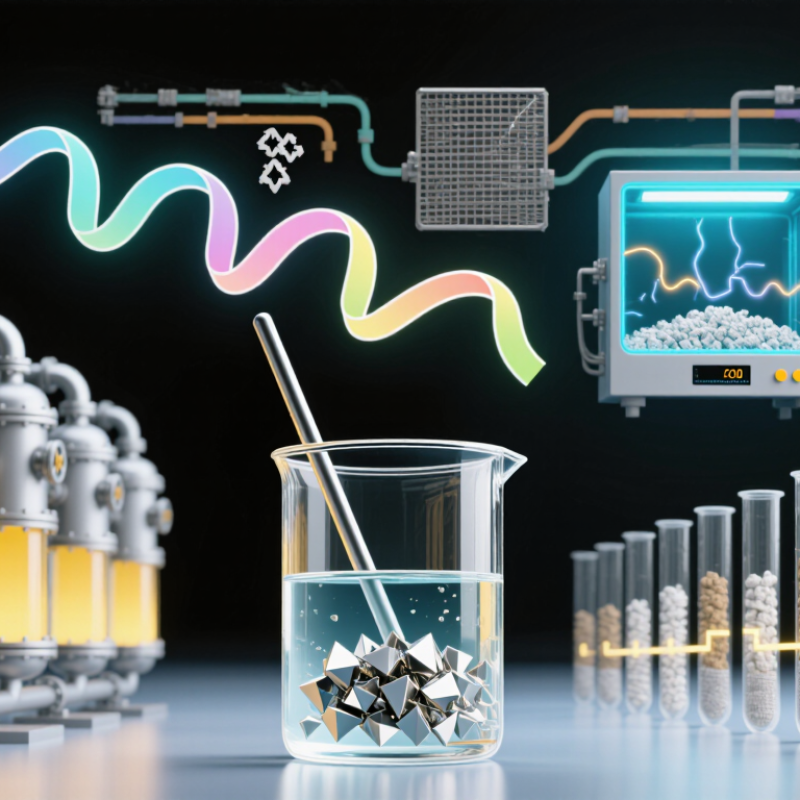
What Catalysts Are and How They Enable Chemical Reactions
What Are the Best Catalyst Types for Catalysis in 2026?
A catalyst enables a chemical reaction by lowering its activation energy. It changes the reaction pathway, but it is not permanently consumed. This simple mechanism supports cleaner fuels, fertilizers, polymers, medicines, and water-treatment processes. The International Energy Agency reports that chemical production remains a major industrial energy user and emissions source. Better catalysts can reduce heat demand and unwanted by-products.
Heterogeneous catalysts work on solid surfaces, making separation easier in large reactors. They often support refining, ammonia production, and emission control. Homogeneous catalysts dissolve in the reaction mixture, allowing precise molecular control. However, recovery can be difficult. Biocatalysts use enzymes and operate under mild temperatures. They can improve selectivity, though their stability sometimes limits industrial use.
Electrocatalysts and photocatalysts are gaining attention in hydrogen production and carbon conversion. Their performance depends on surface area, conductivity, light absorption, and durability. The International Renewable Energy Agency highlights catalyst efficiency as an important factor in renewable hydrogen costs. Still, “best” is rarely universal. A highly active catalyst may degrade quickly. A cheaper material may require more energy. Real reactor conditions matter more than laboratory headlines. I may be oversimplifying, but practical testing should include lifetime, recycling, safety, and performance under impurities. Data from the 2024 International Energy Agency Energy Technology Perspectives also reinforces the need to evaluate catalysts across complete industrial systems, not isolated reactions.
What Are the Best Catalyst Types for Catalysis in 2026? - What Catalysts Are and How They Enable Chemical Reactions
| Catalyst Type | How It Enables Reactions | Typical Active Components | Key Advantages | Main Limitations | Representative Applications | 2026 Relevance |
|---|---|---|---|---|---|---|
| Heterogeneous Catalysts | Provide active surface sites where reactants adsorb, bonds are weakened, and products desorb. | Metals, metal oxides, zeolites, sulfides, carbons, and supported active phases. | Easy separation, continuous processing, strong durability, and suitability for fixed-bed reactors. | Mass-transfer limitations, deactivation by coking or poisoning, and possible loss of active material. | Ammonia synthesis, petroleum refining, hydrogen production, oxidation, and pollution control. | Very High |
| Homogeneous Catalysts | Form soluble intermediates with reactants, enabling selective bond formation through well-defined molecular steps. | Transition-metal complexes, organometallic compounds, mineral acids, and soluble bases. | High selectivity, tunable activity, and precise control of reaction pathways. | Separation can be difficult, solvent use may be significant, and catalyst residues may affect products. | Hydroformylation, hydrogenation, metathesis, carbonylation, and fine-chemical synthesis. | High |
| Enzymatic Catalysts | Use precisely shaped active sites to stabilize transition states and accelerate reactions under mild conditions. | Proteins such as oxidoreductases, hydrolases, transferases, and lyases. | Exceptional chemo-, regio-, and stereoselectivity; often operates in water and at moderate temperatures. | Sensitivity to temperature, pH, solvents, and substrate concentration; stability may require engineering or immobilization. | Food processing, pharmaceutical intermediates, biomass conversion, detergents, and biosensors. | Very High |
| Organocatalysts | Activate substrates through covalent bonding, hydrogen bonding, Brønsted acid-base chemistry, or ion-pair formation. | Small organic molecules containing amines, thioureas, phosphines, carboxylic acids, or related functional groups. | Metal-free options, broad structural tunability, and strong stereoselectivity in many reactions. | Some systems require high catalyst loading, specialized solvents, or lengthy optimization. | Asymmetric synthesis, aldol reactions, Michael additions, cycloadditions, and polymer preparation. | High |
| Photocatalysts | Absorb light to generate excited electrons, holes, radicals, or energy-transfer states that initiate chemical transformations. | Semiconductor oxides, carbon nitride, organic dyes, and molecular photocatalysts. | Can use visible light, enable mild reaction conditions, and support solar-fuel or selective organic transformations. | Light penetration, charge recombination, reactor scale-up, and catalyst stability can limit performance. | Water splitting, carbon dioxide reduction, pollutant degradation, and light-driven organic synthesis. | Very High |
| Electrocatalysts | Lower electrochemical overpotential and accelerate electron-transfer reactions at electrode surfaces. | Metal alloys, metal oxides, phosphides, sulfides, nitrides, carbon materials, and molecular catalysts. | Directly couples chemistry with renewable electricity and permits controllable reaction rates through applied potential. | Electrode corrosion, flooding or drying, competing side reactions, and dependence on current density. | Water electrolysis, fuel cells, batteries, carbon dioxide conversion, and nitrogen-related chemistry. | Very High |
| Single-Atom Catalysts | Disperse isolated metal atoms on a support, maximizing atom utilization and creating distinctive electronic active sites. | Isolated transition-metal atoms anchored to nitrogen-doped carbon, oxides, zeolites, or other supports. | High theoretical metal efficiency, adjustable coordination environments, and potentially high selectivity. | Thermal sintering, complex preparation, difficult structural characterization, and uncertain long-term stability. | Selective hydrogenation, oxidation, carbon dioxide conversion, fuel-cell reactions, and environmental catalysis. | Emerging |
| MOF- and Porous-Framework Catalysts | Use ordered pores and chemically tunable internal surfaces to concentrate reactants and create size-selective reaction environments. | Metal-organic frameworks, covalent organic frameworks, zeolites, and functionalized porous solids. | High surface area, adjustable pore chemistry, molecular sieving, and opportunities for multifunctional catalysis. | Moisture or thermal sensitivity in some materials, diffusion constraints, and challenges in large-scale shaping. | Carbon dioxide capture and conversion, biomass upgrading, separations-assisted catalysis, and fine-chemical synthesis. | Emerging |
| Hybrid and Tandem Catalysts | Combine two or more catalytic functions so that sequential reactions occur in one reactor with fewer isolation steps. | Metal-acid pairs, metal-enzyme systems, photocatalyst-electrocatalyst combinations, and multifunctional supports. | Reduces intermediate handling, can improve atom economy, and enables transformations that are difficult in a single step. | Catalyst compatibility, intermediate diffusion, competing pathways, and more complicated process control. | Biomass valorization, sustainable fuels, carbon dioxide utilization, polymer synthesis, and pharmaceutical chemistry. | Very High |
Related Posts
-
Top 10 Catalysis Catalysts for Efficient Chemical Processes?
-
How to Choose the Right UP Catalyst for Your Business?
-
2026 Top Catalyst Types for Global Buyers?
-
Top 10 Most Effective Catalysts in Chemical Reactions?
-

Top 10 Catalysts for Enhancing Global Procurement Efficiency?
-
How to Choose the Right 2 Catalyst Supplier?