Choosing catalysts and technologies in 2026 means looking beyond headline performance. Global buyers must weigh conversion efficiency, operating temperature, feedstock flexibility, service life, emissions, and local technical support. A catalyst that performs well in a laboratory may behave differently when feedstock quality shifts or equipment ages. Small details matter.
The scale of the challenge is clear. The International Energy Agency’s Chemicals report estimates that direct CO₂ emissions from the chemical sector reached 935 million tonnes in 2022. That makes process efficiency more than a procurement metric. It is an operational priority. For biocatalysis, Nobel laureate and enzyme-engineering pioneer Frances H. Arnold has said, “If you want to make a good enzyme, you have to make a lot of bad ones.” Her observation captures an important purchasing reality: development takes testing, and promising results still need validation under real production conditions.
This guide compares established catalyst families and emerging options, including heterogeneous, homogeneous, and enzyme-based systems, alongside process technologies that can improve their use. It considers evidence from technical reports and practical buying questions, such as regeneration requirements, supplier documentation, and total cost over a catalyst’s working life. No single option fits every plant. That is easy to overlook. Buyers should verify performance claims against independent data and site-specific trials before committing at scale.
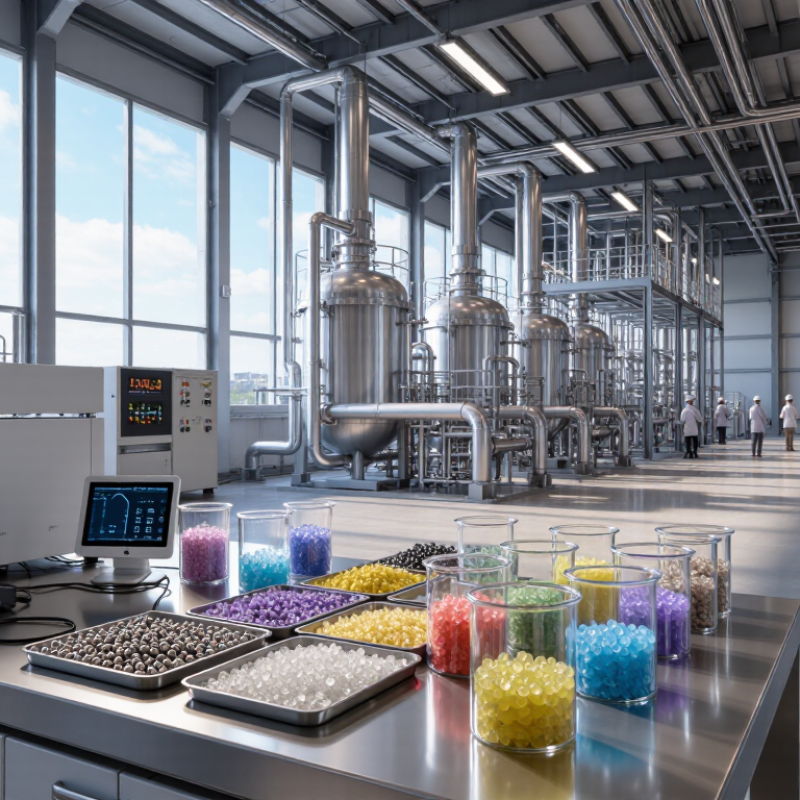
In the 2026 global market, catalysts include materials that speed chemical reactions without being consumed. Buyers may encounter metal-based, zeolite, and enzyme catalysts for chemical production, emissions control, water treatment, and lower-carbon fuel processing. Their performance depends on more than the active material. Feedstock quality, temperature, pressure, and reactor design all matter. A catalyst that works well in a laboratory may behave differently in a full-scale plant.
The technologies around catalysts include reactor systems, coating and support methods, process sensors, and software that tracks operating conditions. Some suppliers also offer regeneration or recycling services, which can reduce waste and help manage replacement costs.
Ask for test results under conditions close to your own process, including expected service life and impurity tolerance. Check whether technical support and replacement materials can reach your operating region reliably.
Small details matter. A slight change in feed composition can affect output, energy use, and maintenance needs. Public performance data may not capture every site-specific factor, so buyers should treat projections as estimates, not guarantees.
Industrial catalysts are best classified by what they do, where they operate, and what they contain. Functionally, buyers encounter catalysts for hydrogenation, oxidation, reforming, polymerization, and emissions control. By phase, they are heterogeneous, homogeneous, or enzymatic; by material, they may use precious metals, base metals, acids, or zeolites. The labels overlap. A supported-metal catalyst, for example, may serve a refinery reactor or a low-temperature fuel-cell process. That context changes heat tolerance, selectivity, lifetime, and regeneration costs.
Demand data help explain why classification matters. The OECD’s Global Plastics Outlook (2022) reports that global plastics production reached 460 million tonnes in 2019, up from 234 million tonnes in 2000. These volumes make polymerization catalysts and recycling-related process technologies commercially relevant, but they do not guarantee attractive returns. Feedstock quality still bites. Buyers should compare yield, impurity tolerance, cycle life, and spent-catalyst handling under actual operating conditions.
Enabling technologies sit around the catalyst. They include reactor design, membranes, heat integration, online analyzers, and process-control software. The IEA’s Global Hydrogen Review 2024 estimates hydrogen demand at about 97 million tonnes in 2023, while low-emissions hydrogen remained below 1% of production. This gap highlights a practical point: catalysts alone cannot decarbonize a process. Electricity sources, water treatment, compression, and reliable measurement matter too. A neat classification can still miss plant reality.
Global demand for catalysts comes from practical needs across several industries. Refineries use them to convert crude oil into fuels and useful chemical feedstocks. Chemical manufacturers depend on catalysts for products such as fertilizers, plastics, and solvents. In transport, exhaust-treatment systems help reduce harmful emissions. Demand also grows around cleaner fuel production and industrial pollution control, though adoption varies by region and infrastructure.
Tips: Compare performance under your actual operating conditions. Check temperature range, pressure, service life, and replacement requirements. Ask for test data. Small differences matter.
For global buyers, the strongest opportunity is often a reliable fit, not the newest technology. A catalyst that works well in a laboratory may behave differently with variable feedstock or frequent start-stop cycles. Review technical documentation, supply continuity, and local servicing before committing. Hydrogen production and renewable-fuel processes may attract attention, but project economics and scale still shape purchasing decisions. Forecasts can shift; that uncertainty deserves a place in any sourcing plan.
A practical, directional buying guide to established catalyst technologies and the industrial applications that support demand. It does not rank suppliers or provide market-size forecasts.
| Catalyst or technology | Typical materials / process | Industries and applications | Demand drivers | Key buying considerations |
|---|---|---|---|---|
| Three-way automotive catalysts | Platinum-group metals, commonly platinum, palladium and rhodium, on a ceramic or metallic substrate. | Gasoline passenger vehicles and other spark-ignition engines; control of carbon monoxide, hydrocarbons and nitrogen oxides. | Vehicle production, emissions requirements, replacement demand and changes in engine and after-treatment designs. | Metal loading and price exposure, operating temperature, substrate specification, durability, and compliance with destination-market standards. |
| Diesel oxidation and SCR systems | Oxidation catalysts often use platinum-group metals; selective catalytic reduction (SCR) commonly uses vanadium-based or zeolite catalysts with a reductant such as urea-derived ammonia. | Heavy-duty road vehicles, buses, non-road machinery and selected stationary diesel engines. | Fleet turnover, exhaust-emission controls, equipment utilization and maintenance or retrofit requirements. | Exhaust temperature window, sulfur and dust tolerance, pressure drop, catalyst volume, reductant-system compatibility and service life. |
| Stationary flue-gas SCR | Typically vanadium-titanium-based catalyst formulations, with tungsten or molybdenum additives in some designs. | Power generation, boilers, cement, metals and other industrial combustion processes; nitrogen-oxide reduction. | Air-quality controls, plant upgrades, operating permits and demand for reliable emissions performance. | Flue-gas temperature and composition, catalyst poisoning, ash loading, cleaning needs, pressure loss and reactor layout. |
| Refining hydroprocessing catalysts | Commonly nickel-molybdenum or cobalt-molybdenum on alumina; platinum-based catalysts are used in some processes. | Refineries processing fuels and feedstocks; hydrotreating removes sulfur and other impurities, while hydrocracking converts heavier fractions. | Fuel-quality requirements, crude and feedstock composition, refinery configuration and catalyst-cycle economics. | Feed contaminants, activity and selectivity, pressure and temperature limits, loading method, regeneration options and spent-catalyst handling. |
| Zeolite-based conversion catalysts | Crystalline aluminosilicate zeolites, sometimes combined with binders or other active components. | Fluid catalytic cracking, petrochemical conversion, separation and selected chemical manufacturing processes. | Demand for fuels and chemical intermediates, feedstock flexibility and the need to improve conversion or product selectivity. | Pore structure, acidity, particle form, attrition resistance, feed compatibility and performance under the intended regeneration conditions. |
| Hydrogen fuel-cell catalysts | Platinum-based catalysts are widely used in polymer-electrolyte-membrane fuel cells; catalyst designs vary by electrode and system. | Fuel-cell vehicles, backup power and distributed or specialized power systems. | Fuel-cell deployment, hydrogen infrastructure development and efforts to improve system efficiency and durability. | Platinum loading, catalyst-layer design, impurity tolerance, durability, membrane-electrode assembly compatibility and supply-chain exposure. |
| Water-electrolysis catalysts | PEM electrolyzers commonly use iridium-based oxygen-evolution catalysts and platinum-group materials at the hydrogen-evolution electrode; alkaline systems use different catalyst materials, including nickel-based options. | Hydrogen production for chemicals, refining, energy storage and industrial feedstocks. | Electrolyzer project development, renewable-power integration and industrial interest in lower-emissions hydrogen. | Electrolyzer type, loading of scarce materials, current density, efficiency, operating life, water quality and stack compatibility. |
| Renewable-fuel hydroprocessing | Hydrotreating and hydrodeoxygenation catalysts, often based on nickel-molybdenum or cobalt-molybdenum formulations. | Processing oils, fats and other suitable renewable feedstocks into hydroprocessed fuels and blend components. | Renewable-fuel capacity, feedstock availability, fuel specifications and policy frameworks that support lower-carbon fuels. | Feed variability, contaminants, hydrogen consumption, product yield, catalyst deactivation, pretreatment needs and proven process compatibility. |
| Industrial oxidation catalysts | Metal oxides and supported precious-metal catalysts, selected according to the reaction and operating conditions. | Chemical production, volatile-organic-compound abatement and treatment of industrial exhaust streams. | Chemical output, process-efficiency goals, emissions controls and replacement of aging treatment equipment. | Target compounds, concentration and flow rate, temperature, moisture, poisoning risk, conversion requirements and pressure drop. |
Global buyers should assess catalysts against the process they will actually run, not a supplier’s best-case data. Compare conversion, selectivity, service life, and stability under realistic temperatures and feed variation. Request test conditions alongside performance figures. Without them, two impressive numbers may tell very different stories. A small pilot can reveal pressure changes, residue buildup, or reduced output that laboratory tests miss.
Cost includes more than the purchase price. Include dosing equipment, energy use, replacement frequency, handling, and waste management in the estimate. Safety reviews should examine storage conditions, protective equipment, exposure controls, and emergency procedures. Check that technical documents and test reports match the product being offered. Compliance needs vary by destination and application, so verify current local requirements with qualified specialists. Paperwork matters. So does practical training.
Tips: Ask for recent, application-specific data and clear test methods. Compare total cost per unit of useful output, not cost per kilogram alone. Trial the technology at a manageable scale, record operating conditions, and question results that seem unusually consistent. Real plants are messy, and a neat spreadsheet may still miss an important cost.
Representative operating-temperature windows help buyers compare catalyst technologies; they are not universal performance specifications.
Temperature ranges vary with catalyst formulation, feed composition, and process design. Compare activity and service life alongside total cost, handling and worker-safety requirements, and compliance with the applicable local emissions and chemical regulations.
For global buyers, comparing catalyst suppliers starts with a shared technical brief. Specify the reaction, operating temperature, pressure, feed composition, expected service life, and performance measures. Otherwise, quoted figures may describe different test conditions. Ask suppliers to explain how they measured activity and selectivity. Request recent test reports, product specifications, and safety documentation. Details matter.
A sample can reveal more than a polished presentation. Check particle size, appearance, packaging integrity, and batch identification against the agreed specification. Where practical, use an independent laboratory or a controlled pilot test. Compare results under the same operating conditions. A small trial may still miss problems that appear during long production runs, so record that limitation.
Supplier comparison should include production capacity, quality controls, lead times, and communication across time zones. Confirm which documents travel with each shipment and how changes in raw materials are disclosed. Compare total landed cost, including freight, insurance, duties, and storage—not just the quoted unit price. Clarify delivery terms and responsibilities in writing. A low quote can become expensive after delays or rework. I would also keep a simple scorecard, but its ratings are only as reliable as the evidence behind them. A neat spreadsheet cannot replace a technical review.