Top Trends in Chemical Manufacturing for Sustainable Development
In recent years, the chemical manufacturing industry has emerged as a pivotal player in promoting sustainable development, addressing both environmental and economic challenges. According to the International Council of Chemical Associations (ICCA), the sector contributes nearly 5% of the global GDP, demonstrating its significant economic impact. However, with increasing regulatory pressures and growing consumer awareness, there is an urgent need for chemical manufacturers to adopt sustainable practices that minimize environmental footprints while maximizing resource efficiency.

Industry expert Dr. Emily Chen, a renowned figure in sustainable chemical processes, emphasizes the importance of innovation in this space: "Sustainable development in chemical manufacturing is not just a trend; it’s a fundamental shift necessary for the future of our planet." As the industry explores new trends such as green chemistry, circular economy principles, and digitalization, embracing these transformative approaches will be essential for enhancing productivity and reducing greenhouse gas emissions.
Driven by both technological advancements and shifting market demands, the top trends in chemical manufacturing are aligning with sustainable development goals. As organizations reinvest in clean technologies and sustainable sourcing solutions, the potential for achieving not only operational efficiencies but also broader societal benefits is promising, making this an exciting time for the chemical manufacturing sector.
Emerging Green Technologies in Chemical Manufacturing
The chemical manufacturing industry is witnessing a significant shift towards sustainability through the adoption of emerging green technologies. These innovations not only enhance efficiency but also minimize environmental impact. Techniques such as bio-based feedstocks and catalysis are gaining traction as they reduce reliance on fossil fuels and decrease greenhouse gas emissions. Green chemistry emphasizes designing chemical products and processes that are environmentally benign, which can lead to safer alternatives for traditional chemicals.
**Tip:** Companies looking to integrate green technologies should consider conducting a life cycle assessment (LCA) of their products. This will help identify areas for improvement and ensure that the benefits of new technologies extend beyond mere compliance with regulations.
Another promising avenue is the development of waste-to-resource technologies. By converting waste materials into valuable chemical products, manufacturers can significantly contribute to circular economy practices. Additionally, advancements in enzyme catalysis are enabling more efficient and lower energy-consuming processes, which is crucial for sustainable production.
**Tip:** Collaborating with research institutions can provide access to cutting-edge technologies and help manufacturers stay ahead of regulatory changes, ensuring long-term viability in an increasingly eco-conscious market.
Top Trends in Chemical Manufacturing for Sustainable Development - Emerging Green Technologies in Chemical Manufacturing
| Trend |
Description |
Technology Used |
Environmental Impact |
| Biobased Chemicals |
Production of chemicals from renewable biological resources. |
Fermentation, enzymatic processes |
Reduced greenhouse gas emissions, less dependence on fossil fuels |
| Process Intensification |
Optimization of chemical processes to reduce resource consumption. |
Microreactors, modular systems |
Lower energy consumption, decreased waste generation |
| Waste Valorization |
Recycling waste materials into valuable products. |
Chemical recycling, upcycling |
Minimization of landfill waste, resource recovery |
| Digitalization |
Utilizing data analytics and IoT for process optimization. |
Machine learning, IoT sensors |
Enhanced efficiency, predictive maintenance reduces waste |
| Green Synthesis |
Development of chemical processes that minimize hazardous substances. |
Solvent-free processes, alternative reaction conditions |
Safer chemical manufacturing, reduced toxicity |
Adoption of Circular Economy Principles in Chemical Processes
The adoption of circular economy principles in chemical processes is reshaping the landscape of chemical manufacturing, steering the industry towards a more sustainable future. This approach emphasizes the importance of minimizing waste and maximizing resource efficiency by rethinking product life cycles. By designing chemicals and materials that can be reused, recycled, or remanufactured, manufacturers can significantly reduce their dependency on virgin resources and lower their environmental footprint.
One critical aspect of implementing circular economy concepts is the shift in perspective regarding by-products and waste. Traditional chemical processes often regard waste as a negative outcome; however, a circular economy treats it as a valuable resource. Innovations such as biorefining and the use of renewable feedstocks create pathways for converting waste into usable materials, thus fostering a regenerative system.
Additionally, collaborative initiatives among stakeholders, including industry players, policymakers, and consumers, are essential to promote systemic change and facilitate the adoption of these sustainable practices across the sector. Through these efforts, the chemical industry can contribute robustly to sustainable development while ensuring economic viability.
Role of Digitalization in Enhancing Sustainability in Chemistry
In recent years, digitalization has emerged as a crucial driver in the chemical manufacturing sector, significantly enhancing sustainability efforts. Advanced technologies such as IoT (Internet of Things), AI (Artificial Intelligence), and machine learning are optimizing production processes, reducing waste, and minimizing energy consumption. By integrating these technologies, manufacturers can gain real-time insights into their operations, allowing for more efficient resource management and better decision-making.
Tips for implementing digitalization in chemical manufacturing include investing in smart sensors for real-time data collection, which can help in monitoring environmental parameters and operational efficiency. Additionally, adopting predictive maintenance software can lower downtime and reduce the likelihood of equipment failure, leading to a more sustainable production cycle.
Moreover, cloud-based platforms can facilitate improved collaboration among teams, streamlining communication and enhancing the overall transparency of the supply chain. By sharing data across networks, chemical manufacturers can work closely with suppliers and customers to develop more sustainable products and processes, thus contributing to a greener future for the industry.
Innovative Biodegradable Materials in Chemical Production
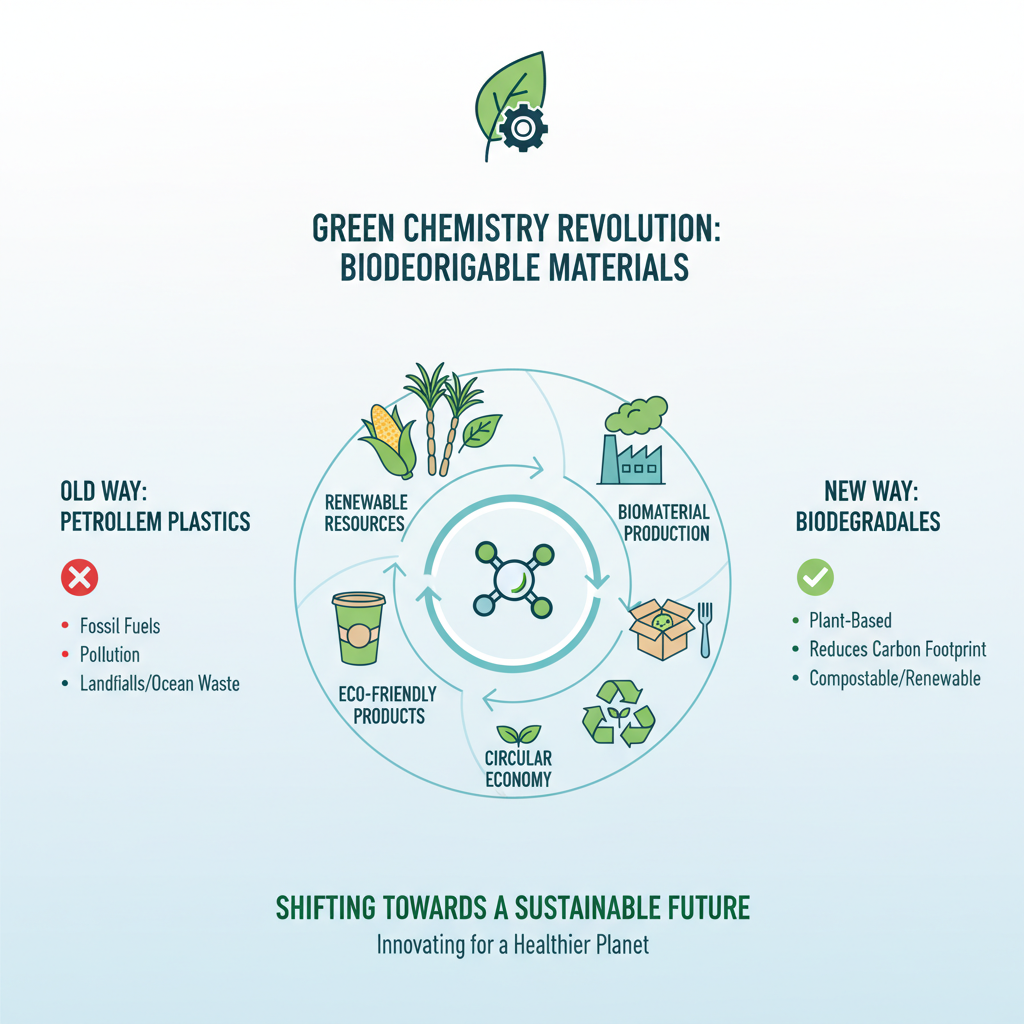
The rise of innovative biodegradable materials in chemical production marks a significant shift towards
sustainable development in the chemical manufacturing industry. Traditional petroleum-based plastics pose severe
environmental challenges, leading to a growing demand for alternatives that minimize ecological footprints. Biodegradable materials,
derived from renewable resources such as corn starch, sugarcane, and other plant-based inputs, represent a promising solution. These materials not only reduce reliance on fossil fuels
but also offer a pathway toward a circular economy, where waste products can be transformed into new resources.
Moreover, advancements in biopolymer technology are enabling the development of high-performance biodegradable products suitable for various applications,
from packaging to medical supplies. Companies are increasingly investing in research and collaboration to enhance the properties of these materials, ensuring they meet industry standards while being
environmentally friendly. As regulatory pressures intensify and consumer awareness grows, the shift towards biodegradable materials could redefine the landscape of chemical production, pushing the industry
towards more sustainable practices that align with global climate goals.
Collaboration and Policy Support for Sustainable Chemical Practices
Collaboration among various stakeholders is essential for advancing sustainable practices in chemical manufacturing. Industry players, policymakers, and researchers must work together to formulate innovative strategies that address environmental concerns while maintaining economic viability. Public-private partnerships can foster knowledge sharing and technological advancements, allowing for the development of greener processes and materials. This collaborative approach also enables companies to leverage public funding for research and development, making sustainability not just a regulatory requirement, but a competitive advantage.
Policy support plays a crucial role in guiding the chemical manufacturing sector towards sustainability. Governments can implement regulations and incentives that encourage the adoption of eco-friendly practices, such as reduced emissions, waste minimization, and energy efficiency. Policies that promote circular economy principles, like recycling and product life cycle management, can drive systemic change in the industry. Moreover, by establishing clear metrics for sustainability performance, policymakers can help companies track their progress and make informed decisions. Ultimately, effective collaboration and robust policy frameworks are vital in transitioning chemical manufacturing towards a more sustainable future.
Top Trends in Chemical Manufacturing for Sustainable Development
This bar chart illustrates the increasing adoption of sustainable practices in chemical manufacturing, highlighting key trends such as the integration of renewable energy, reduction of hazardous waste, and collaboration in research and development.