What is a Process Catalyst and How Does It Work?
In the realm of industrial chemistry, a "process catalyst" plays a crucial role. These substances speed up reactions without being consumed. Dr. Emily Johnson, a leading expert in catalytic processes, once stated, "Catalysts are the silent heroes of chemical manufacturing." This highlights their importance in enhancing efficiency.
Process catalysts are everywhere. They are found in various industries, from petrochemicals to pharmaceuticals. The impact of catalysts is significant. They reduce energy consumption and improve yield. However, the choice of a catalyst can be complex. Not all catalysts suit every reaction, and some may have unintended consequences.
Understanding a process catalyst involves more than knowing its function. It requires exploring its design, effectiveness, and limitations. As the industry evolves, new materials emerge. Innovations bring hope but also uncertainty. Balancing performance with sustainability remains a challenge. In this dynamic landscape, the role of process catalysts will continue to spark discussions and developments.
What is a Process Catalyst?
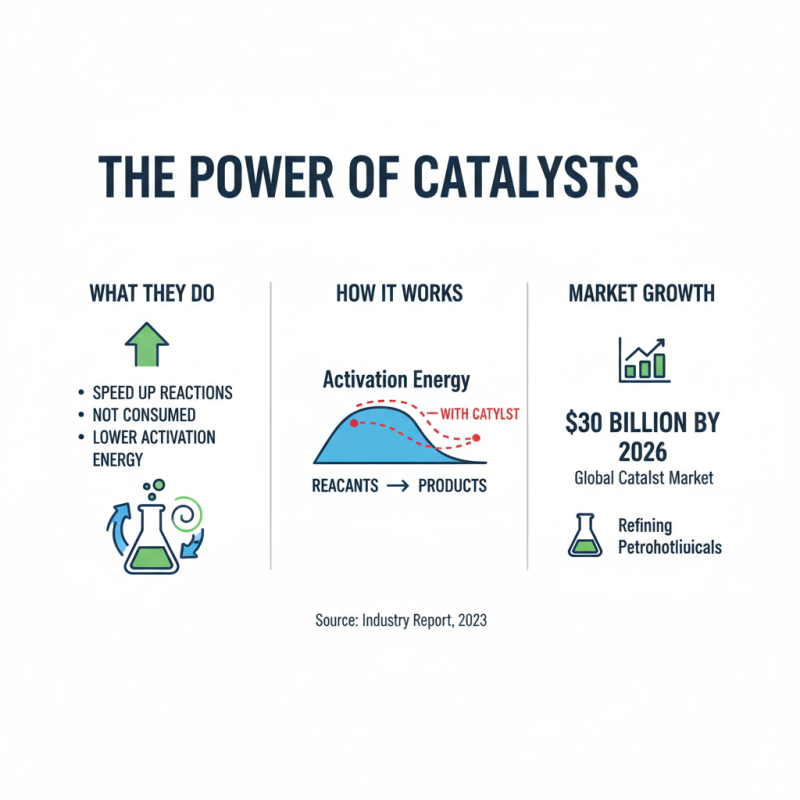
A process catalyst plays a crucial role in chemical reactions. It accelerates the reaction without undergoing any permanent change itself. This means that a catalyst can be reused multiple times. Catalysts lower the activation energy required, making reactions happen more efficiently. They are essential in industries like pharmaceuticals, oil refining, and environmental protection.
There are various types of catalysts. Homogeneous catalysts are in the same phase as the reactants. They interact at a molecular level, allowing for efficient energy transfer. Heterogeneous catalysts, on the other hand, exist in a different phase. They often provide a solid surface for reactions. Both types have their advantages and drawbacks.
Choosing the right catalyst is not always clear. Some may be effective but can be costly or difficult to source. Others might work well under specific conditions but perform poorly in others. This creates a challenge for scientists and engineers aiming to optimize chemical processes. Experimentation often reveals unforeseen issues, requiring adjustments and refining approaches.
Process Catalyst Efficiency Comparison
The Role of Catalysts in Chemical Reactions
Catalysts play a vital role in speeding up chemical reactions without being consumed. They lower the activation energy needed for reactions to occur. This means they make it easier for reactants to transform into products. According to a recent industry report, the global catalyst market is projected to reach $30 billion by 2026, driven by demand in refining and petrochemicals.
Understanding how catalysts work can help in many applications. They are present in everyday processes, such as the automotive industry, which uses catalytic converters. These devices reduce harmful emissions by accelerating the conversion of exhaust pollutants. A small amount of catalyst can lead to significant changes in reaction rates. However, efficiency can vary. Sometimes catalysts can fail to perform as expected due to impurities or adverse conditions.
Tips: Always monitor the conditions where the catalyst operates. Temperature and pressure changes might affect performance. Even the best catalysts can degrade over time, losing their effectiveness. Regular maintenance and testing can ensure optimal function. Finding the right catalyst for a specific reaction takes time and experimentation, so patience is essential.
Types of Process Catalysts Used in Industry
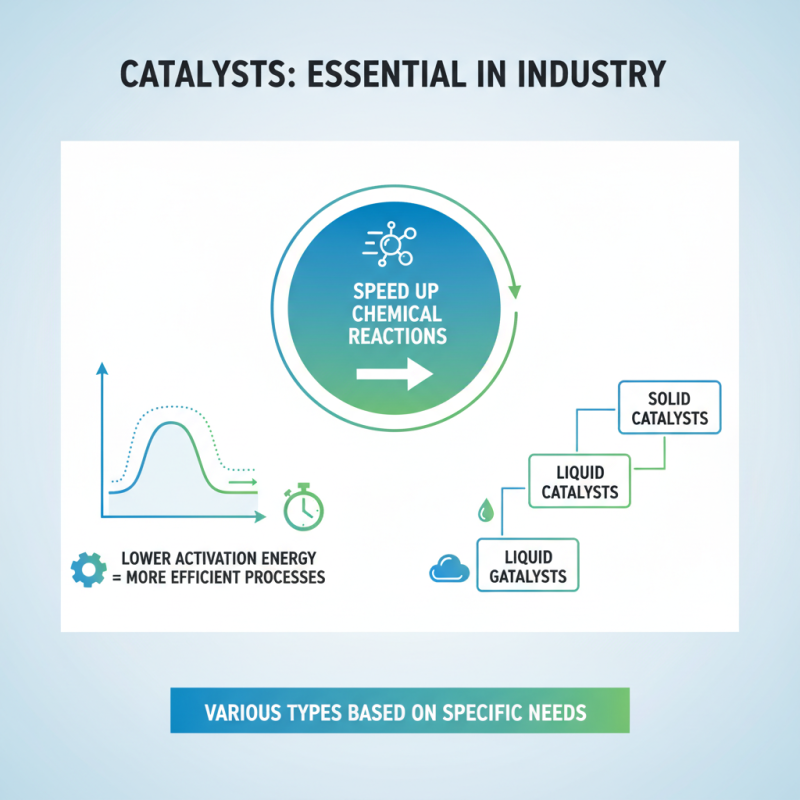
Catalysts are essential in industry, speeding up chemical reactions. They lower activation energy, making processes more efficient. Various types of catalysts are employed based on specific needs. Some catalysts are solid, while others are liquid or gaseous.
One common type is homogeneous catalysts. These are in the same phase as the reactants, often seen in liquid reactions. They provide uniform interaction, which enhances reaction rates. On the other hand, heterogeneous catalysts exist in a different phase. They typically come as solids, often used to catalyze gas reactions. This separation can lead to easier product recovery.
Enzymatic catalysts are another category. They are biological and work under mild conditions. They offer specificity in biochemical reactions. However, their stability can be a concern in harsh industrial settings. Each catalyst type has pros and cons. Choosing the right catalyst involves understanding the process and the desired outcome. This decision impacts efficiency and cost. It's crucial to reflect on these factors when selecting a catalyst.
Mechanisms of Action: How Catalysts Facilitate Reactions
Catalysts play a crucial role in chemical reactions by lowering activation energy. This process enables reactions to occur more efficiently. According to a study by the International Energy Agency, catalysts can enhance reaction rates by up to 1000 times. This dramatic increase significantly improves manufacturing processes in various industries.
Understanding how catalysts work can be complex. They provide an alternative reaction pathway, which requires less energy. By binding to reactants, they create an intermediate that requires reduced energy to form products. In many cases, catalysts do not alter the overall reaction equilibrium.
However, challenges remain. Some catalysts can become deactivated over time. Factors such as temperature and impurities can impact their effectiveness. A report by the American Chemical Society noted that roughly 30% of catalysts used in key processes are eventually rendered inactive due to these issues. This raises questions about catalyst longevity and the economic implications for industries relying on them.
What is a Process Catalyst and How Does It Work?
| Catalyst Type |
Chemical Reaction |
Activation Energy Reduction (%) |
Reaction Time Reduction (%) |
Common Applications |
| Heterogeneous Catalyst |
Hydrogenation of Alkenes |
30% |
50% |
Petrochemical Industry |
| Homogeneous Catalyst |
Esterification Reaction |
25% |
40% |
Food Industry |
| Enzyme Catalyst |
Biological Degradation of Organic Materials |
15% |
60% |
Environmental Applications |
| Transition Metal Catalyst |
Cross-Coupling Reactions |
40% |
70% |
Pharmaceutical Industry |
Applications and Benefits of Using Process Catalysts
Process catalysts play a vital role in various industries. They enhance chemical reactions, making processes more efficient. Typically, these catalysts lower the energy required for reactions. This leads to faster production times and reduced costs. In many applications, even small amounts of a catalyst can significantly change the outcome.
The benefits are substantial. For instance, in petrochemical refining, catalysts help convert crude oil into useful products. This results in cleaner fuels and less waste. Additionally, in pharmaceutical production, catalysts can create complex molecules with high specificity. However, it’s important to mention that not all processes benefit equally. Some reactions may require different approaches for optimal efficiency.
In real-world applications, the choice of catalyst remains crucial. One might struggle to find the perfect catalyst for a specific reaction. This leads to research and development challenges. Adjustments in temperature or pressure can yield unexpected results. Understanding these nuances is essential for maximizing the benefits of process catalysts.