How to Optimize Chemical Process Development for Global Buyers?
Chemical process development is critical for meeting the demands of global markets. According to a recent report by MarketsandMarkets, the global market for chemical process optimization is expected to reach $28 billion by 2025. This underscores the need for businesses to streamline their processes for efficiency. The challenge lies in balancing innovation with cost-effectiveness.
Many companies struggle to adapt to rapid changes in market needs. Inefficient chemical processes can lead to increased costs and wasted resources. A study by McKinsey found that organizations implementing optimized processes can reduce production costs by up to 25%. Investing in research and development is essential for staying competitive. However, some firms hesitate to take risks. They often fear the potential failures of new methods.
The journey of chemical process development requires careful planning and execution. Collaborating with experts can guide this process. Yet, firms must also evaluate their existing practices critically. This reflection can uncover hidden inefficiencies. Companies that embrace both innovation and analysis will likely thrive. After all, the future of chemical process development is not just about technology, but also about being adaptable in an ever-changing landscape.

Understanding the Needs of Global Buyers in Chemical Process Development
Understanding the needs of global buyers in chemical process development is crucial for success. Buyers seek innovative solutions that increase efficiency and reduce costs. They value transparency and want to know about every development stage. Keeping them informed fosters trust and long-term relationships.
Buyers also appreciate sustainability. Eco-friendly processes are increasingly important in decision-making. Companies must showcase their commitment to environmental practices. However, balancing cost and sustainability poses challenges. A viable process should not only meet budget constraints but also adhere to environmental standards.
Communication plays a vital role in this relationship. Regular updates can fine-tune the development process. Yet, misunderstandings may occur. Sometimes, critical feedback might be overlooked. Paying attention to buyer insights can lead to necessary adjustments. Engaging with them often can clarify expectations.
Optimization of Chemical Process Development for Global Buyers
Key Strategies for Efficient Chemical Process Optimization
Optimizing chemical process development requires a strategic approach tailored to the needs of global buyers. Understanding local market demands is crucial. Each region has varying regulations and customer preferences, influencing the choice of raw materials and processes. Engaging with local experts can provide insights that enhance product relevance. This localized strategy helps avoid common pitfalls in design and manufacturing.
Effective communication among team members is vital for collaboration. Regular meetings can help align goals and expectations. Moreover, utilizing digital tools for project management promotes efficiency and oversight. Data analytics also plays a significant role. It allows companies to gather real-time feedback and make informed decisions quickly. However, reliance on data can sometimes lead to analysis paralysis if not managed well.
Adopting a flexible approach means being open to modifications based on testing outcomes. Each iteration should aim for improvement, yet not every change yields the desired results. Encouraging a culture of reflection among team members can help identify what works and what doesn’t. Acknowledging failures is part of the learning process. This commitment to continuous improvement is essential for meeting the evolving demands of global buyers.
How to Optimize Chemical Process Development for Global Buyers? - Key Strategies for Efficient Chemical Process Optimization
| Optimization Strategy |
Typical Improvement Metrics |
Implementation Difficulty |
Estimated Time Savings |
Global Impact |
Cost Efficiency Increase (%) |
| Process Analytical Technology (PAT) Integration |
±3% product purity variation reduced |
Medium |
20%-30% |
Uniform quality across countries |
12 |
| Modular Process Design |
Lead time reduced by 25% |
High |
25%-40% |
Faster scale-up for diverse markets |
15 |
| Data-Driven Optimization (Machine Learning) |
Yield improvement by 5-7% |
High |
30%-50% |
Adaptive to regional raw material variability |
18 |
| Green Chemistry Implementation |
Hazardous waste reduced by 40% |
Medium |
15%-25% |
Meets international environmental regulations |
10 |
| Continuous Flow Chemistry |
Reaction time cut by 50% |
High |
40%-60% |
Consistent quality worldwide |
22 |
| Supplier Collaboration & Qualification |
Raw material variability ±2% |
Low |
10%-15% |
Improved supply chain reliability |
8 |
Leveraging Technology and Data Analytics in Chemical Processes
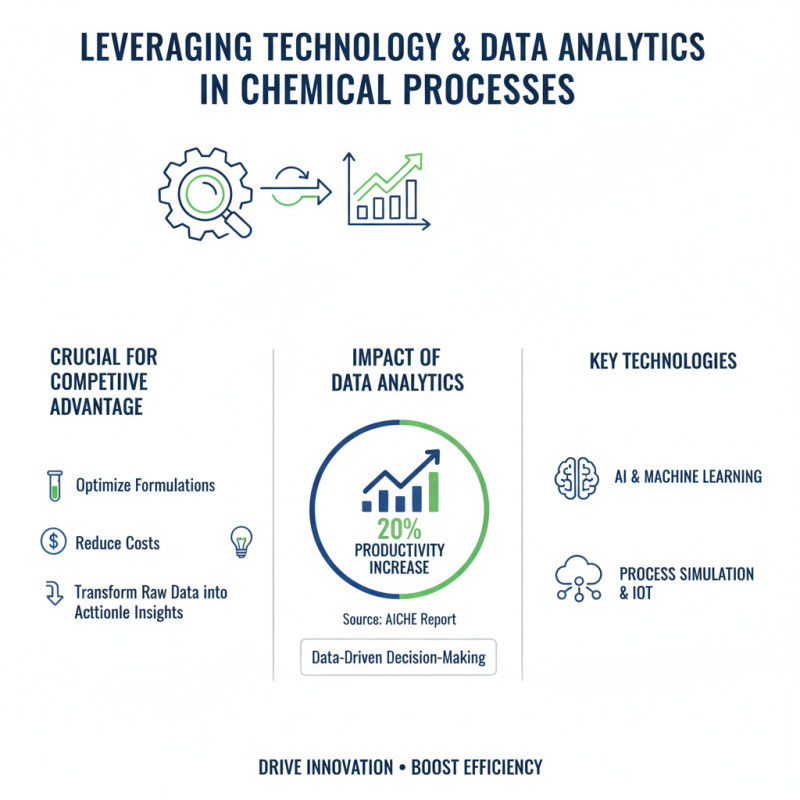
In today's competitive landscape, leveraging technology and data analytics in chemical processes is crucial. According to a report from the American Institute of Chemical Engineers, companies utilizing data analytics see a productivity increase of around 20%. This highlights the importance of data-driven decision-making in chemical process development. Advanced technologies can help optimize formulations and reduce costs, transforming raw data into actionable insights.
Utilizing predictive analytics can enhance operational efficiency. By monitoring real-time data, companies can identify inefficiencies promptly. Improperly identifying trends leads to missed opportunities for improvement. Investing in data visualization tools can translate complex data into understandable formats, aiding teams in making informed decisions.
Tip: Regularly train staff on data interpretation skills. This ensures everyone is equipped to utilize technological advancements effectively. Developing a culture of continuous learning can further optimize processes and foster innovation. However, it’s essential to evaluate the quality of data regularly. Data inaccuracies can lead to misguided strategies, undermining potential gains.
Collaborative Approaches to Enhance Supply Chain and Quality Control
In the world of chemical process development, collaboration has become essential. Companies increasingly seek to enhance their supply chains and maintain quality control. According to a report by McKinsey, over 70% of firms face challenges in coordinating with global partners. This complexity often leads to inefficiencies. Improved collaboration can significantly mitigate these issues.
Sharing information among stakeholders is vital. Open communication helps address potential quality concerns early. A recent study by Deloitte revealed that companies with strong collaborative practices see a 20% decrease in defects. By leveraging technology, teams can create real-time updates to ensure compliance with stringent quality standards. However, difficulties can arise when integrating different systems.
Moreover, building trust is key for successful collaboration. Without trust, teams may hesitate to share critical data. Research indicates that only 30% of companies actively foster such relationships. Time and effort are necessary to cultivate a collaborative environment. Regular meetings and workshops can help bridge gaps. Yet, organizations sometimes overlook these practices, leading to missed opportunities for optimization.
Regulatory Considerations and Compliance for International Markets
Navigating regulatory considerations is crucial for chemical process development aimed at global markets. Different countries have varying regulations. Understanding local guidelines helps in avoiding costly compliance issues. For instance, the REACH regulation in Europe necessitates prior registration of chemicals. A robust compliance strategy simplifies market entry and enhances trust with buyers.
Obtaining accurate documentation is often a pain point. Incomplete files can lead to delays in approvals. Companies should invest in thorough record-keeping from the outset. This attention to detail builds credibility with regulatory bodies and partners. Training personnel on local compliance requirements is essential. A knowledgeable team can proactively address potential hurdles in the approval process.
Moreover, engaging local experts can clarify complex regulations. Regional consultants often possess insights that can streamline development efforts. However, relying solely on third-party advice without critical evaluation can be risky. Firms must balance expert input with their internal knowledge, fostering a collaborative environment. Continuous reflection on these practices ensures ongoing compliance and aids in quicker adaptation to evolving regulations.