Why is the Catalyst Industry Essential for Sustainable Energy Solutions?
The catalyst industry plays a crucial role in developing sustainable energy solutions. Catalysts facilitate chemical reactions, making processes more efficient and environmentally friendly. With growing concerns about climate change, the demand for innovative catalysts is rising. This industry helps in reducing greenhouse gas emissions and enhancing energy efficiency.
For example, catalysts are vital in fuel cells and batteries. They improve performance while using less energy. Their application extends to renewable energy sources, such as hydrogen production from water. The catalyst industry's advancements directly impact global energy strategies.
However, challenges remain. Not all catalysts are equally effective, and some materials are scarce. This can lead to sustainability concerns within the industry itself. Moreover, not all countries invest equally in catalyst research. The industry must navigate these issues while striving for progress. The future of energy relies heavily on this complex yet essential sector.

The Role of Catalysts in Enhancing Renewable Energy Efficiency
Catalysts play a crucial role in improving the efficiency of renewable energy systems. They increase the speed of chemical reactions, allowing the conversion of resources into energy more effectively. According to the International Energy Agency, catalysts could enhance the efficiency of hydrogen production by up to 50%. This improvement can significantly impact how we harness clean energy.
In the realm of solar energy, catalysts help optimize the conversion of sunlight into electricity. For instance, new catalytic materials can facilitate the splitting of water molecules. Experts estimate that these advancements may boost overall solar cell efficiency from 20% to nearly 30%. This leap could transform our energy landscape dramatically.
However, the catalyst industry faces challenges. There is a need for more sustainable materials that minimize environmental impact. Transitioning to greener options remains a work in progress. Data show that current catalysts often rely on rare minerals, which raises ethical and ecological concerns. The industry must address these issues to ensure responsible growth and the long-term viability of renewable energy solutions.
Global Catalytic Converter Market: Statistics and Growth Trends
The global catalytic converter market is undergoing significant transformation. Recent statistics show that the market is projected to reach approximately $40 billion by 2025. This growth represents an annual increase of about 7% from previous years. Such trends underline the critical role of catalysts in clean energy solutions.
Catalytic converters are essential for reducing harmful emissions. They convert toxic gases into less harmful substances. The automotive sector is a major consumer of these devices. It accounts for nearly 70% of the demand. However, this industry faces challenges. As governments tighten environmental regulations, manufacturers must innovate. Transitioning to greener technologies is not just a trend; it is a necessity.
Moreover, new materials and processes are emerging. The shift towards electric vehicles is altering the landscape. Traditional metals used in converters may become less relevant. This calls for a reevaluation of supply chains. The market is also influenced by fluctuating prices of precious metals. These changes create uncertainties but also opportunities for growth and innovation.
Impact of Catalysts on Hydrogen Production for Clean Energy Solutions
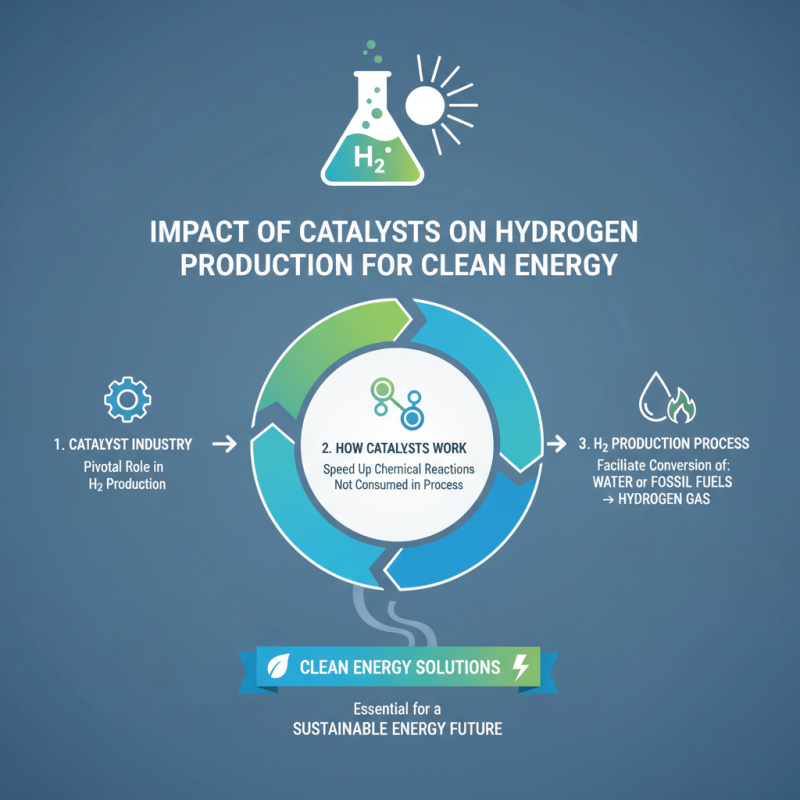
The catalyst industry plays a pivotal role in hydrogen production, driving forward the clean energy revolution. Catalysts are substances that speed up chemical reactions without being consumed. In hydrogen production, they facilitate the conversion of water or fossil fuels into hydrogen gas. This process is essential for creating a sustainable energy future.
However, the industry faces challenges. Many existing catalysts rely on rare metals, which can limit scalability. Moreover, there are ongoing debates about the environmental impact of extracting these materials. It's crucial to develop alternatives that are both effective and sustainable. Research is ongoing to create catalysts from abundant, non-toxic materials. Finding solutions requires collaboration and innovation.
Hydrogen, as a clean energy solution, holds great promise. It generates only water when used as fuel. Yet, production methods need improvement. The efficiency of catalytic processes must be enhanced. This is where the true challenge lies. Catalysts must be optimized for performance and cost-effectiveness. Sustainable solutions are within reach, but we must address these issues thoughtfully and creatively.
Catalysts in Carbon Capture: Reducing Industrial Emissions Significantly
Catalysts play a crucial role in carbon capture technologies. They help convert carbon dioxide emissions into less harmful substances. In industrial processes, these catalysts can significantly decrease greenhouse gas emissions. By facilitating chemical reactions, they transform CO2 into useful products.
Improving catalyst efficiency is essential. Many existing options have limitations. They can be costly or ineffective under certain conditions. Researchers are exploring new materials and methods. Success in these areas could lead to more widespread adoption and lower operational costs.
The urgency of reducing industrial emissions cannot be overstated. Every reduction counts in the fight against climate change. Yet, challenges remain. The balance between efficacy and cost is delicate. Addressing this will require ongoing innovation and collaboration in the catalyst industry. Solutions must be practical and ready for implementation.
Why is the Catalyst Industry Essential for Sustainable Energy Solutions?
| Emission Source |
Catalyst Type |
Reduction Efficiency (%) |
Application Area |
CO2 Reduced (tons/year) |
| Cement Production |
Calcium Looping |
40 |
Industrial |
300,000 |
| Steel Production |
Metal Oxide |
30 |
Industrial |
250,000 |
| Natural Gas Processing |
Amine Solutions |
25 |
Energy |
200,000 |
| Power Plants |
Selective Catalytic Reduction |
50 |
Energy |
500,000 |
| Refineries |
Hydrotreating Catalysts |
35 |
Energy |
400,000 |
Innovative Catalytic Processes for Biofuel Production and Sustainability
The catalytic processes for biofuel production play a crucial role in sustainable energy solutions. Advanced catalysts can enhance the efficiency of biofuel production, promoting economic viability. For instance, a study found that efficient catalytic reactions can increase biodiesel yields by up to 98%. This is significant in addressing global energy needs.
In recent years, the industry has seen innovative approaches, such as using biomass or waste materials. Reports indicate that utilizing waste can boost sustainability by reducing feedstock costs. However, developing these catalytic processes requires continuous research. It’s essential to innovate while ensuring economic and environmental sustainability doesn't falter amidst rising demands.
Despite the advancements, challenges persist. The performance of some catalysts may degrade over time. Moreover, not all catalytic processes are scalable. There’s a need for in-depth exploration into more robust solutions. Current methods may also produce by-products that hinder overall sustainability. Continuous improvement and adaptation are vital for the industry's future.