Why Fine Chemicals Are Essential for Global Procurement?
Fine chemicals play a pivotal role in global procurement. They are indispensable for various industries, from pharmaceuticals to agriculture. Renowned expert Dr. Jane Thompson, a leading figure in the fine chemical sector, once stated, “Fine chemicals bridge innovation and application in countless products we depend on daily.” This insight underscores the unique value fine chemicals bring to the table.
Everyday products rely heavily on these specialized compounds. High-quality fine chemicals enable the creation of consumer goods that meet strict safety and efficacy standards. Despite their importance, the industry faces challenges, such as supply chain vulnerabilities and sustainability concerns. These issues highlight the need for constant reflection and improvement within the sector.
As the market evolves, understanding fine chemicals becomes essential for businesses. They not only influence production efficiency but also impact market competitiveness. Companies that overlook fine chemicals may find themselves at a disadvantage. Addressing these complexities requires a commitment to innovation and collaboration within the fine chemical community.

The Role of Fine Chemicals in Global Supply Chains
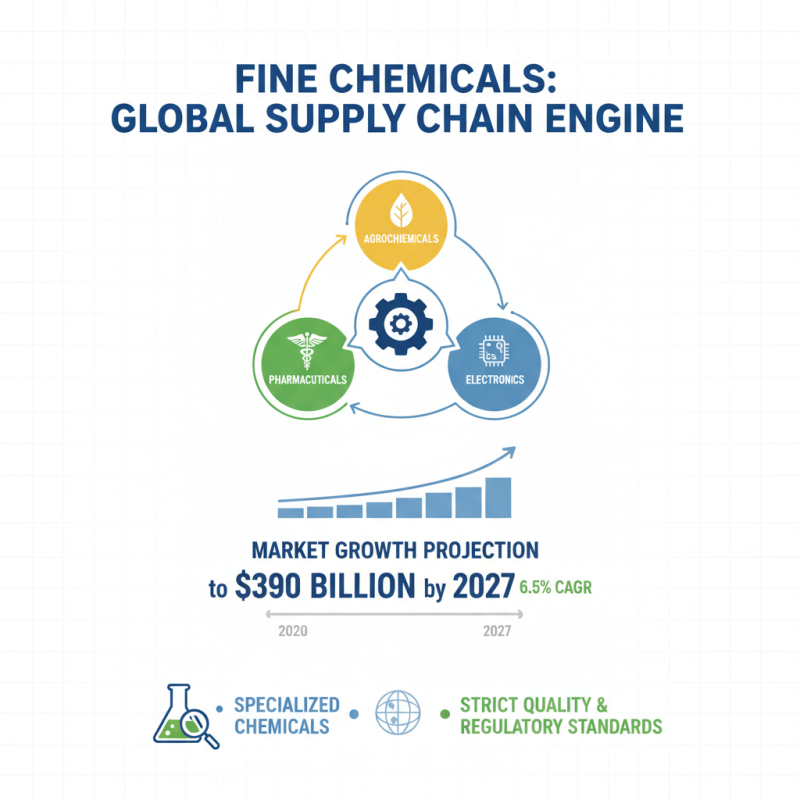
Fine chemicals play a vital role in global supply chains. They are essential for various industries, including pharmaceuticals, agrochemicals, and electronics. According to a recent report by Grand View Research, the global fine chemicals market is projected to reach $390 billion by 2027, growing at a compound annual growth rate (CAGR) of 6.5%. This growth reflects the increasing demand for specialized chemicals that meet stringent quality and regulatory standards.
Supply chains heavily rely on fine chemicals for the production of active pharmaceutical ingredients and agricultural solutions. For instance, fine chemicals account for approximately 30% of the cost of drug manufacturing. Yet, many companies face challenges in sourcing these specialized materials due to market fluctuations and geopolitical uncertainties. The reliance on few suppliers can lead to vulnerabilities, as evidenced by recent disruptions during the pandemic. This has highlighted the need for a diversified procurement strategy, with local sourcing becoming more appealing to mitigate risks.
Moreover, sustainability is increasingly important. Manufacturers are urged to adopt greener processes in fine chemical production. Reports indicate that around 25% of companies are investing in bio-based fine chemicals. However, transitioning to sustainable practices requires substantial investment. This challenge prompts reflection on balancing innovation and environmental responsibility. Finding this equilibrium will be crucial for the continued relevance of fine chemicals in global supply chains.
Key Industries Reliant on Fine Chemicals for Production
Fine chemicals play a vital role in various key industries, driving innovation and ensuring production continuity. The pharmaceuticals sector heavily relies on fine chemicals to develop lifesaving drugs. Active pharmaceutical ingredients (APIs) are crafted from fine chemicals, allowing for precise formulations. Without these specialized compounds, many therapeutic treatments would be impossible to produce.
The agrochemical industry also depends significantly on fine chemicals to create effective pesticides and fertilizers. These substances enable farmers to enhance crop yields and protect plants from pests. However, sustainability concerns are rising. The environmental impact of certain fine chemicals can be troubling. Industries are now challenged to balance effective solutions with eco-friendliness.
The electronic sector utilizes fine chemicals for manufacturing semiconductors and circuit boards. High-purity fine chemicals ensure the quality and reliability of electronic components. Yet, this dependency raises concerns about supply chain resilience. Global disruptions can impact availability. Companies must rethink sourcing strategies to mitigate risks. The interconnectedness of these industries highlights the importance of fine chemicals in achieving both technological advancements and sustainability goals.
Strategic Importance of Fine Chemicals in Procurement Strategies
Fine chemicals are fundamental to modern procurement strategies. These substances serve as building blocks for various industries, including pharmaceuticals, agrochemicals, and electronics. According to a report by Allied Market Research, the fine chemicals market is projected to reach over $250 billion by 2027, highlighting their growing importance. These chemicals enhance product performance and sustainability, making them indispensable.
Procurement teams face challenges in sourcing fine chemicals. There are issues with supply chain stability and quality assurance. A survey by McKinsey shows that approximately 45% of procurement leaders report difficulties in securing reliable suppliers. This variability can complicate planning and inventory management. Moreover, regional disparities in production capabilities can lead to risks.
Strategically, businesses must adapt their procurement approaches to mitigate these challenges. A strategic alignment with suppliers can foster innovation and efficiency. Balancing cost considerations with quality is essential. It demands careful supplier vetting and continuous market evaluation. Investing in long-term relationships with fine chemical producers can prove beneficial. However, it requires ongoing efforts and a willingness to reassess strategies regularly.
Global Fine Chemicals Market Segmentation by Application
Challenges in Sourcing Fine Chemicals on a Global Scale
Sourcing fine chemicals globally is a complex task. It involves various challenges that can disrupt supply chains. The intricate nature of fine chemicals demands specialized knowledge. They are often used in pharmaceuticals, agrochemicals, and specialty chemicals. Each application has specific requirements, complicating the sourcing process.
Quality control is a major concern. Manufacturers must ensure that every batch meets stringent standards. Variability in raw materials can lead to unexpected results. Different countries have varying quality regulations, too. Navigating this landscape requires expertise and vigilance.
Logistical issues also pose significant hurdles. Transporting fine chemicals can be risky. Storage conditions must be carefully managed to maintain quality. Delays at ports can lead to inventory shortages. These factors necessitate contingency planning. Developing strong relationships with multiple suppliers helps mitigate risks. However, this can be resource-intensive and requires continuous effort.
Future Trends Influencing the Fine Chemicals Market Globally
The fine chemicals market is evolving rapidly, driven by various influencing trends. Global demand for specialty chemicals is projected to grow at a CAGR of 5.5% from 2022 to 2030. This growth is influenced by the increasing demand for advanced materials in pharmaceuticals and agrochemicals. With greater emphasis on sustainability, companies are shifting their focus to green chemistry practices. This shift is not just a trend; it is a necessity for meeting stringent regulations and consumer expectations.
Moreover, the push for innovation continues to shape the fine chemicals landscape. Research indicates that more than 70% of leading companies are investing significantly in R&D to develop novel compounds. These advancements often come with challenges, such as sourcing raw materials sustainably. The volatility of raw material prices can lead to increased production costs, making efficient supply chain management essential.
Competitiveness in the fine chemicals sector hinges on collaboration and technology adoption. Companies are leveraging digital tools to enhance visibility in their supply chains. However, this reliance on technology brings its own set of vulnerabilities, including cybersecurity risks. As businesses adapt to these trends, they must remain agile, addressing shortcomings in both their operational and strategic frameworks. These complexities highlight the dynamic nature of the fine chemicals market today.
Why Fine Chemicals Are Essential for Global Procurement? - Future Trends Influencing the Fine Chemicals Market Globally
| Dimension |
2022 Value |
2023 Value |
2024 Forecast |
Growth Rate (%) |
| Market Size (Billion USD) |
350 |
375 |
400 |
7.1 |
| Asia-Pacific Share (%) |
40 |
42 |
44 |
2.0 |
| Key Application Areas |
Pharmaceuticals, Agrochemicals |
Pharmaceuticals, Agrochemicals |
Pharmaceuticals, Electronics |
N/A |
| Sustainable Practices (%) |
30 |
35 |
40 |
5.0 |
| Investment in R&D (Billion USD) |
25 |
30 |
35 |
10.0 |