How to Choose the Right Natural Gas Catalyst for Your Needs?
Choosing the right natural gas catalyst is crucial for efficiency and performance. It impacts various processes in energy production and industrial applications. Understanding different catalysts is essential to make informed decisions.
Natural gas catalysts come in various types, each designed for specific reactions. Selecting the appropriate one depends on factors like temperature and pressure conditions. This choice can significantly affect the output quality and cost-effectiveness.
Users often overlook their exact needs when choosing a natural gas catalyst. A misplaced selection may lead to inefficient chemical reactions. It is vital to assess not only the technical specifications but also the long-term operational implications. Making a careful choice can enhance productivity and reduce environmental impact.
Understanding the Role of Natural Gas Catalysts in Energy Conversion
Natural gas catalysts play a crucial role in energy conversion processes. These catalysts facilitate reactions that transform natural gas into valuable products. They significantly improve efficiency and reduce emissions. According to industry reports, using catalysts can enhance conversion rates by up to 90%. This highlights their importance in meeting energy demands sustainably.
Selecting the right catalyst is not always straightforward. Various factors come into play, such as the specific reaction type and operating conditions. Research indicates that improperly chosen catalysts can lead to decreased performance or increased operational costs. For instance, a mismatch in temperature or pressure requirements can result in suboptimal outcomes. It’s critical to analyze the properties of natural gas and the intended application carefully.
Moreover, recent studies suggest that catalyst deactivation is a common challenge in this field. Factors like poisoning and sintering can diminish catalyst effectiveness over time. Up to 30% of catalysts can lose activity within just a few months of use. This reality necessitates ongoing evaluation of catalyst performance to ensure long-term reliability. Grounding selection processes in data-driven insights leads to better decisions in the energy sector.
Key Factors to Consider When Selecting a Natural Gas Catalyst
Choosing the right natural gas catalyst is crucial for optimal performance. Various factors come into play when making this decision. Consider the specific application of your project. The type of reaction you are targeting will dictate the most suitable catalyst. Each catalyst has unique properties that work better under certain conditions.
Tips: Evaluate the temperature and pressure ranges of your process. These conditions will affect the catalyst's efficiency and lifespan. A catalyst that thrives at high temperatures may not perform well at lower temperatures. It’s essential to align your catalyst selection with your operational parameters.
Another key aspect to ponder is catalytic activity. Different catalysts have varied activity levels, impacting reaction rates. A catalyst with lower activity might save costs upfront but can prolong process times. Conversely, high-activity catalysts often come with higher initial costs. Finding a balance between cost and efficiency is vital.
Tips: Perform tests with small-scale trials to gauge performance. Observations from these trials can guide you in making informed decisions. Remember, a catalyst’s reliability over time is as important as its immediate performance. Regularly revisiting your catalyst choices will help refine your approach.
Types of Natural Gas Catalysts and Their Applications
When selecting a natural gas catalyst, it's essential to understand the various types available and their unique applications. Common options include noble metal catalysts, transition metal oxides, and zeolites. Each type has specific benefits suited for different processes. For example, noble metal catalysts excel in oxidation reactions. They offer high efficiency but can be expensive.
Another option is transition metal oxides. These are often used in more aggressive conditions. They are effective in high-temperature environments. Zeolites, on the other hand, provide excellent catalytic support due to their porous structure. They facilitate chemical reactions while allowing for easier product separation.
Tips: Evaluate your specific requirements before choosing a catalyst. Consider factors such as temperature, pressure, and the desired reaction rate. Always research the catalyst's compatibility with your process. Remember that the most expensive option might not be the most effective for your needs. A trial run can help you identify potential inefficiencies.
It's important to continually assess your catalyst’s performance. Gradual changes can impact efficiency over time. Keep an eye on reaction yields. If things aren't working as expected, it may be necessary to revisit your choice of catalyst. Seek out expert advice when in doubt. Having a knowledgeable consultant can save time and resources.
Evaluating Catalyst Performance and Longevity
Choosing the right catalyst for natural gas applications involves evaluating both performance and longevity. A catalyst's efficiency can vary significantly. Industry reports indicate that catalysts can improve methane conversion rates by over 90%. Yet, not all catalysts are equal in durability. Some may degrade rapidly under harsh operational conditions, leading to increased operational costs.
When assessing catalyst longevity, it's crucial to consider both thermal stability and resistance to poisoning. Studies show that catalysts can lose up to 30% efficiency within the first few months due to environmental factors. Evaluating supplier data on durability is essential. It helps gauge how long a catalyst will maintain its performance level.
Tips: Always review third-party testing results. Seek information about the catalyst's behavior under specific conditions. Additionally, consider the cost per operation hour rather than just the initial purchase price. Longevity can greatly affect overall project viability. Balancing performance metrics with expected lifespan can make a significant difference in outcomes.
How to Choose the Right Natural Gas Catalyst for Your Needs? - Evaluating Catalyst Performance and Longevity
| Catalyst Type |
Performance (Conversion Efficiency %) |
Longevity (Years) |
Operating Temperature (°C) |
Cost ($/kg) |
| Platinum-Based Catalyst |
90 |
5 |
300 |
1500 |
| Nickel-Based Catalyst |
85 |
7 |
350 |
900 |
| Ruthenium Catalyst |
92 |
6 |
280 |
2000 |
| Cobalt Catalyst |
80 |
8 |
320 |
750 |
| Iron Catalyst |
75 |
10 |
400 |
500 |
Cost-Benefit Analysis of Different Natural Gas Catalysts
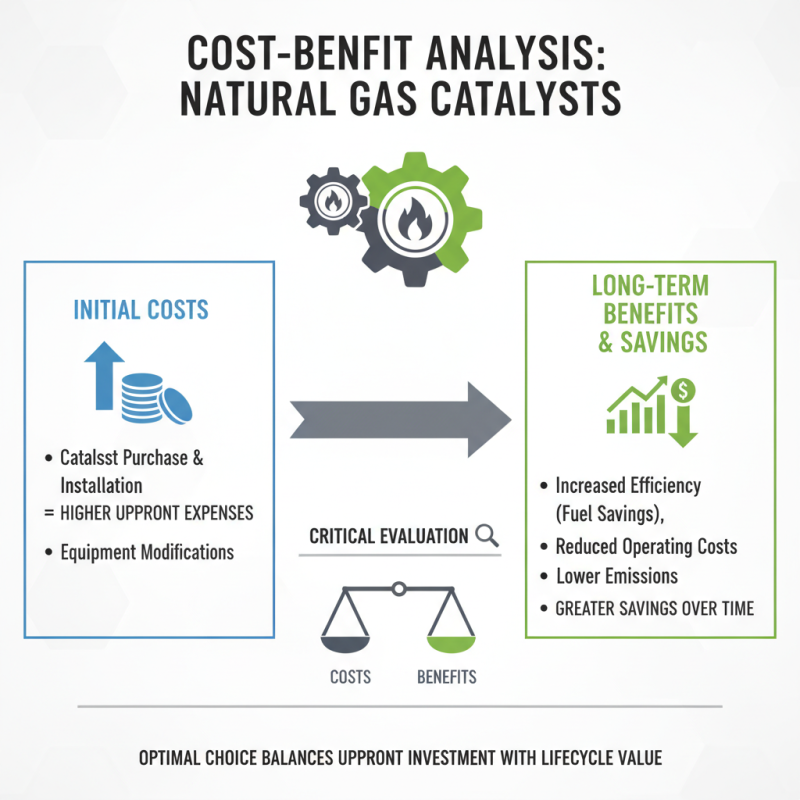
When choosing the right natural gas catalyst, conducting a cost-benefit analysis is vital. It involves evaluating both initial expenses and long-term savings. Different catalysts offer varied efficiency levels, which can impact operating costs significantly. For example, a more efficient catalyst might have higher upfront costs but lead to greater savings over time. This can be especially important in industrial applications where large volumes of gas are processed.
Another factor to consider is the catalyst's lifespan and performance under specific conditions. Some catalysts degrade faster than others, affecting their overall cost-effectiveness. A catalyst that works well in one setting may not perform the same in another. It’s essential to assess operational parameters such as temperature and pressure. Inappropriately matched catalysts can lead to subpar performance and increased expenses, prompting the need for frequent replacements.
Evaluating supplier support is equally crucial. Access to technical expertise can influence how effectively a catalyst operates over time. Poor support can lead to misunderstandings and misuse. In many cases, companies focus on immediate savings, overlooking potential hidden costs, such as maintenance or downtime. All these factors require careful reflection and analysis to ensure the best choice for your specific needs.