How to Choose the Best DC Solar Pump for Your Needs?
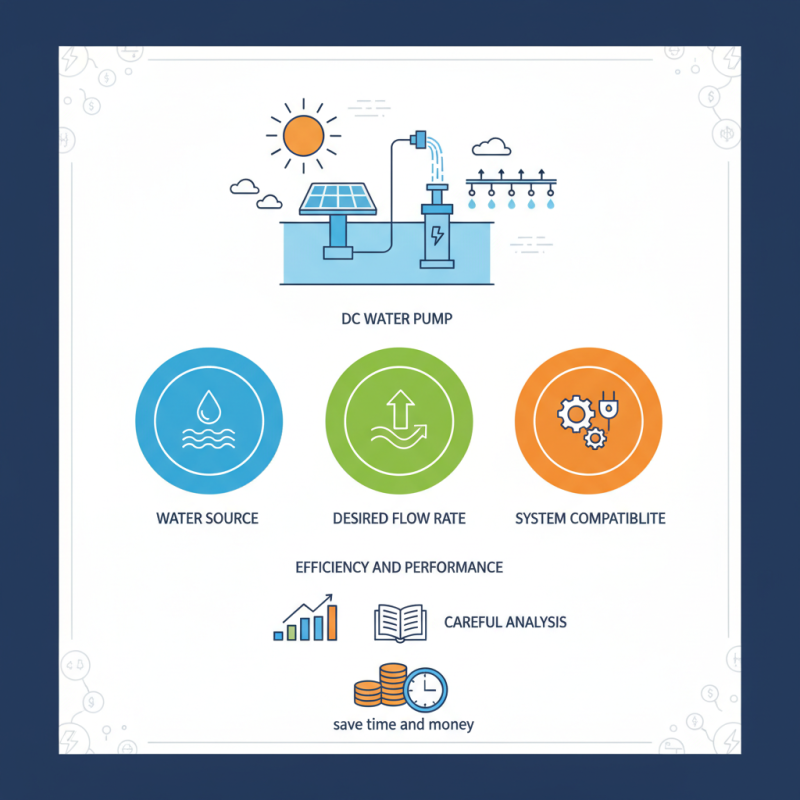
Choosing the right Dc Solar Pump is crucial for maximizing efficiency and performance. Expert Mike Turner, a veteran in renewable energy solutions, emphasizes, “An optimal solar pump can save you time and money.” Understanding your specific needs can make a significant difference in your selection process.
DC solar pumps come in various sizes and capacities. Each pump has unique features that cater to different applications. Before making a decision, consider your water source, desired flow rate, and system compatibility. It’s important to evaluate these factors thoroughly to avoid potential future issues.
While many may rush their choice, taking time to reflect can lead to better outcomes. Each project is different, and what works for one application may not work for another. A careful analysis of the specifications can help ensure you choose a DC solar pump that meets your needs effectively.
Factors to Consider When Selecting a DC Solar Pump System
When selecting a DC solar pump, several factors come into play. One key consideration is the pump's flow rate. This property defines how much water the pump can deliver per minute. Assess your specific needs, whether for irrigation, livestock watering, or household use. A higher flow rate is not always better. You might need a lower rate for smaller systems to avoid wasting energy.
Another important factor is the solar panel size. The panel should match the pump's energy requirements. An oversized panel can lead to inefficiencies, while an undersized one can hinder performance. Calculate the power needed based on the pump specifications. Additionally, take note of the battery capacity if your system includes one. It stores energy for cloudy days or nighttime use.
Lastly, consider the installation environment. A sandy or muddy area might require special features. The pump’s durability in harsh conditions is essential. Reflect on past experiences with similar systems or consult experts. Each installation comes with unique challenges, and understanding them can improve your selection process.
Understanding the Types of DC Solar Pumps Available on the Market
When selecting a DC solar pump, understanding the types available is essential. These pumps come in various categories. Each type serves different purposes, suited to distinct needs. For example, submersible pumps are ideal for deep wells. They efficiently draw water from significant depths, but installation can be complex. Surface pumps, on the other hand, work well for shallow water sources. They are easier to install but may not provide the same efficiency.
Another category is solar fountain pumps, primarily used for decorative water features. These pumps can be less powerful, making them unsuitable for irrigation. Meanwhile, diaphragm pumps are excellent for delivering high pressure. However, their size and complexity may be challenging for some users. These distinctions highlight that not all pumps are created equal. Choosing the right one can be overwhelming if you're unacquainted with each type's functionality.
It's important to consider your specific needs. For instance, a submersible pump may cost more but save you energy long-term. In contrast, a surface pump might be budget-friendly but inefficient for larger volumes. Reflecting on your water source depth and desired flow rate is crucial. Choosing a pump isn't just about immediate cost; it's about meeting your long-term needs effectively.
Evaluating the Power Requirements for Your Specific Application
When selecting a DC solar pump, understanding your power requirements is crucial. Different applications demand varying power levels. For example, a small garden irrigation system might need only 100 watts, while larger agricultural setups may require over 1,500 watts. Assessing your needs helps in choosing the right size. According to industry reports, up to 65% of users underestimate their power needs, resulting in inefficient operations. Accurate calculations can prevent these pitfalls.
Solar irradiance also plays a vital role in your pump's performance. Regions receive different sunlight levels, influencing the power output of your solar panels. For instance, areas with high average solar insolation can produce more energy. Conversely, cloudy or shaded environments diminish output. A study by the Solar Energy Industries Association indicates that 25% of installations fail to account for local weather patterns, leading to inadequate pump performance.
It’s essential to assess both daily and peak power needs. The total energy consumption should align with the solar system's capabilities. Energy audits can identify specific requirements, yet many users neglect this step. Engaging with professionals for a detailed analysis is often overlooked but can enhance efficiency and reduce long-term costs. Understanding these nuances reflects a commitment to making informed choices.
Assessing the Efficiency Ratings and Flow Rates of Solar Pumps
When selecting a DC solar pump, understanding efficiency ratings is essential. Efficiency ratings indicate how well a pump converts solar energy into water movement. A high efficiency rating means better performance, resulting in more water pumped using less energy. This is critical for off-grid applications where every watt matters.
Flow rates are another important factor. This measurement indicates how much water the pump can move over time. It varies based on the specific application. For example, a garden may need a different flow rate compared to a livestock watering system. Knowing your water demand helps match the pump’s capabilities to your needs.
Choosing the right balance of efficiency and flow rate requires some reflection. Not all situations are straightforward. Sometimes, a pump with a lower efficiency may suit specific conditions better. Analyzing your unique requirements allows for more informed choices. Frequent adjustments may be necessary as conditions change over time. Make sure to revisit your selection periodically.
Budgeting for Installation and Maintenance Costs of Solar Pump Systems
When considering the installation of a DC solar pump, budgeting is crucial. Initial costs are often higher than expected. It goes beyond just the pump price. You need to account for solar panels, controllers, and batteries. Conduct thorough research on these components. Each element affects overall performance and longevity.
Maintenance costs are another concern. Regular check-ups are vital. A neglected pump can lead to costly repairs. Factor in potential expenses for spare parts too. Some parts might need replacement every few years. If you’re not handy, hiring a professional could add to the budget.
Think about the solar pump's location. If it's remote, transportation for installation becomes a factor. Accessibility will impact labor costs. Explore whether your location requires permits or inspections. These hidden fees can creep into your overall cost. Consider all of these elements carefully to ensure a successful investment.
Cost Breakdown for DC Solar Pump Systems