What is Catalyst Scale Up and Why Does It Matter?
Catalyst scale up is a crucial process in the chemical industry, impacting efficiency and production on a large scale. According to a recent report by the Chemical & Engineering News, improving catalyst efficiency can lead to cost reductions of up to 30% in industrial processes. It has become essential for companies aiming to stay competitive. Expert Dr. Emily Carter notes, “Mastering catalyst scale up defines the future of sustainable industrial practices.” Her insight highlights the importance of this topic.
The catalyst scale up process can be complex. Various challenges arise during the transition from laboratory to commercial production. Inconsistent results can occur, risking both time and financial investments. The National Renewable Energy Laboratory emphasizes that approximately 70% of catalyst scale-up projects face significant hurdles. This data serves as a reality check for many in the industry.
Investing in effective catalyst scale up strategies can promote innovations in cleaner energy. Companies need to prioritize this area to ensure they meet global sustainability goals. However, the path to effective scale-up is not straightforward. Ongoing research and development are critical for overcoming existing challenges and advancing our understanding of this vital process.

Understanding Catalyst Scale Up: Definition and Importance
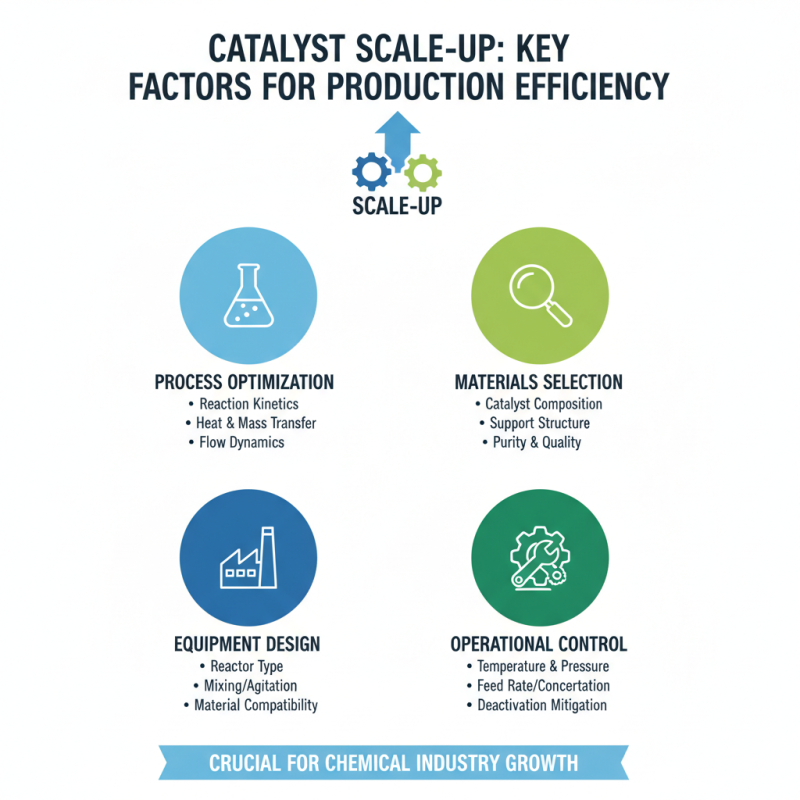
Catalyst scale-up is a critical step in industrial processes. It involves increasing the production scale of a catalyst. This step is pivotal for achieving commercial viability. Optimizing the catalyst at a larger scale can pose unforeseen challenges. Reaction conditions may vary from lab to production.
Understanding catalyst scale-up helps ensure efficient processes. Small-scale experiments may yield excellent results. However, translating these to larger operations isn't always straightforward. Factors like heat management and mass transfer can alter outcomes. Ineffective scale-up can lead to reduced performance.
The implications of effective catalyst scale-up are significant. A successful transition can mean the difference between profit and loss. Companies should pay close attention to this phase. A mistake in scaling can have far-reaching effects. Reflection on past experiences is essential for improvement. Each project offers lessons for future endeavors.
The Process of Catalyst Scale Up: Step-by-Step Overview
Catalyst scale-up is essential in chemical engineering. It involves transferring a process from laboratory to industrial scale. This step is critical for ensuring efficiency and sustainability. The process begins with optimizing the catalyst's performance under laboratory conditions. Data from industry reports reveal that over 40% of catalysts lack scalability. This highlights the need for thorough testing and development at each stage.
After initial development, engineers must assess production parameters. This includes reaction kinetics, temperature control, and material handling. A recent study indicated that 30% of scale-up projects experience significant setbacks due to unexpected catalyst behavior. These issues often arise from differences between small-scale and large-scale environments. Properly addressing these variables is vital.
Finally, continuous monitoring during production is crucial. Adjustments may be necessary to maintain reaction conditions. Moreover, feedback loops should be established to ensure optimal performance. A well-documented process can lead to improvements while minimizing risks. Remember, scaling up is not merely about size but also enhancing efficiency and sustainability in operations.
Applications of Catalyst Scale Up in Various Industries
Catalyst scale-up plays a vital role across various industries, featuring prominently in chemical manufacturing, pharmaceuticals, and energy. This process involves enhancing the efficiency of catalysts for larger production volumes. According to a 2021 report by MarketsandMarkets, the global catalyst market size is expected to reach USD 47.42 billion by 2026, reflecting the growing significance of this technology.
In the petrochemical industry, catalyst scale-up is crucial for maximizing output while minimizing costs. A study showed that optimized catalysts can reduce processing costs by up to 30%. This is essential for maintaining competitiveness in a rapidly evolving market. Similarly, in pharmaceuticals, scaling up catalysts allows for more efficient synthesis of complex molecules, reducing time and waste.
Tips: Focus on testing catalysts in smaller batches before full-scale implementation. This approach minimizes risks and identifies potential issues early.
The renewable energy sector also benefits significantly from catalyst scale-up. For instance, scaling up hydrogen generation through catalysts can enhance fuel cell efficiency. However, challenges remain. Not all catalysts perform equally at larger scales. Fine-tuning remains a necessity, and sometimes it could lead to unexpected performance drops. Being aware of these issues leads to better-informed decisions in catalyst development.
Tips: Continuous monitoring during scale-up helps in catching performance drifts in real-time. Regular adjustments are key to maintaining optimal efficiency.
Challenges and Solutions in Catalyst Scale Up Techniques
Scaling up catalysts presents several challenges in the chemical and pharmaceutical industries. Catalyst effectiveness can diminish when moving from lab-scale to production scale. Data shows that nearly 30% of products face delays due to optimization issues during scale-up. Factors such as mass transfer limitations and mechanical stability can hinder performance. These obstacles sometimes lead to unexpected costs that can escalate rapidly.
Solutions to these challenges involve innovative techniques and thorough testing. Advanced simulations can help predict catalyst behavior. For instance, computational fluid dynamics can model flow patterns. This approach allows teams to tweak conditions before actual production. However, relying too much on simulation can lead to a false sense of security. Errors during testing phases might slip through unnoticed, leading to further complications.
Additionally, batch-to-batch consistency is essential but can be difficult to achieve. Variations in raw material quality can significantly impact outcomes. A recent report indicated that 15% of scale-up projects fail at this stage. Employing robust quality controls, while necessary, can also introduce delays. The balance between maintaining quality and meeting deadlines remains a persistent dilemma for many firms.
Catalyst Scale Up Challenges and Solutions