2026 Top Trends in High Throughput Catalyst Screening Technologies?
In the rapidly evolving world of catalysis, "high throughput catalyst screening" stands out as a game-changer. Dr. Emily Tran, a leading expert in catalyst research, remarked, "The future of catalysis hinges on our ability to screen efficiently." This statement captures the essence of advancements we expect in 2026. With an increasing demand for sustainable chemical processes, innovative screening methods are crucial.
Recent developments in high throughput screening technologies significantly enhance our understanding of catalyst performance. These methods enable researchers to test hundreds of catalysts in a fraction of the time needed for traditional approaches. Technologies like integrated microfluidics and automated robotics are reshaping the landscape. However, challenges remain. Data management and interpretation often lag behind, leading to potential misinterpretations of results.
As the industry moves forward, the integration of AI and machine learning in high throughput catalyst screening promises to simplify complex datasets. Yet, these technologies require careful implementation. A balance between automation and human insight is essential for meaningful conclusions. The next few years present both opportunities and hurdles in this dynamic field.

Emergence of High Throughput Screening in Catalysis Research
High throughput screening (HTS) is transforming catalysis research. This method allows researchers to test thousands of catalysts rapidly. It is becoming essential in finding effective catalysts for various chemical reactions. According to recent reports, the global HTS market is expected to reach $6.2 billion by 2026. The growth indicates strong interest in efficient catalyst development.
Many researchers are aware of the challenges in HTS. Despite the speed, issues like data accuracy remain significant. Screening hundreds of samples does not always guarantee optimal results. Sometimes, potential catalysts may be overlooked due to automation errors. Furthermore, not every promising compound will perform well in diverse conditions.
Moreover, the integration of machine learning is enhancing HTS capabilities. Algorithms analyze vast amounts of data faster than human efforts. This can speed up the discovery process. However, reliance on technology can introduce bias. Researchers must consider diverse parameters. Balancing automation and human insight is vital for success in this evolving landscape.
Advancements in Automation and Robotics for Catalyst Testing
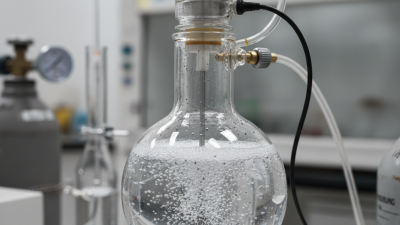
Recent advancements in automation and robotics are revolutionizing catalyst testing. High throughput screening technologies are now more efficient than ever.
Automation allows for rapid testing of numerous catalysts simultaneously. This speeds up the discovery of effective materials for various applications.
Robotics plays a crucial role in enhancing precision. Automated systems can handle samples with minimal human intervention.
However, this also raises concerns about data reliability. Machines can make errors, affecting experimental outcomes. Ensuring accurate calibration and maintenance is essential.
The integration of AI in these systems further complicates the landscape. While AI can optimize the screening process, it may overlook nuanced patterns human researchers notice.
Balancing automation with human expertise is critical for success. The future promises exciting developments but also requires careful deliberation.
Integration of Machine Learning in Catalyst Screening Processes
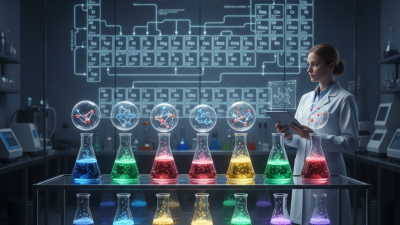
In the evolving world of catalyst screening, machine learning has emerged as a game-changer. Researchers can now analyze vast datasets of catalyst performance. This enables faster identification of promising candidates. Machine learning algorithms help predict how catalysts behave under different conditions. They learn from past experiments and optimize future tests. This integration is transforming traditional methods.
However, the use of machine learning is not without challenges. It requires quality data to be effective. Incomplete datasets can lead to flawed predictions. Sometimes, the models generated are too complex, making them hard to interpret. Researchers must continually refine their approaches.
Combining high throughput techniques with machine learning enhances efficiency. It accelerates the discovery process significantly. Yet, it's crucial to maintain a balance between automation and human oversight. Understanding the nuances in data is vital. Researchers should remain vigilant about potential biases in algorithms. This blend of technology and human insight is essential for progress.
2026 Top Trends in High Throughput Catalyst Screening Technologies
Sustainability Trends Influencing Catalyst Development Approaches
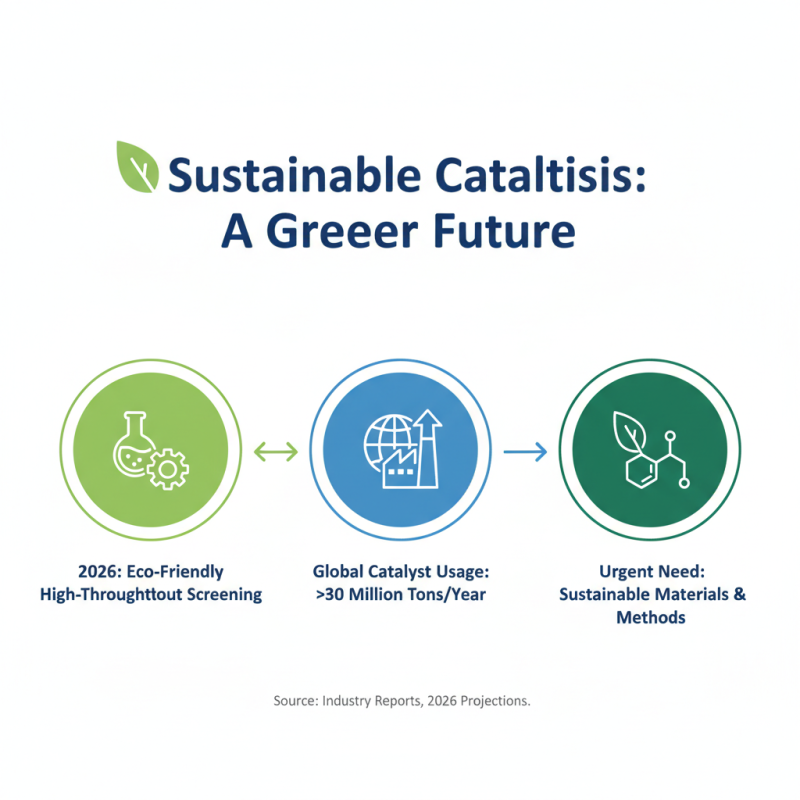
Sustainability is reshaping catalyst development. In 2026, high-throughput screening technologies increasingly focus on eco-friendly methods. According to recent industry reports, global catalyst usage is projected to exceed 30 million tons per year. This surge creates a pressing need for sustainable materials.
Innovations in recycling and renewable feedstocks are gaining traction. Recently, researchers found that using biobased materials can improve catalyst efficiency by up to 25%. However, not all advancements translate smoothly to industry standards. The challenge lies in scalability and maintaining performance metrics. Many catalysts fail to deliver consistent results on a larger scale.
Collaboration between academic institutions and industry players is essential. Continued investment in green chemistry can lead to breakthroughs. Industry experts suggest that by 2026, up to 40% of catalysts could be derived from sustainable sources. Yet, skepticism remains about the feasibility of widespread adoption. Balancing performance and sustainability requires ongoing innovation and critical assessment.
Collaboration Between Academia and Industry in Catalyst Innovations
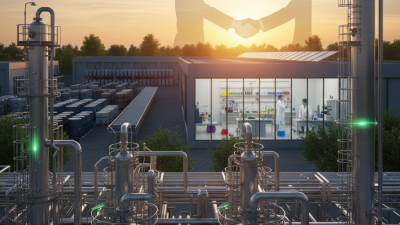
Collaboration between academia and industry is crucial in advancing catalyst innovations. Researchers and companies must work together. This synergy can drive breakthrough technologies.
Academic institutions bring fresh ideas and theoretical knowledge. They often lack resources for extensive testing. Conversely, industry players have the funding and practical applications. However, communication gaps can hinder progress. Often, academic studies may not align with industry needs. Adjusting research focus can lead to more relevant outcomes.
Field trials play a key role. Though they are essential, establishing effective partnerships can be challenging. Trust issues may arise between parties. Academics may feel pressured by commercial interests. Meanwhile, industries may seek quick results at the expense of thorough research. Ultimately, finding a balanced approach is necessary to realize innovative catalysts.
2026 Top Trends in High Throughput Catalyst Screening Technologies
| Trend |
Description |
Impact on Catalyst Development |
Collaboration Type |
| Data-Driven Discovery |
Integrating AI and machine learning to accelerate the identification of high-performing catalysts. |
Speeds up the screening process and enhances predictive accuracy. |
Joint research projects between universities and tech firms. |
| High-Throughput Experimentation |
Utilizing automated systems to conduct numerous experiments simultaneously. |
Increases data collection efficiency and reduces time to market. |
Collaborative labs between industry and academic research centers. |
| Advanced Materials |
Development of new catalyst materials with enhanced properties. |
Promotes sustainability and performance in catalysis. |
Partnerships for material synthesis and characterization. |
| Real-Time Analytics |
Implementing real-time data collection during experiments. |
Enables quick adjustments and optimizations of experiments. |
Collaboration with tech developers for software solutions. |
| Sustainable Practices |
Focus on greener catalysts to improve environmental impact. |
Drives innovation towards eco-friendly catalyst development. |
Joint initiatives between NGOs and research institutions. |